




UN Report: Global Warming Will Breach 1.5°C Safety Limit


Global warming is on track to exceed the 1.5°C limit set under the Paris Agreement, according to a new United Nations report. The threshold could be breached within the next few years, but the UN says it is not too late to limit the overshoot, reduce climate risks and eventually bring global temperatures back below 1.5°C.
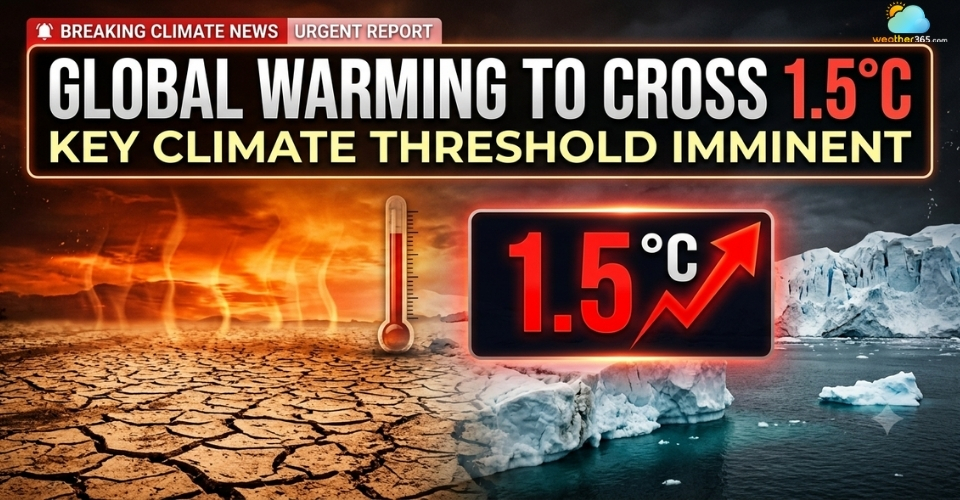
Global warming will exceed the 1.5°C limit
Global Warming Is Expected to Cross the 1.5°C Threshold
Global warming is now at about 1.4°C above pre-industrial levels, based on the long-term average used by climate scientists.
The new UNEP report says the world is likely to cross the 1.5°C threshold within the next few years, marking a major shift in the global climate outlook.
The 1.5°C threshold comes from the 2015 Paris Agreement, which established efforts to keep the rise in global temperatures well below 2°C while pursuing a limit of 1.5°C.
See also: How to measure air temperature?
Scientists have found that climate risks become significantly more severe as warming approaches and passes this level.
The latest assessment reflects how quickly the climate situation has changed. For years, the United Nations and governments have focused on keeping the world below 1.5°C.
The new report instead recognizes that crossing the threshold is now highly likely and calls for planning around that outcome.
Importantly, the 1.5°C threshold is measured over a longer period rather than by a single unusually hot year.
Short-term temperatures can rise above the level because of natural climate variability, while the threshold refers to sustained global warming.
The report therefore does not treat 1.5°C as a point beyond which climate action becomes meaningless.
Instead, it marks the start of a more difficult phase in which limiting further warming becomes increasingly important.
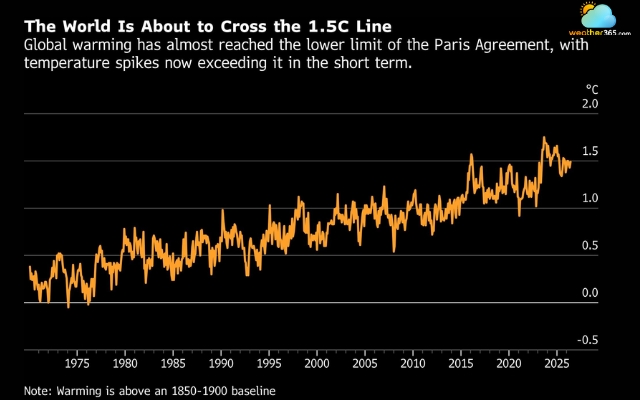
The world will exceed the 1.5°C threshold within the next few years
Source: Berkeley Earth
Check the latest temperature forecast for New York City to see how warm it is today and what to expect next.
How High Could Global Warming Rise?
The amount of future warming will depend largely on how quickly countries cut greenhouse gas emissions.
The new UNEP assessment outlines a wide gap between different pathways, with the level of warming varying significantly depending on the policies and climate action adopted in the coming decades.
Under a more ambitious pathway, global temperatures could peak at around 1.8°C above pre-industrial levels before starting to decline.
This scenario would require countries to strengthen their climate commitments and deliver deeper emissions cuts than under current policies.
The report shows that reaching a lower peak would make it easier to limit the damage caused by a period of warming above 1.5°C.
The sooner emissions fall, the less additional heat the planet is likely to accumulate.
If countries continue broadly with their current policies, global warming could reach about 2.6°C by 2100, according to the assessment.
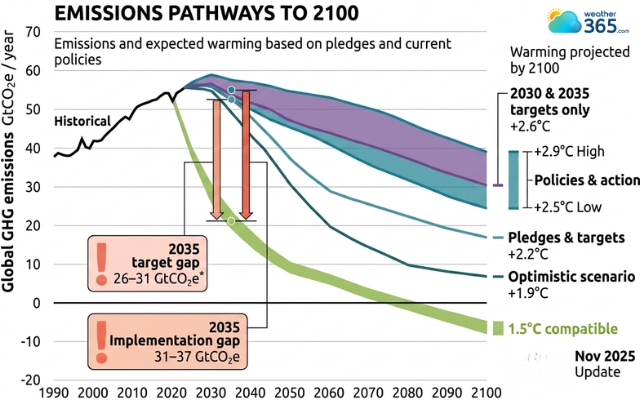
Emissions pathways to 2100
Source: Climate Action Tracker
That is substantially higher than the 1.5°C goal and would leave the world facing a much more difficult climate outlook.
The difference between these pathways highlights the importance of decisions made now.
Delaying emissions cuts can push the eventual temperature peak higher, making it harder to limit the period of warming above 1.5°C.
The report therefore presents the future as a range rather than a single fixed outcome.
How high global warming rises will depend on the scale and speed of climate action taken from this point forward.
Discover the highest recorded temperature in the world!
What Happens When the World Overshoots 1.5°C?
Crossing 1.5°C does not mean climate action has failed or that the planet reaches an immediate tipping point.
Instead, the longer temperatures remain above the threshold, the greater the risks and potential damage become.
The UNEP report describes this period as a climate overshoot, in which temperatures rise above 1.5°C before eventually falling again.
Higher temperatures can intensify heat, rainfall, drought and other climate hazards.
Some impacts, including sea-level rise and damage to ecosystems, may also continue even after global temperatures begin to decline.
How Can the World Bring Temperatures Back Down?
The UN says the best remaining pathway is to overshoot 1.5°C, limit the peak and then bring global temperatures down.
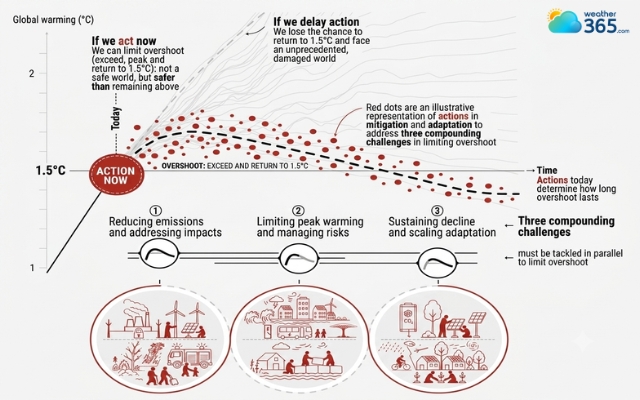
“Overshoot, peak and decline” pathway
Source: UNEP
This “overshoot, peak and decline” pathway depends on rapid emissions cuts now, followed by large-scale carbon removal to lower the amount of CO₂ in the atmosphere.
Cut greenhouse gas emissions faster: Countries need deeper and faster reductions in emissions, particularly from fossil fuels, to slow the rise in global temperatures.
Reach net-zero emissions: Bringing human-caused CO₂ emissions close to zero is essential to stop the continued buildup of greenhouse gases in the atmosphere.
Remove more carbon dioxide: Carbon removal can help reduce atmospheric CO₂ after emissions have been sharply cut. Options include restoring forests and using technological carbon-removal methods.
Keep the temperature peak as low as possible: Even if 1.5°C is temporarily exceeded, limiting how far temperatures rise can reduce the scale of climate risks.
Shorten the overshoot period: Returning below 1.5°C sooner would help limit the additional impacts associated with prolonged warming above the threshold.
As extreme heat becomes a growing climate risk, check the current temperatures in Phoenix, Arizona, and see how hot conditions are expected to be.
References
APTN News
Insurance Journal
The Independent
UNEP
Related post
Record Breaking Heat Wave in US Fuels Wildfires and Severe Storms
 250
250
 0
0
 4.8
4.8
 20/05/2026
Europe Heatwave Temperatures Soar, WHO Warns of Death Toll
86
0
4.9
29/06/2026

0 Comment
Leave a comment
Your email address will not be published. Required fields are marked *