




Why Does the Ocean Get Darker? Science Behind Ocean Color


Why does the ocean get darker? The answer lies in how light moves through seawater, where it is absorbed, scattered, and blocked by depth, particles, and marine life. This article explains the science behind ocean darkening, its impact on the environment, and how the trend may be reversed.
Understanding why the Ocean gets darker
What is ocean darkening?
Ocean darkening refers to the reduction in the depth that sunlight can penetrate seawater.
It occurs when changes in the ocean's optical properties make the water less transparent, causing the sunlit layer known as the photic zone to become shallower.
The photic zone is one of the most important parts of the marine environment because it receives enough sunlight to support photosynthesis and many ecological processes.
It is home to approximately 90% of marine life, including plankton, fish, and countless other organisms that depend on light for survival.
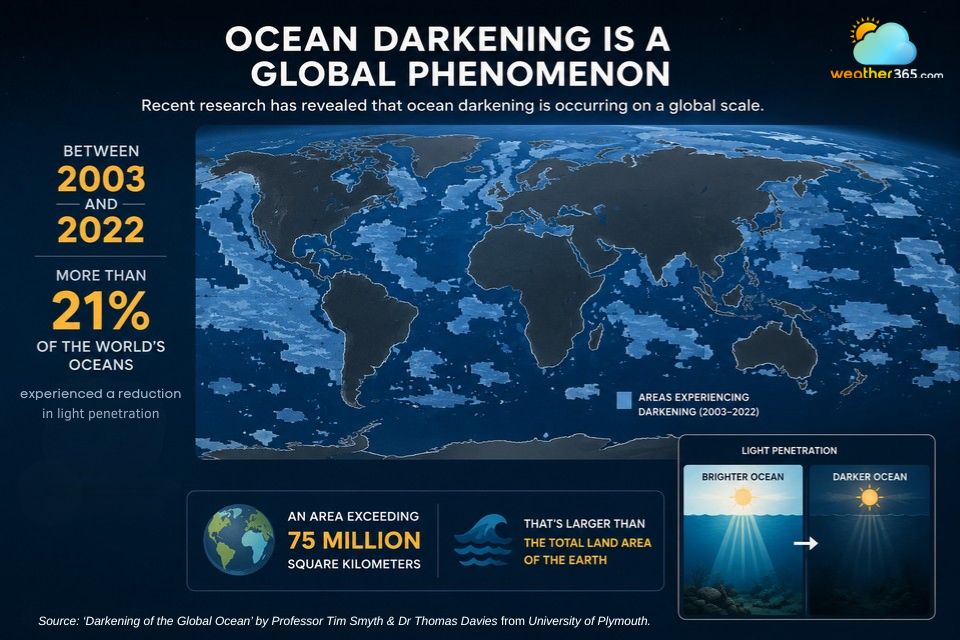
Recent research has revealed that ocean darkening is occurring on a global scale.
Between 2003 and 2022, more than 21% of the world's oceans—an area exceeding 75 million square kilometers—experienced a reduction in light penetration.
Ocean darkening is a global phenomenon
Scientists measured these changes by analyzing shifts in photic zone depth using satellite observations and numerical models.
As the photic zone becomes shallower, the available habitat for light-dependent marine organisms decreases.
Because sunlight plays a crucial role in ocean ecosystems, ocean darkening is increasingly recognized as an important indicator of environmental change in marine environments.
So, why does the ocean get darker? Keep reading to explore the primary culprit in the next part!
Why does the ocean get darker?
Scientists are increasingly investigating why does the ocean get darker as evidence shows that large areas of the world's oceans are receiving less sunlight than they did in the past.
Runoff and Sediment
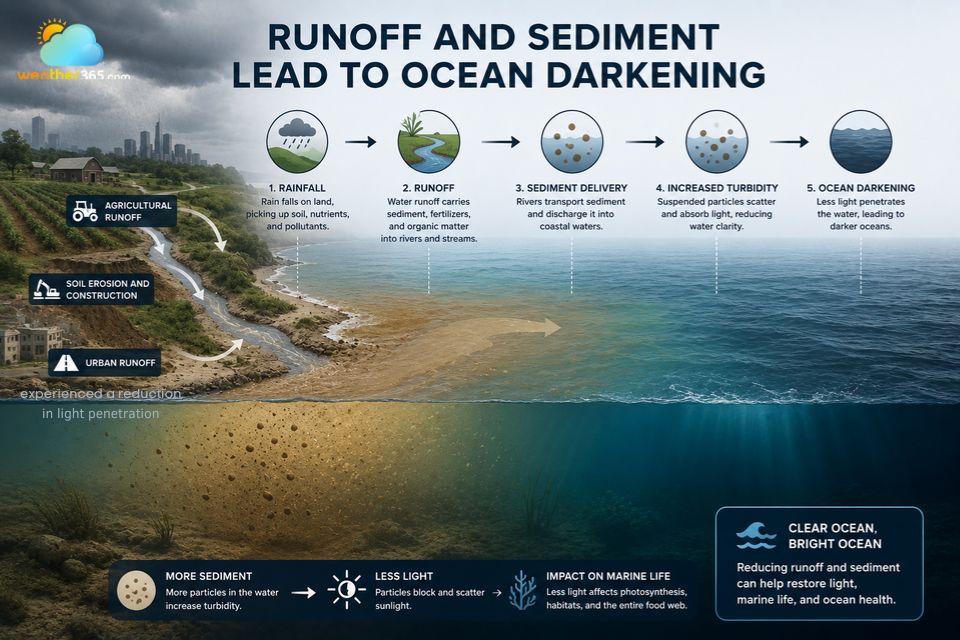
One of the primary reasons why does the ocean get darker is the increased amount of runoff entering coastal waters.
Rainfall and river systems transport sediments, soil particles, organic matter, and pollutants from land into the ocean.
These suspended materials scatter and absorb sunlight, making the water less transparent.
Coastal regions near heavily populated or agricultural areas are particularly vulnerable.
As sediment concentrations rise, sunlight struggles to penetrate deeper layers of the water column.
Runoff and Sediment lead to ocean darkening
Algal Blooms
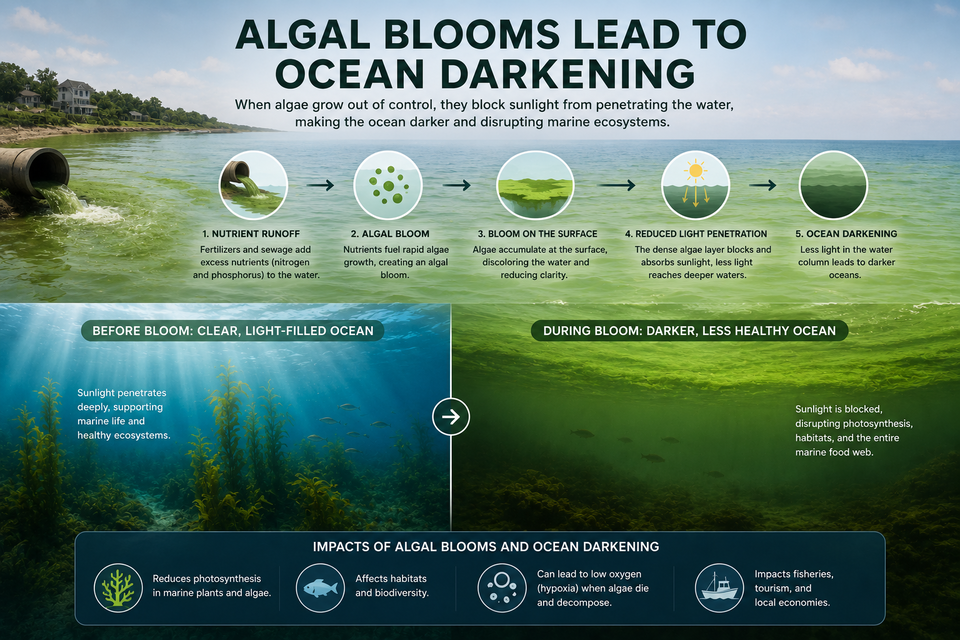
Algal blooms are another major contributor to ocean darkening. When microscopic algae multiply rapidly, they form dense concentrations near the water's surface.
These blooms can block sunlight from reaching deeper waters.
In many parts of the open ocean, warmer sea surface temperatures have increased the frequency and intensity of algal blooms.
As a result, more light is absorbed or reflected before it can penetrate the ocean, contributing to darker conditions below the surface.
Before heading out to coastal waters known for seasonal blooms, make sure to check Miami weather forecasts to see if recent heatwaves or heavy rains might trigger local marine shifts.
Algal blooms lead to ocean darkening
Increased Rainfall
Climate change is altering precipitation patterns around the world, leading to heavier rainfall in many regions.
Increased rainfall accelerates the transport of sediment, nutrients, and organic matter from land to coastal waters.
Some extreme rainfall events are associated with atmospheric rivers, narrow bands of moisture that can deliver large amounts of rain over a short period.
Learn more about what causes an atmospheric river and why these moisture systems can intensify rainfall.
For example, researchers have identified rainfall-driven inputs as a significant factor in ocean darkening in coastal seas such as the Baltic Sea.
Larger volumes of freshwater runoff can reduce water clarity and increase biological activity, both of which limit light penetration.
If you are planning a coastal visit or outdoor activity in heavy rainfall zones, track Seattle live weather updates to stay prepared for upcoming storms and severe downpours.
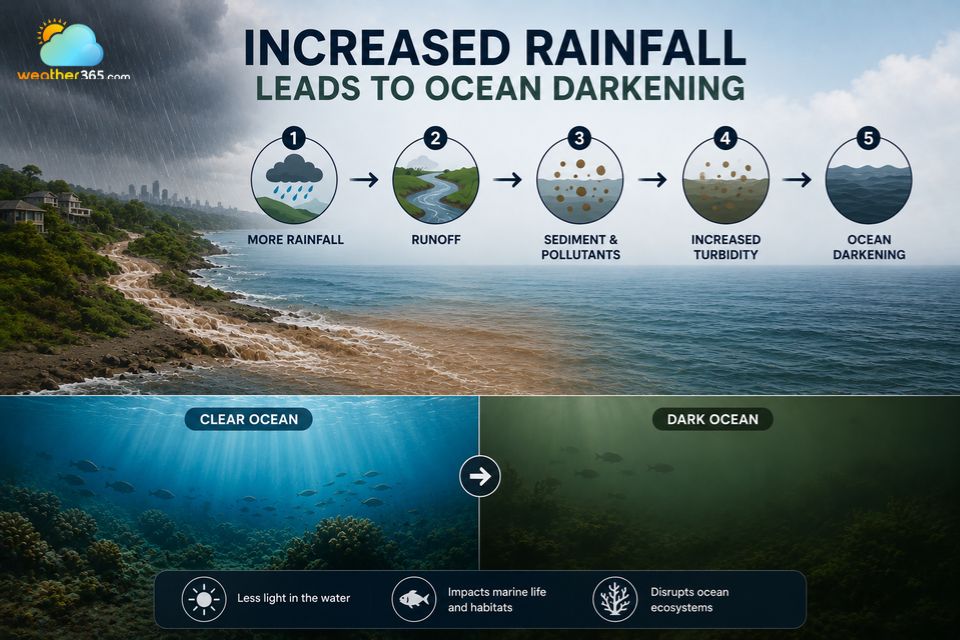
Increased rainfall leads to ocean darkening
Regional Environmental Factors
The causes of ocean darkening vary from one region to another. In coastal zones, nutrient enrichment, sediment loading, and organic matter often play the dominant role.
In contrast, open-ocean darkening is more closely linked to changes in marine ecosystems, including shifts in algal bloom dynamics and rising sea surface temperatures.
These regional differences explain why some areas have become significantly darker while others have experienced little change or even increased water clarity.
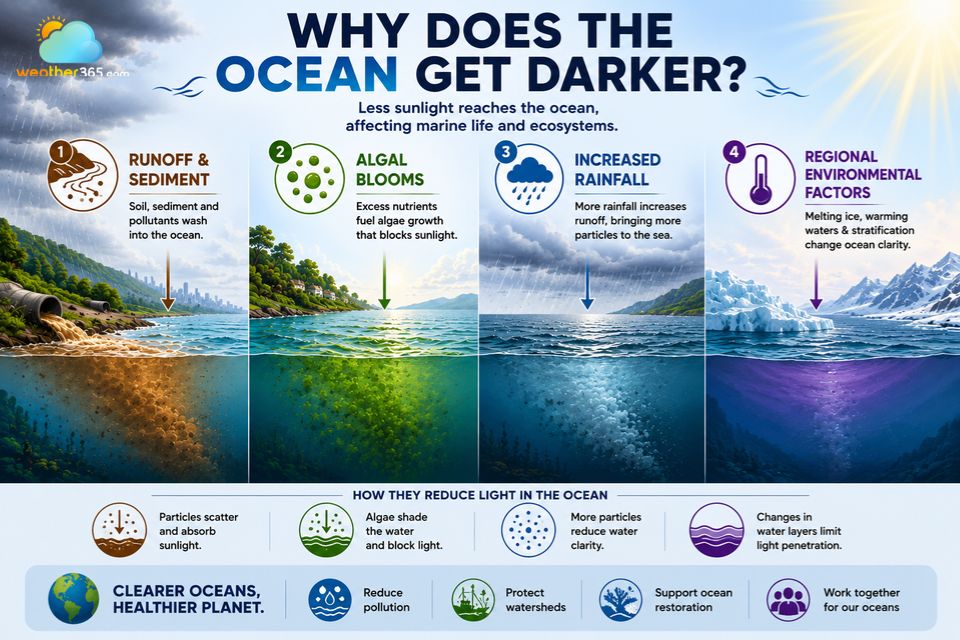
Reasons why the ocean gets darker
Where does the ocean darkening happen the most?
Ocean darkening has been observed across the globe, but some regions are experiencing much greater changes than others.
The most significant ocean darkening has occurred in the Arctic and Antarctic regions.
Antarctica’s changing ice environment can also influence the surrounding ocean, making it worth exploring what is under Antarctica ice and how this hidden world connects to the marine environment.
These polar areas are among the fastest-warming parts of the planet and are under intense pressure from climate change.
Researchers also identified substantial darkening in parts of the North Atlantic influenced by the Gulf Stream, a major ocean current that plays a key role in regulating global climate.
Darkening is also widespread in enclosed seas such as the Baltic Sea.
In these regions, rivers carry sediments, nutrients, and organic matter from land into coastal waters, reducing water clarity and limiting light penetration.
These geographic patterns help scientists understand why does the ocean get darker, linking the phenomenon to climate-related changes in both open-ocean and coastal environments.
Areas already experiencing rapid environmental change appear to be the most vulnerable to further ocean darkening.
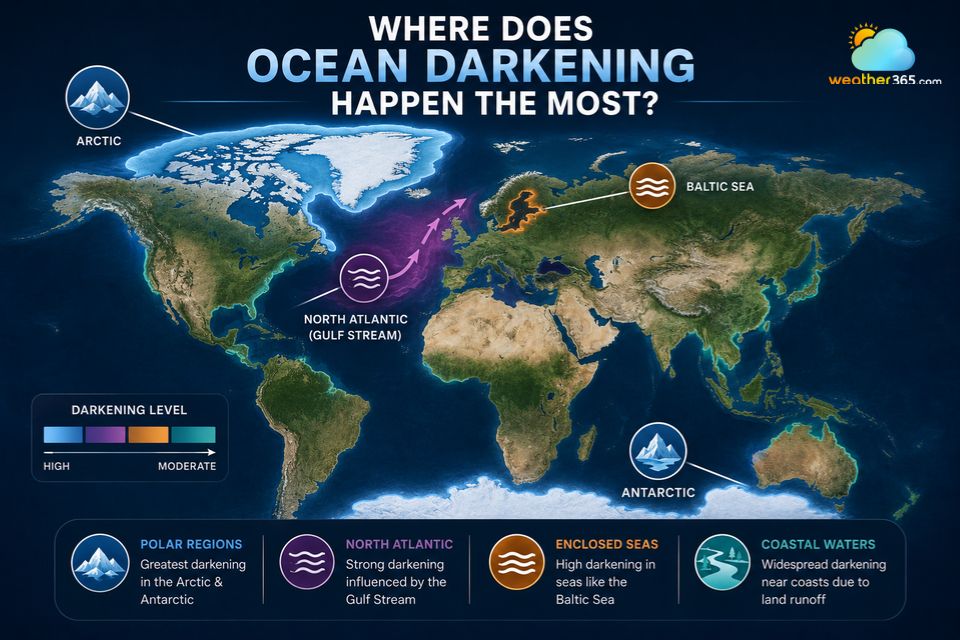
Places that experience ocean darkening the most
Impacts of ocean darkening
Ocean darkening is more than a change in water color.
It can have significant consequences for marine ecosystems and the services oceans provide to the planet.
Understanding these impacts also helps explain why does the ocean get darker and why scientists are increasingly concerned about the trend.
Key impacts of ocean darkening include:
Reduced photosynthesis by plankton
Phytoplankton depend on sunlight to produce energy through photosynthesis. As less light penetrates the water, their ability to grow and generate organic matter may decline.
Shrinking habitats for marine species
Many fish, invertebrates, and other organisms rely on well-lit waters for feeding, reproduction, and survival. A shallower photic zone reduces the amount of suitable habitat available.
Disruption of marine food webs
Since plankton form the foundation of many ocean food chains, any decline in their productivity can affect larger species, including commercially important fish.
Changes in species distribution
Some marine organisms may be forced to move to new areas or depths in search of adequate light conditions, potentially altering ecosystem balance.
Impacts on biodiversity
Species adapted to specific light levels may struggle to survive as ocean conditions change, leading to shifts in marine biodiversity.
Potential effects on carbon cycling
Reduced plankton productivity could weaken the ocean's role in absorbing carbon dioxide from the atmosphere, an important process in regulating Earth's climate.
As researchers continue studying why does the ocean get darker, they warn that ongoing ocean darkening could have long-term effects on marine life, fisheries, and the health of global ocean ecosystems.
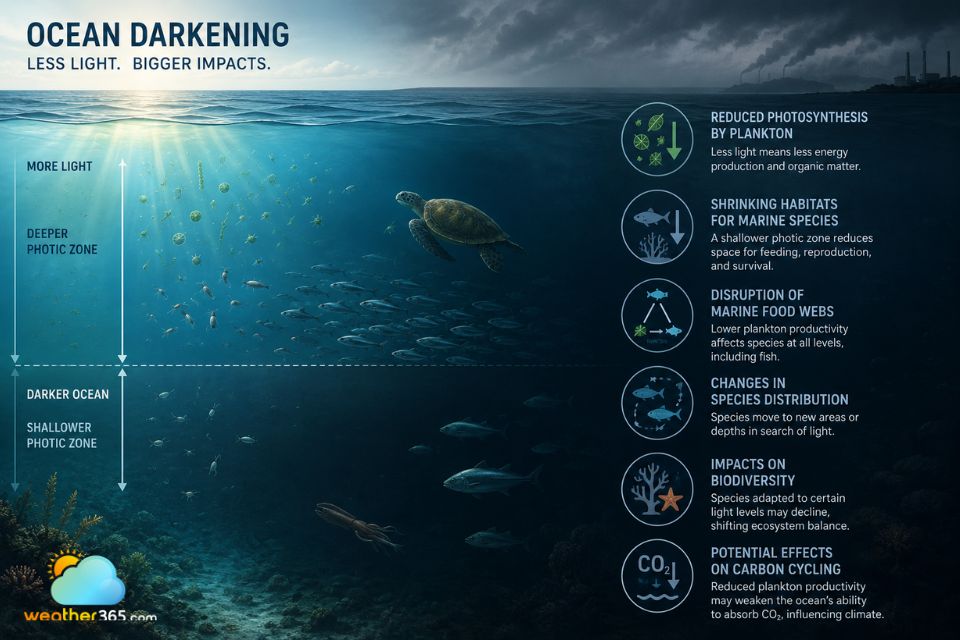
Heavy impacts of ocean darkening
How to reverse this trend?
While ocean darkening is a complex environmental challenge, scientists believe that addressing its underlying causes can help slow or even reverse the trend in some regions.
Understanding why does the ocean get darker is the first step toward developing effective solutions.
Here are some ways to reduce/ reverse ocean darkening:
Reduce nutrient pollution
Excess fertilizers from agriculture can wash into rivers and coastal waters, fueling algal blooms that block sunlight.
Improving fertilizer management and reducing agricultural runoff can help maintain clearer waters.
Control sediment runoff
Protecting forests, wetlands, and riverbanks reduces soil erosion and prevents large amounts of sediment from entering the ocean.
Healthier watersheds often lead to better water clarity in nearby coastal areas.
Address climate change
Many of the regions experiencing the most severe ocean darkening, including the Arctic and Antarctic, are also warming rapidly.
Reducing greenhouse gas emissions can help limit changes in ocean temperatures, circulation patterns, and marine ecosystems.
Restore coastal ecosystems
Mangroves, salt marshes, and wetlands naturally filter sediments and pollutants before they reach the ocean.
Conservation and restoration projects can improve water quality and light penetration.
Strengthen monitoring and research
Satellite observations and ocean monitoring programs help scientists track changes in water clarity and identify areas at greatest risk.
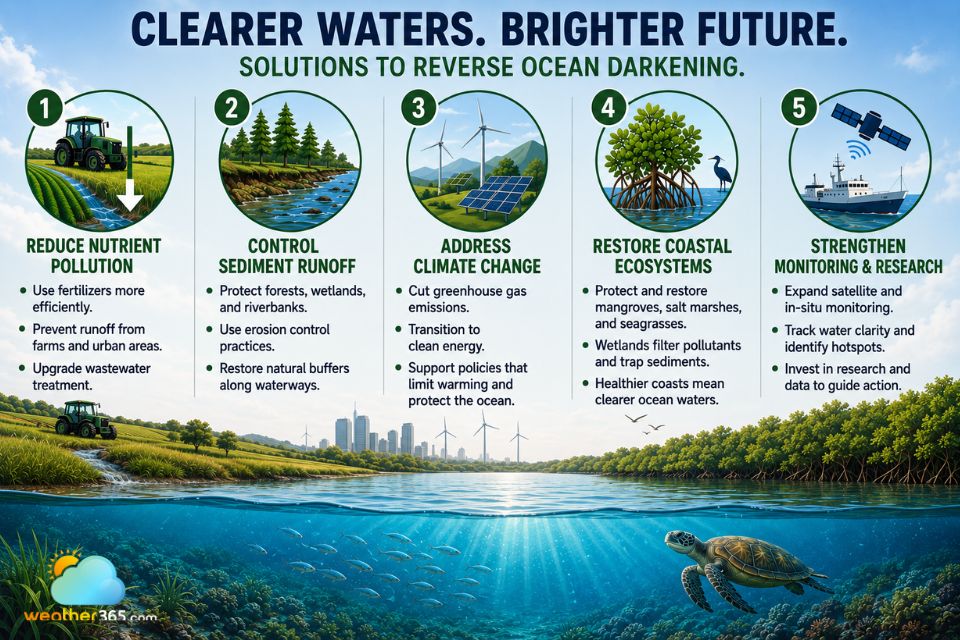
Some solutions to reverse ocean darkening
Because more than 21% of the global ocean experienced darkening between 2003 and 2022, action is increasingly important.
By tackling the factors behind why does the ocean get darker, governments, industries, and communities can help protect marine ecosystems and improve the long-term health of the world's oceans.
You may also like this:
In conclusion
Ocean darkening is an emerging global issue that reduces the amount of sunlight reaching marine ecosystems. From runoff and algal blooms to climate-driven changes in ocean conditions, the phenomenon is affecting regions from the Baltic Sea to the Arctic and Antarctic. Understanding the causes, hotspots, and solutions is key to answering why does the ocean get darker?
Frequently Asked Questions (FAQs)
Related post
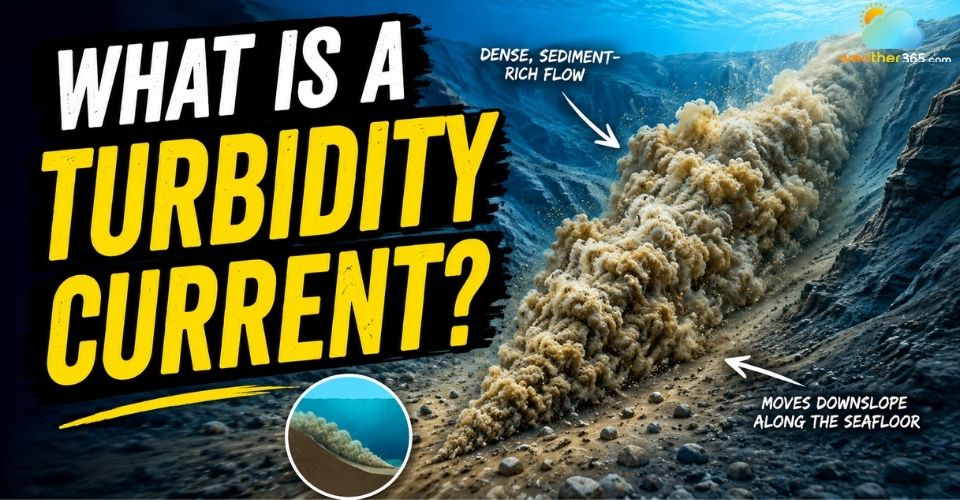
What is a turbidity current? Understanding Causes, Effects, and Solutions
 182
182
 0
0
 4.6
4.6
 03/09/2026
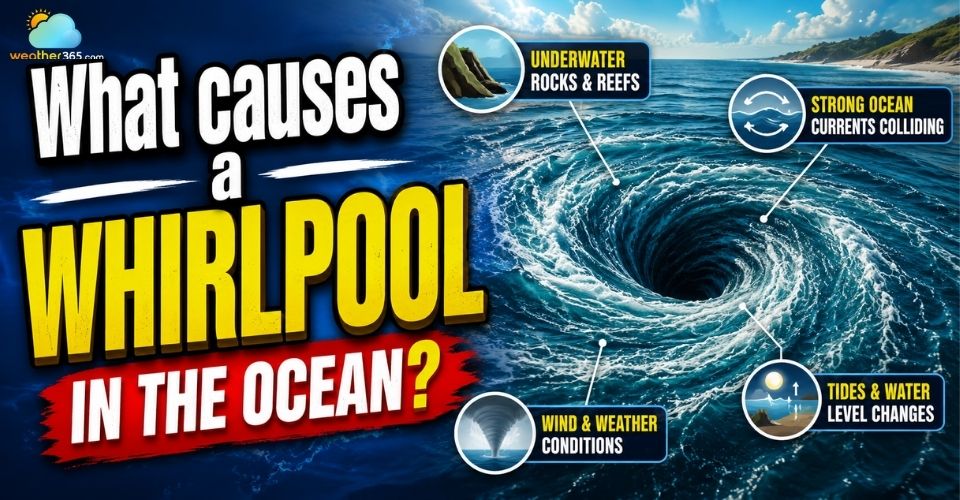
What causes a whirlpool in the ocean? Causes, Dangers and Survival Tips
165
0
4.6
03/09/2026
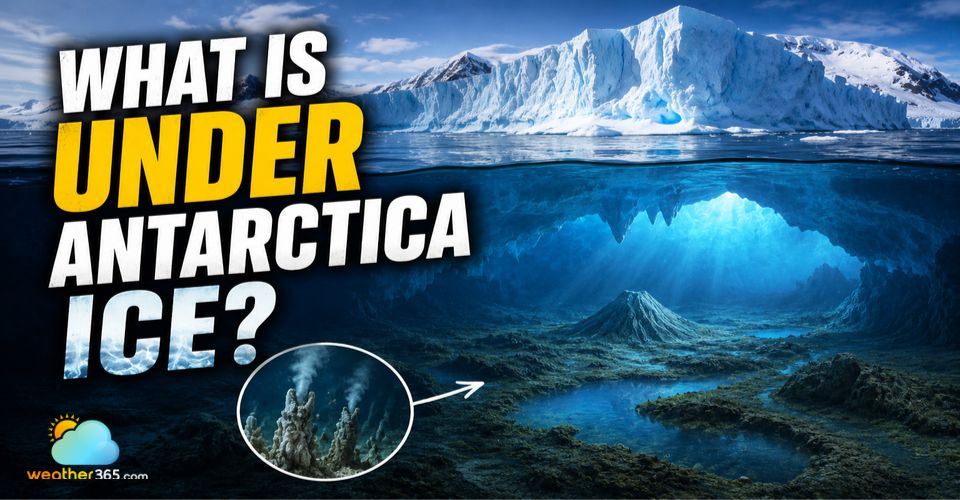
What Is Under Antarctica Ice? Hidden World Beneath the Surface
75
0
5.0
03/09/2026

0 Comment
Leave a comment
Your email address will not be published. Required fields are marked *