




What causes a whirlpool in the ocean? Causes, Dangers and Survival Tips


What causes a whirlpool in the ocean, and why can some of them become powerful enough to trap boats and swimmers? Strong tidal currents to colliding ocean flows, these spinning water vortices are more common than many people realize. Keep reading to discover the main causes, hidden dangers, and practical survival tips!
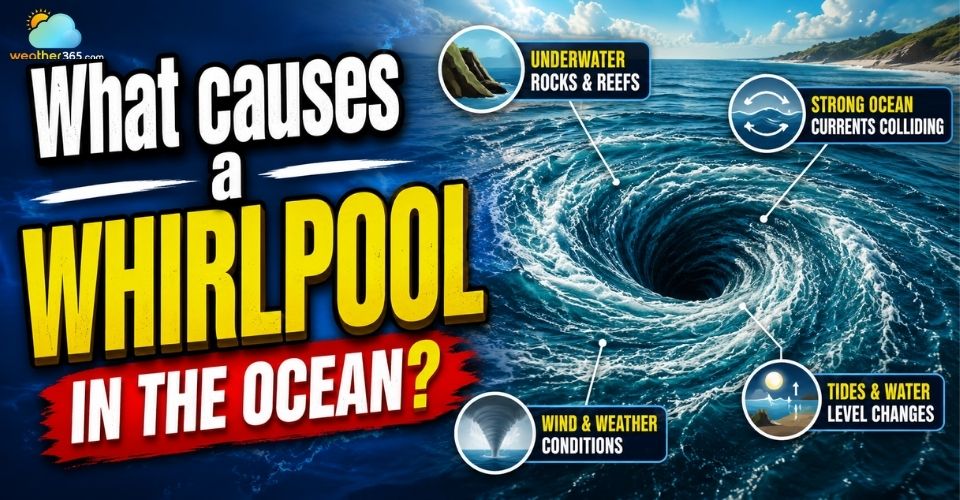
What causes a whirlpool in the ocean
- What is a whirlpool in the ocean?
- Types of ocean whirlpools
- Surface Whirlpools
- Deep Whirlpools
- Ocean Turbulence
- What causes a whirlpool in the ocean?
- Tidal currents
- Topography and Coastline
- Collision of currents
- Obstructions
- Key dangers of ocean whirlpools
- Safety tips
- Surviving a whirlpool
- Prevention and general safety
What is a whirlpool in the ocean?
A whirlpool is a rotating body of water created when opposing currents, tides, or underwater obstacles force water to spin in a circular motion.
In the ocean, whirlpools can range from small harmless swirls to massive and dangerous vortices capable of pulling objects toward their center.
Most ocean whirlpools form naturally in narrow channels, coastal straits, or areas with strong tidal activity.
Coastal areas of Alaska have complex shorelines and strong marine currents, making local coastal conditions important for understanding ocean activity.
The faster the water moves, the stronger the rotation becomes.
Some whirlpools last only a few minutes, while others appear regularly due to predictable tidal patterns.
Unlike fictional depictions in movies, most real-world whirlpools are not giant “bottomless holes” in the sea.
However, strong whirlpools can still create dangerous conditions for swimmers, kayakers, and small boats because of intense turbulence and powerful currents.
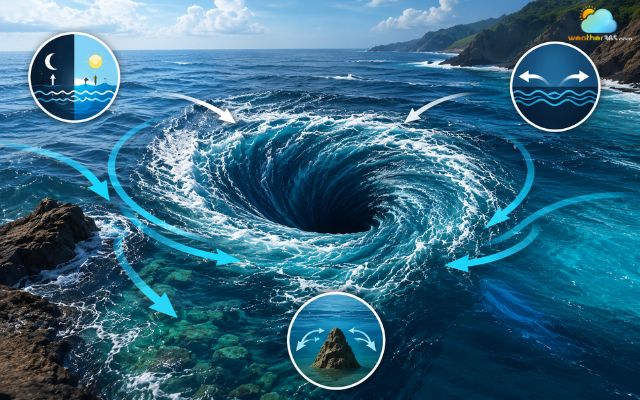
A whirlpool is a rotating body of water
Types of ocean whirlpools
Types of ocean whirlpools include surface whirlpools, deep whirlpools, and ocean turbulence.
Surface Whirlpools
Surface whirlpools occur near the top layer of the ocean and are usually visible as spinning circular water patterns.
They commonly form when strong tidal currents interact with coastlines, narrow passages, or obstacles.
These whirlpools may look harmless from a distance, but larger ones can create unstable conditions for small vessels and swimmers.
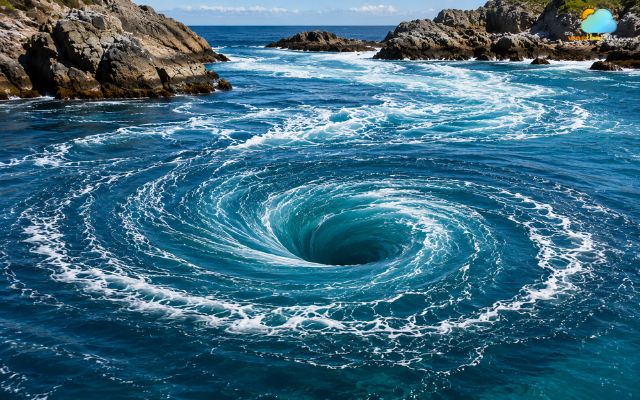
Surface whirlpools occur near the top layer of the ocean
Deep Whirlpools
Deep whirlpools extend below the ocean surface and involve stronger underwater circulation.
They are often caused by massive tidal forces or deep ocean current interactions.
Because much of the movement happens underwater, deep whirlpools can be difficult to detect until vessels encounter rough and unstable waters above them.
Under extreme conditions, these deep movements can interact with marine sediments to trigger a turbidity current, a powerful underwater avalanche.
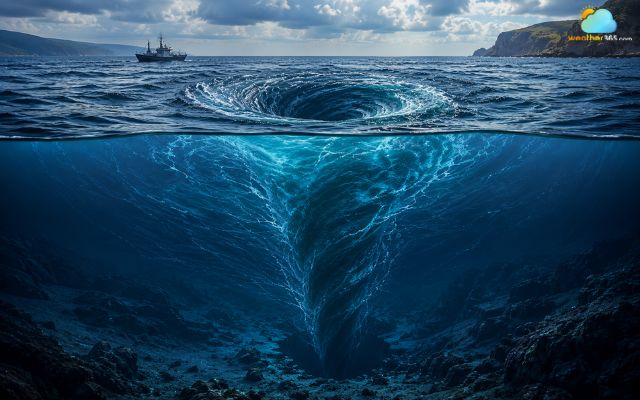
A deep whirlpool occurs below the ocean
Ocean Turbulence
Not all rotating ocean motion forms a perfect whirlpool. In many coastal regions, turbulent water movement creates chaotic spinning eddies and vortices.
Ocean turbulence usually develops when fast-moving water collides with underwater ridges, rocky coastlines, or changing seafloor elevations. These turbulent zones can still pose serious risks to navigation and swimming.
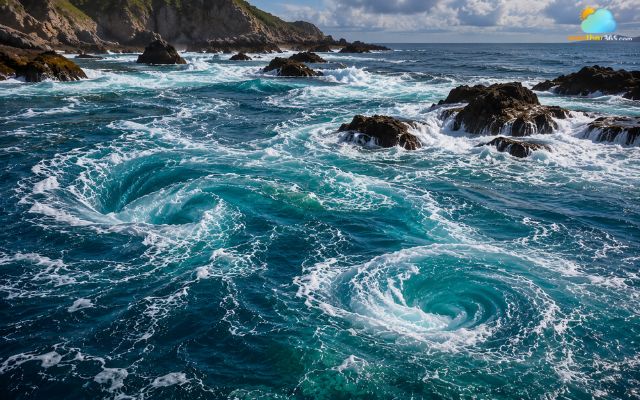
Ocean turbulence can pose serious dangers
What causes a whirlpool in the ocean?
Several natural forces contribute to whirlpool formation in oceans and coastal waters.
Understanding these factors helps explain why whirlpools often appear in specific locations around the world.
Tidal currents
Tidal currents are considered the main answer to the question: what causes a whirlpool in the ocean?
Whirlpools commonly form during tidal reversals in narrow coastal straits, channels, and inlets where enormous amounts of water move back and forth between connected bodies of water.
As the tide rises and falls, water is forced through tight spaces at very high speeds.
When fast-moving tidal water squeezes through narrow passages, it becomes unstable and begins rotating. This spinning motion can gradually develop into a visible whirlpool or vortex.
The stronger the tidal movement, the more intense the rotation becomes.
Large differences in water levels between two connected seas or bays can create especially powerful whirlpools.
This is why some of the world’s largest whirlpools are found near island chains, narrow straits, and coastal passages with extreme tidal activity.
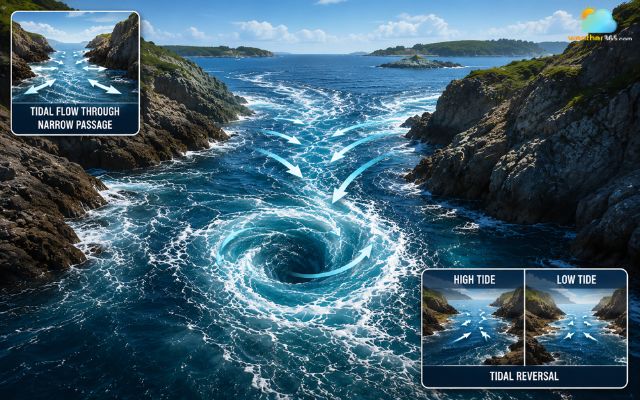
Tidal currents are the main cause of a whirlpool
Topography and Coastline
The shape of the coastline and the underwater landscape also play a major role in whirlpool formation.
Jagged coastlines, underwater ridges, steep drop-offs, and uneven sea floors disrupt the smooth flow of ocean currents.
When fast-moving water collides with these natural formations, the current changes direction suddenly and begins to spiral.
In shallow coastal regions, certain underwater formations naturally funnel water into circular patterns.
Rocky shorelines and narrow bays can also increase turbulence, making rotating currents more likely to develop.
The more irregular the underwater terrain is, the more chaotic the water movement becomes.
Over time, this turbulence can strengthen into a stable whirlpool during strong tidal or current conditions.
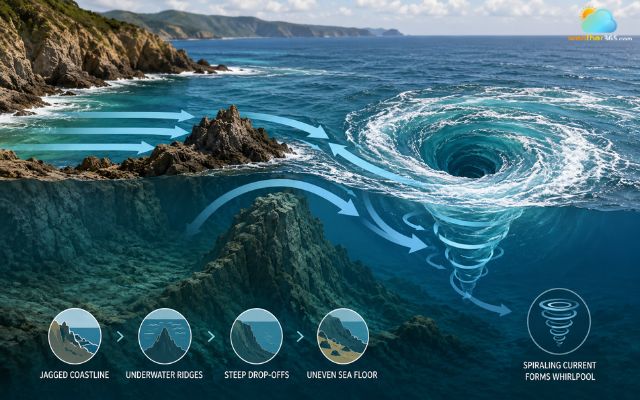
Shape of the coastline is crucial to whirlpool formation
Collision of currents
Another important factor behind whirlpool formation is the collision of ocean currents.
When two currents moving in different directions meet, the water flow becomes unstable. Instead of continuing in a straight line, the currents begin circling around one another, creating rotating eddies or vortex systems.
The size and strength of these whirlpools depend on how powerful the colliding currents are.
Smaller collisions may create harmless surface swirls, while stronger interactions can generate dangerous rotating water systems.
Current collisions are especially common near river mouths, coastal inlets, and major ocean current boundaries where warm and cold waters meet.
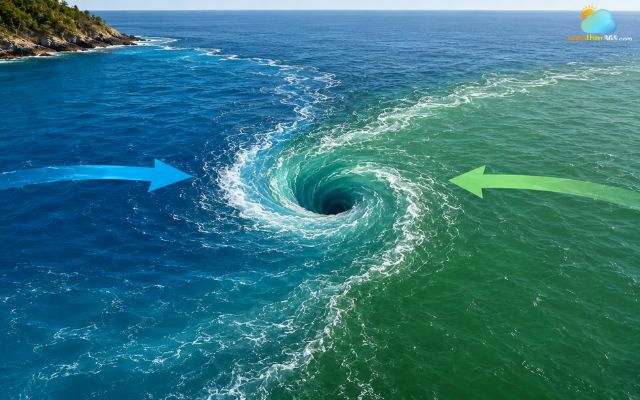
Whirlpool formation is also due to the collision of ocean currents
Obstructions
Large obstacles in the water can also trigger whirlpool formation.
When rapid water flows around bridges, rocks, reefs, island chains, or underwater structures, pressure differences develop on each side of the obstacle.
This uneven flow forces the water into a spinning motion, creating localized vortices.
Even relatively small obstacles can generate strong whirlpools if the surrounding current is fast enough.
In some cases, whirlpools repeatedly appear around the same rocks or structures because the water conditions remain consistent throughout the year.
These obstruction-based whirlpools are often smaller than tidal whirlpools, but they can still create dangerous conditions for swimmers, kayakers, and small boats.
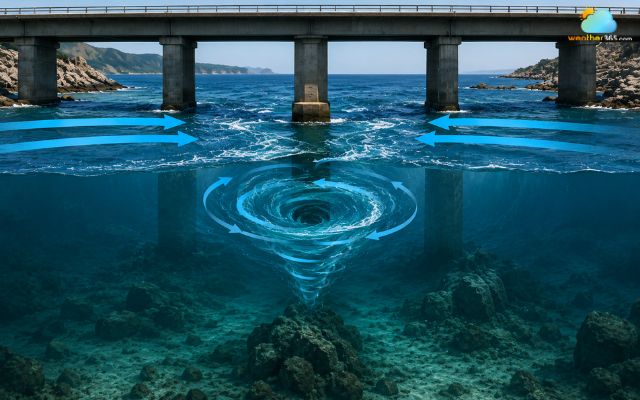
Obstacles in the water also cause whirlpool formation
Key dangers of ocean whirlpools
Although many whirlpools are relatively small, stronger ocean vortices can become extremely dangerous under the right conditions.
Submersion
The center of a powerful whirlpool can drag objects, debris, or even people downward. In strong tidal whirlpools, the rotating water creates downward suction that may lead to drowning or severe disorientation.
People caught near the center often struggle to stay afloat because of the constantly shifting currents.
Entrapment
Swimmers, kayakers, and small boats can become trapped within the rotating current of a whirlpool. Escaping becomes difficult because the spinning motion continuously pulls them back toward the center.
Panic and exhaustion make the situation even more dangerous.
Underwater hazards
Whirlpools commonly form near rocky coastlines, tidal rapids, or underwater ridges. These areas may contain hidden rocks or shallow formations beneath the turbulent water.
Strong currents can push boats into rocks or pull swimmers into dangerous underwater obstacles.
Dangerous examples
Some whirlpools around the world are famous for their size and strength.
The Old Sow Whirlpool in Canada is considered one of the largest tidal whirlpools in the Western Hemisphere.
The Naruto whirlpools in Japan are known for their massive rotating currents caused by strong tidal movements through narrow straits.
These locations attract tourists but can also become dangerous during peak tidal activity.
The coastal waters around Hawaii can also experience strong currents and changing marine conditions.
Before planning water activities, check the local weather forecast for conditions that could affect waves, visibility, and boating safety.
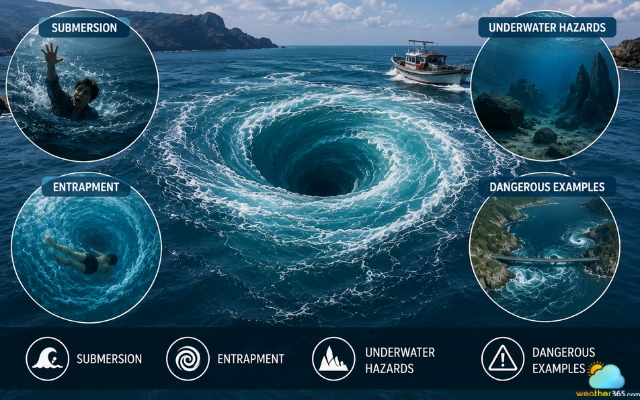
Ocean whirlpools can pose serious dangers
Safety tips
Understanding how to react around a whirlpool can significantly improve survival chances in an emergency.
Surviving a whirlpool
Avoid fighting the center
Swimming directly against the current will quickly drain your energy and may pull you deeper into the vortex.
Instead of resisting the rotation head-on, focus on moving with the current strategically.
Slingshot to escape
One of the best survival methods is to swim or paddle parallel to the spinning current while gradually moving diagonally outward.
Using the whirlpool’s rotation to “slingshot” away from the center is often more effective than fighting against it.
Dive beneath the vortex
If the whirlpool begins pulling you underwater, take a deep breath and dive deeper temporarily.
In some cases, the strongest current exists near the surface, while water movement becomes weaker closer to the ocean floor.
This can create an opportunity to escape sideways.
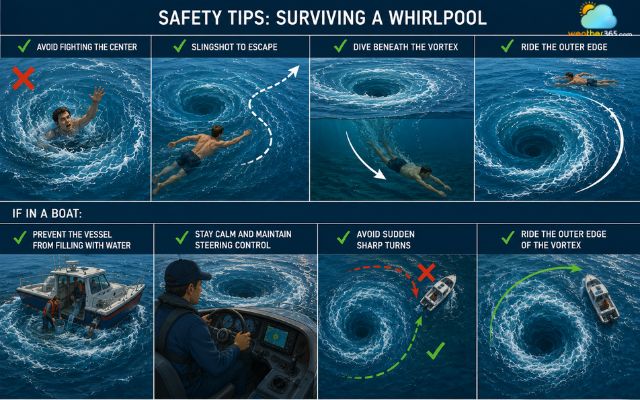
Tips to survive a whirlpool
Prevention and general safety
Know local conditions
Before swimming, kayaking, or boating, check local tide charts and nautical information. Large whirlpools often occur during predictable tidal shifts or in known narrow channels.
If you're planning water activities along the Florida coast, check local weather conditions before heading out, as changing waves and visibility can affect water safety.
Never swim alone
Always swim with a partner, especially in open water environments. Having another person nearby increases survival chances during emergencies.
Wear protective gear
When boating near turbulent waters:
→ Wear a Coast Guard-approved life jacket
→ Use helmets during kayaking or rafting activities
→ Carry emergency signaling equipment when possible
Avoid known high-risk zones
Research local water hazards before entering unfamiliar waters. Pay attention to warning signs, restricted areas, and weather advisories.
Many dangerous whirlpools form repeatedly in the same locations.
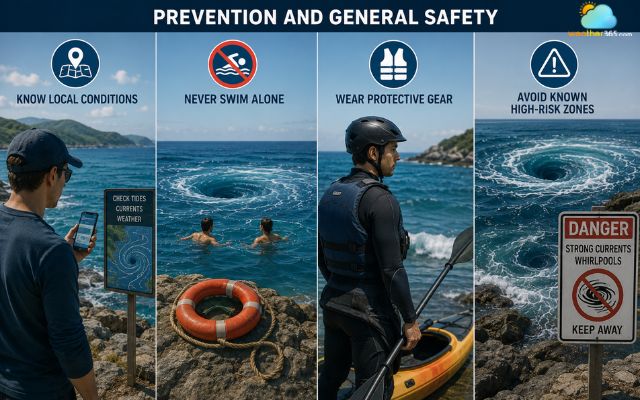
Stay safe before encountering a whirlpool
The bottom line
So what causes a whirlpool in the ocean? In most cases, whirlpools form because of powerful tidal currents, underwater topography, colliding currents, and water flowing around obstacles. While many ocean whirlpools are relatively harmless, stronger ones can create dangerous conditions for swimmers and boats.
Frequently Asked Questions (FAQs)
Related post
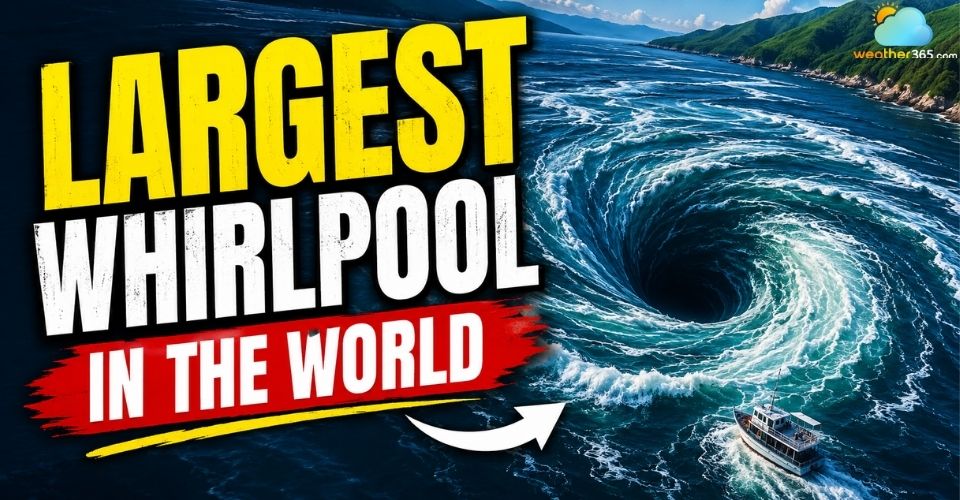
What is the largest whirlpool in the world? Safety tips for visiting
 176
176
 0
0
 4.7
4.7
 03/09/2026
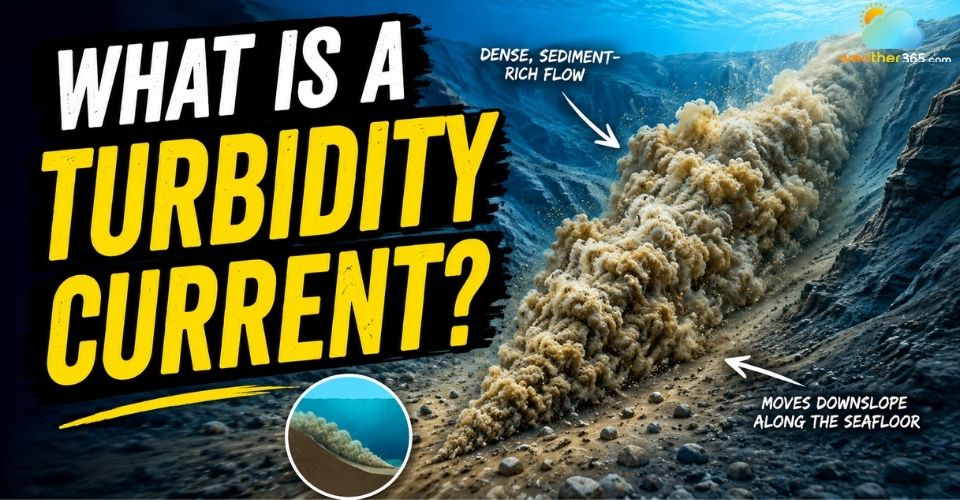
What is a turbidity current? Understanding Causes, Effects, and Solutions
174
0
4.6
03/09/2026
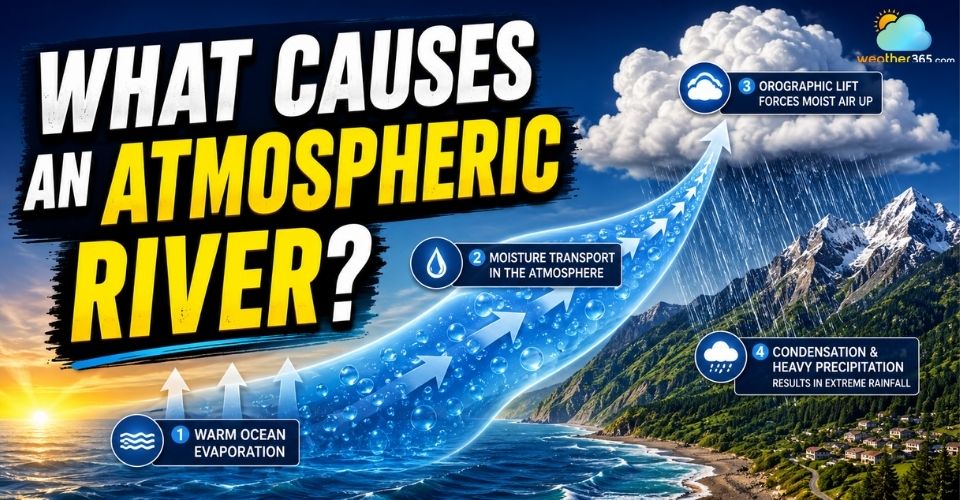
What Causes An Atmospheric River? A Full Explanation
70
0
4.9
03/09/2026

0 Comment
Leave a comment
Your email address will not be published. Required fields are marked *