




What Is Under Antarctica Ice? Hidden World Beneath the Surface


What is under Antarctica ice? Beneath the frozen surface lies a hidden world shaped by millions of years of glacial history, including mountains, lakes, volcanoes, and ancient ecosystems. Antarctica is not just ice; it is a dynamic continent with a complex geological and biological history still being uncovered.
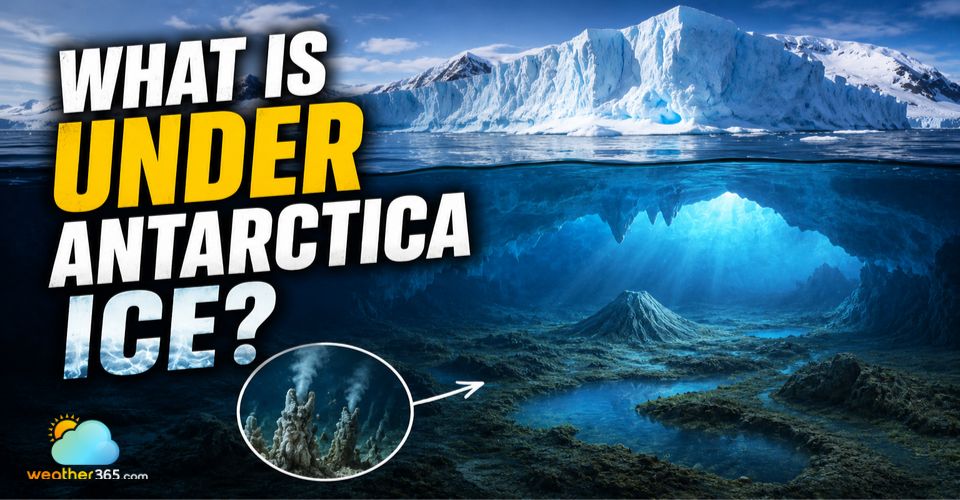
Explore the hidden world beneath the surface in Antarctica
Antarctica’s Glacial History
Antarctica’s icy landscape is relatively young in geological terms. Around 600 million years ago, Antarctica was part of the supercontinent Gondwana, which also included Africa, South America, India, Australia, and Madagascar.
During this period, fossil evidence shows Antarctica had a much warmer climate, supporting forests, vegetation, and even dinosaur ecosystems—far from the frozen desert we know today.
As Gondwana began to break apart around 180 million years ago, Antarctica slowly drifted south due to tectonic plate movement. This long migration toward the South Pole, combined with global cooling trends, gradually transformed its climate.
By the end of the Eocene epoch, around 34–35 million years ago, a major shift occurred: atmospheric CO₂ levels dropped, ocean circulation changed, and permanent ice sheets began to form.
Early glaciation started in mountainous regions before expanding into large, interconnected ice domes and glaciers. Over time, these ice masses merged into the vast Antarctic Ice Sheet, now holding about 70% of Earth’s freshwater.
Today, Antarctica stands as the coldest continent on Earth, shaped by millions of years of tectonic drift and long-term climate evolution.
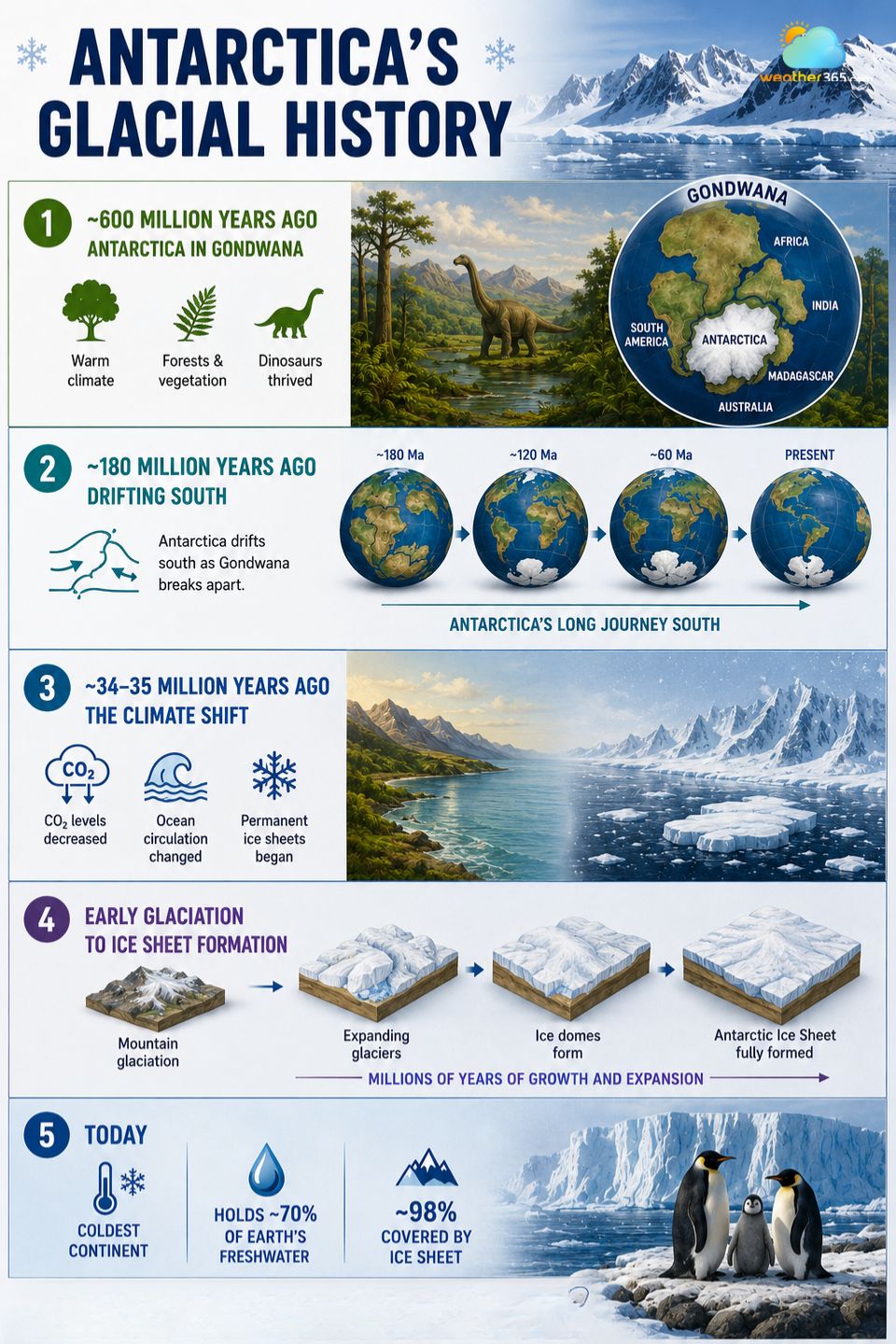
Explore Antarctica’s glacial history
What is under Antarctica ice?
Antarctica hides one of the most complex and mysterious landscapes on Earth beneath its massive ice sheet.
This frozen continent contains mountain ranges, ancient valleys, liquid-water systems, and even evidence of past ecosystems buried beneath up to 4.8 km of ice.
1. Mountain ranges and hidden terrain
Beneath Antarctica’s ice lies a dramatic and largely unseen landscape of mountain ranges, valleys, and ancient terrain.
One of the most remarkable features is the Gamburtsev Mountain Range, completely buried under ice and comparable in size to the European Alps.
These mountains are believed to be over 500 million years old, formed during ancient continental collisions.
Radar mapping has also revealed deep valleys, ridges, and sediment-filled basins that shape how the Antarctic Ice Sheet flows.
Some areas sit thousands of meters below sea level, creating natural “ice traps” that influence glacier movement.
This hidden topography plays a crucial role in controlling ice stability and contributes to how Antarctica responds to climate change.
While subzero temperatures here remain extreme year-round, you can see how North American sub-arctic regions compare by checking the current Anchorage forecast.
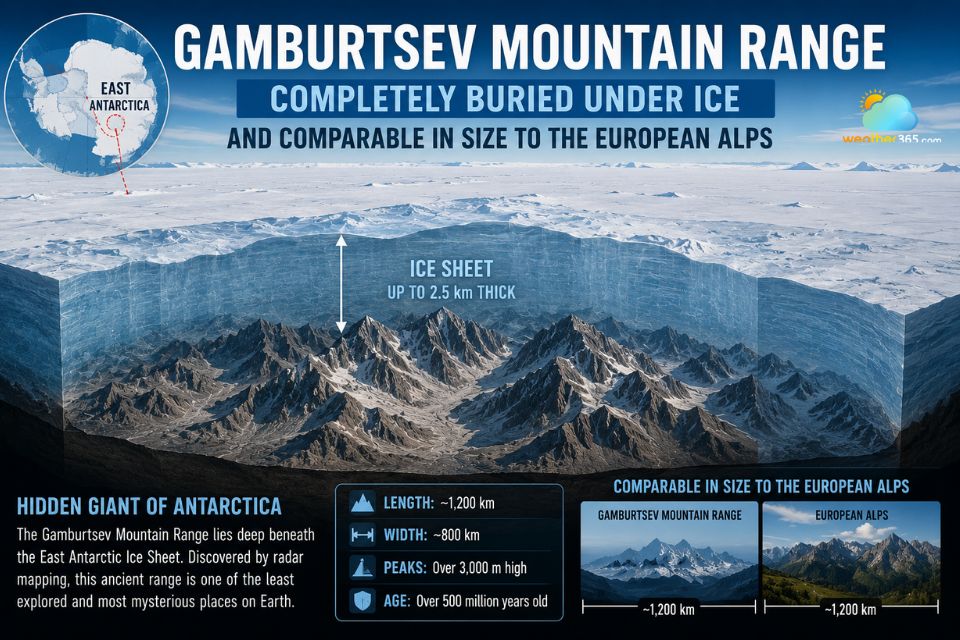
Hidden giant mountain under Antarctica ice
2. Subglacial lakes and rivers
Beneath Antarctica’s ice sheet lies a vast hidden network of liquid water, including more than 400 confirmed subglacial lakes and interconnected river systems.
The most famous is Lake Vostok, buried under about 4 km of ice and isolated for millions of years, preserving unique chemical and microbial conditions.
Scientists estimate that Antarctica may contain up to 10,000 interconnected subglacial lakes, forming a vast hidden drainage system beneath the ice.
These lakes are linked by slow-moving subglacial rivers that transport water across the bedrock.
These hidden rivers are part of a much larger system of moving water that extends toward the Southern Ocean, where currents and swirling water can create powerful ocean eddies.
Learn more about what causes a whirlpool in the ocean and how these swirling currents form.
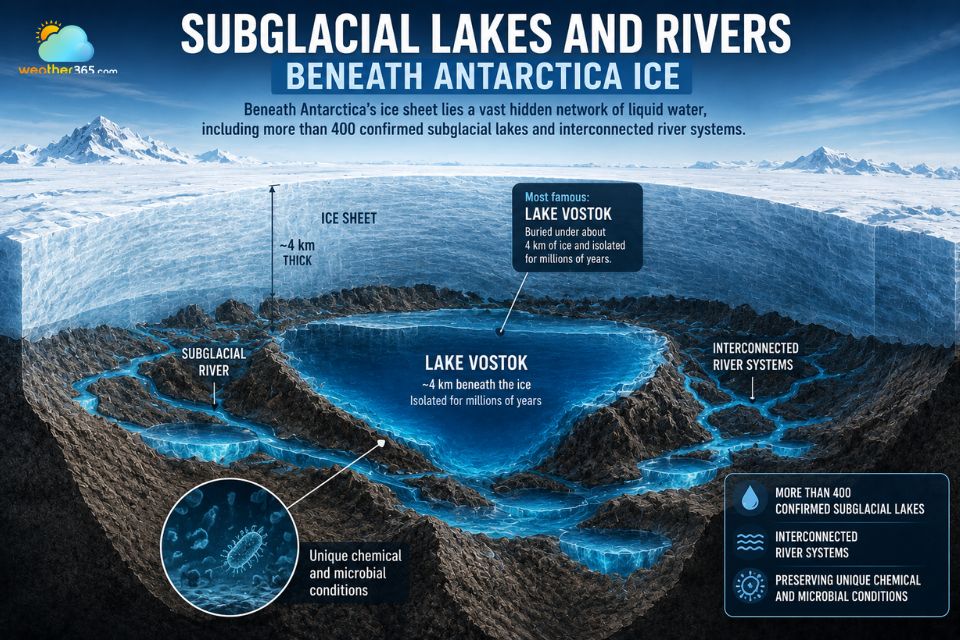
Subglacial lakes and rivers beneath Antarctica ice
This hidden hydrological network is maintained by geothermal heat and immense pressure from overlying ice.
It plays a crucial role in shaping glacier movement by lubricating the ice base, thereby accelerating ice flow toward the ocean.
As a result, these unseen water systems are important for understanding ice sheet stability and future sea level rise.
3. Ancient sediment and fossils
Beneath the ice, researchers have discovered sediment layers and fossils that reveal Antarctica once had forests, rivers, and warm ecosystems.
As subglacial rivers and melting ice discharge enormous amounts of mud, sand, and gravel into the surrounding Southern Ocean, they trigger a fascinating geological phenomenon known as turbidity currents.
One of the most surprising discoveries is the presence of microbial life in subglacial lakes and sediments.
These microorganisms survive without sunlight, relying on chemical energy in isolated, oxygen-poor environments.
Their existence helps scientists understand potential life in extreme environments on other planets.
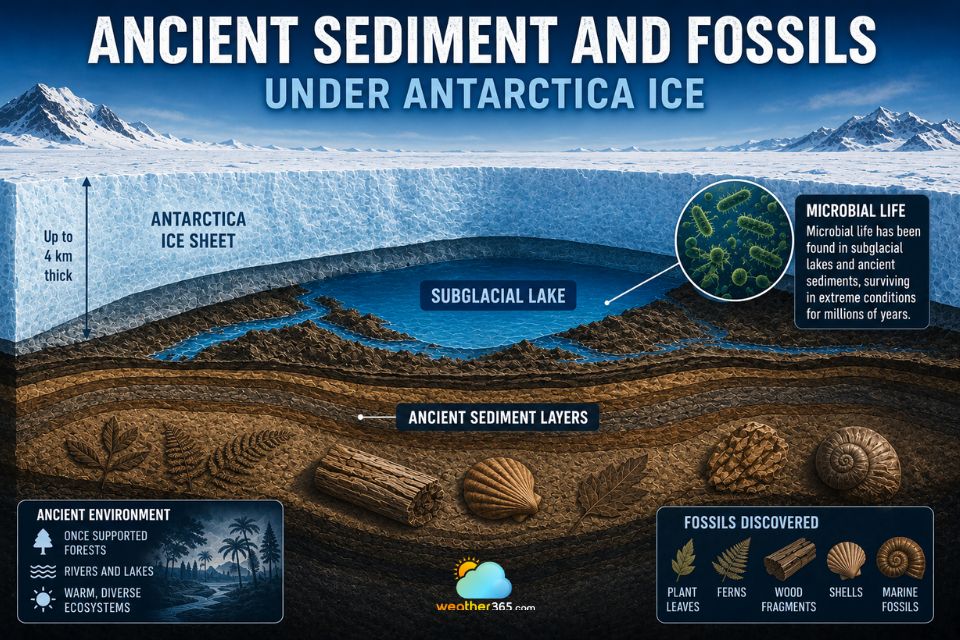
Ancient sediment and fossils under Antarctica
4. Bedrock and tectonic structures
Antarctica’s bedrock reveals a highly complex geological framework shaped by ancient supercontinents and ongoing tectonic processes.
The continent is split into East Antarctica and West Antarctica, separated by the Transantarctic Mountains, one of the longest mountain chains on Earth, extending over 3,500 km.
East Antarctica is a stable cratonic shield composed of extremely old Precambrian rocks, some exceeding 1–3 billion years in age.
This region was once part of Gondwana and retains a thick, elevated crust that supports a relatively stable and colder ice sheet.
In contrast, West Antarctica is geologically younger and structurally fragmented. Much of its bedrock lies below sea level, forming deep sediment-filled basins.
It is part of an active rift system where the Earth’s crust is slowly stretching apart, similar to early stages of continental breakup.
This tectonic instability contributes to volcanic activity and geothermal heat flow, both of which influence ice sheet movement and melting patterns across the region.
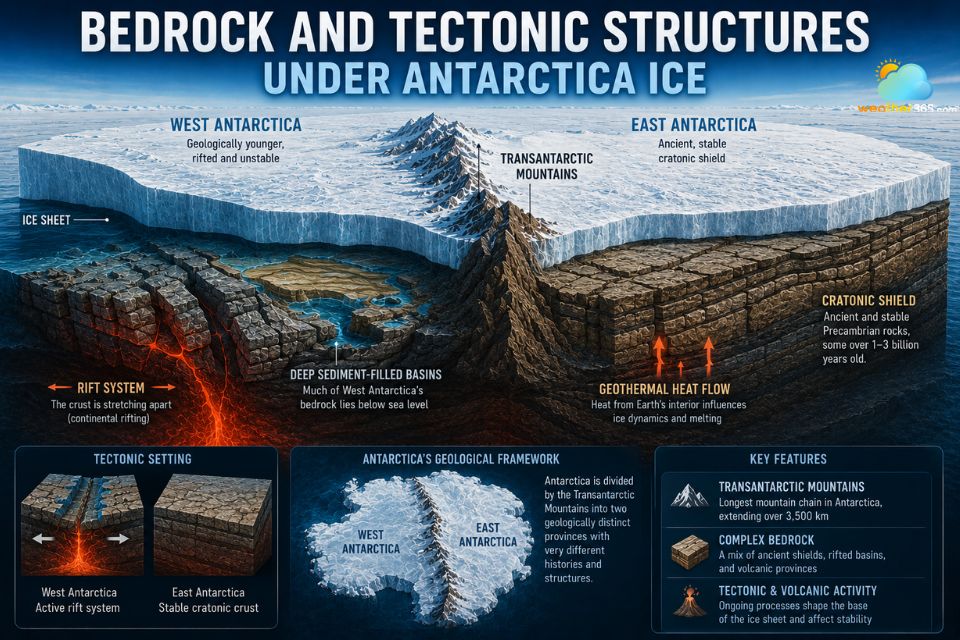
Antarctica’s bedrock reveals a highly complex geological framework
How Scientists Discover What Is Under the Ice
Understanding what is under Antarctica ice requires advanced scientific tools that can “see” through up to 4.8 km of ice.
Because direct observation is impossible across most of the continent, researchers rely on a combination of remote sensing, geophysical surveys, and direct drilling to map the hidden landscape beneath the Antarctic Ice Sheet.
Radar mapping (ice-penetrating radar): Sends signals through ice to detect mountains, lakes, and bedrock. It has revealed features like the hidden Gamburtsev Mountains and hundreds of subglacial lakes.
Ice-penetrating satellites: Satellites such as CryoSat-2 measure ice thickness and surface changes, helping map the shape of the land below.
Seismic surveys: Use sound waves from ice quakes or controlled sources to map rock layers, valleys, and tectonic structures.
Deep ice drilling: Projects like the Vostok Ice Core drill nearly 4 km deep, providing direct samples and clues about subglacial environments.
Together, these tools allow scientists to build detailed maps of Antarctica’s hidden landscape, revealing mountains, lakes, and ancient geological structures beneath the ice.
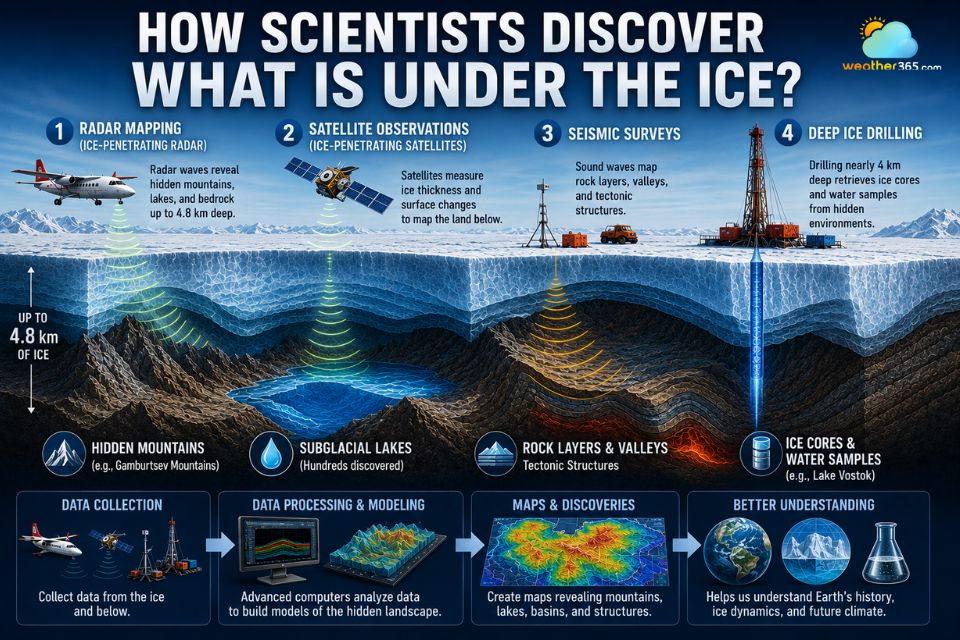
Ways scientists discover hidden world beneath Antarctica ice
Surprising Facts About Antarctica’s Hidden World
When exploring what is under Antarctica ice, scientists reveal a world that is far more complex than frozen land.
Antarctica is the highest, driest, coldest, and windiest continent on Earth, covering about 14.2 million km² (5.5 million sq miles).
It holds the largest ice store on the planet—about 90% of Earth’s ice and 70% of its fresh water, with ice thickness reaching up to 4,776 meters.
While Antarctica claims the record for global extremes, you can look up temperature trends in Chicago today to see how severe winter wind chills impact major US cities.
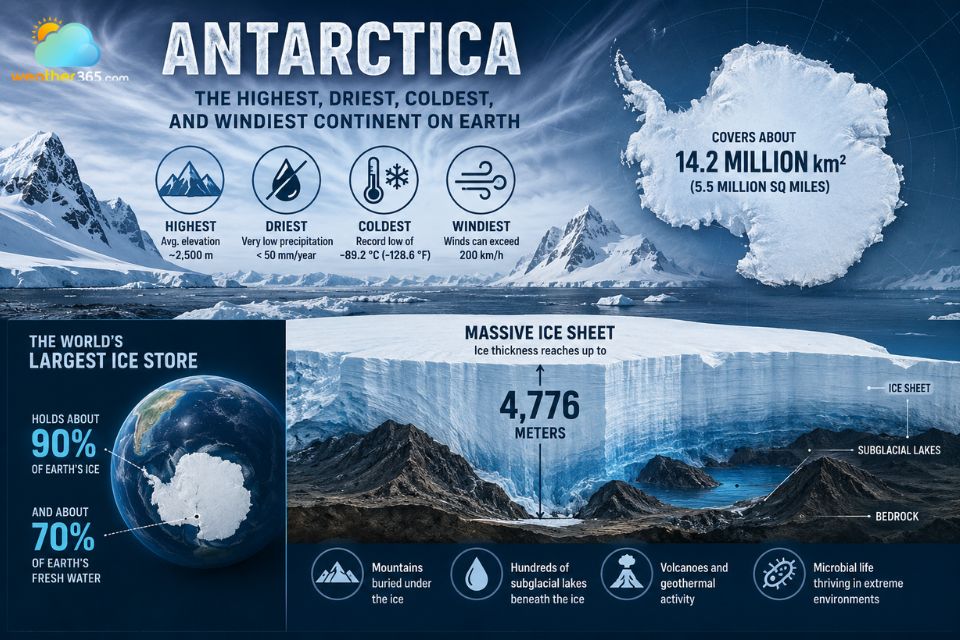
Antarctica is the highest, driest, coldest, and windiest continent on Earth
Far beneath this massive ice sheet lies an unexpected hidden world:
A hidden ecosystem in subsurface rivers: Liquid water channels beneath the ice may support microbial ecosystems, flowing between subglacial lakes and sediments.
Ancient subglacial seawater aquifers: Trapped seawater from millions of years ago remains preserved beneath the ice, isolated from the modern ocean.
A vast volcanic province: West Antarctica contains widespread volcanic activity that influences ice melting from below.
Hidden marine life systems: Beneath ice shelves like the Ross Sea region, scientists have discovered thriving ecosystems including fish nurseries and unusual organisms such as burrowing anemones.
Fossil and ancient life evidence: Plant fossils like Glossopteris show Antarctica once supported forests and connected ecosystems within Gondwana.
These discoveries show that what is under Antarctica ice is not just rock and ice, but a dynamic system of water, heat, biology, and ancient history still being uncovered today.
The bottom line
Antarctica is far more than a frozen continent—it hides mountains, lakes, volcanoes, and ancient ecosystems beneath its massive ice sheet. From its glacial history to modern scientific discoveries, each layer reveals a complex hidden world shaped over millions of years. All of these findings help answer the question: what is under Antarctica ice?
Frequently Asked Questions (FAQs)
Related post
What is the pineapple express? Distinguish pineapple express vs atmospheric river
 381
381
 0
0
 4.9
4.9
 03/09/2026
What causes a whirlpool in the ocean? Causes, Dangers and Survival Tips
165
0
4.6
03/09/2026
What Causes An Atmospheric River? A Full Explanation
72
0
4.9
03/09/2026

0 Comment
Leave a comment
Your email address will not be published. Required fields are marked *