




Super El Nino 2026: NOAA Warns of Historic Record-Breaking Winter Impact


Super El Nino 2026 is raising concerns as Pacific Ocean temperatures climb to record levels and forecasts point to a potentially historic event. NOAA now sees an 83% chance of the strongest El Nino since 1950. Discover how this powerful climate pattern could reshape winter rain, snowfall and temperatures across the US and beyond.
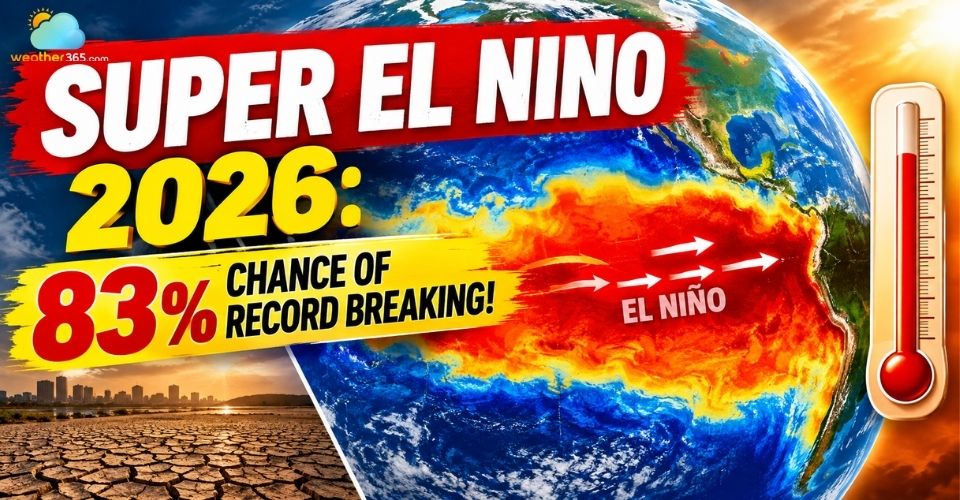
Super El Nino 2026
Key takeaways
NOAA now estimates an 83% chance that the super el Nino 2026 event will become the strongest on record since 1950.
98% likelihood that El Nino conditions will persist through early spring.
Super El Nino 2026 Builds Toward a Potential Historic Peak
The tropical Pacific continues to warm, increasing the likelihood that the ongoing El Nino event could surpass previous records.
Early forecast for super El Nino 2026
NOAA's October 8 outlook gives an 83% chance of a strong to very strong event through January–March 2027, with the highest intensity potentially occurring near the end of 2026.
The agency also reported sea surface temperature anomalies exceeding 4°C above average in parts of the eastern equatorial Pacific.
However, these readings do not alone confirm a record-breaking event. Scientists assess the phenomenon using standardized indices and observations collected over several months.
El Nino develops when waters across the central and eastern tropical Pacific become warmer than normal.
This disrupts atmospheric circulation and shifts rainfall patterns across different regions.
The current event is unfolding alongside long-term global warming, which could further increase temperatures as the ocean releases heat into the atmosphere.
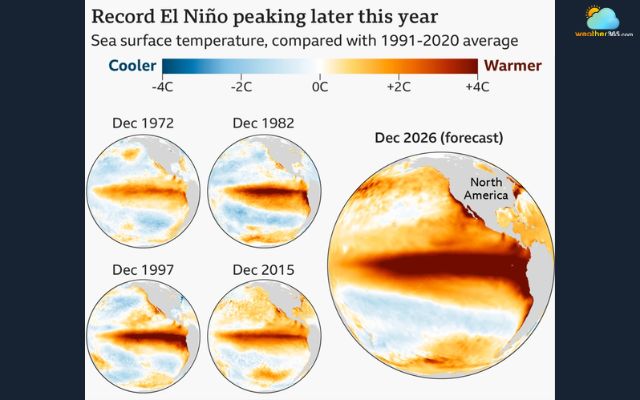
Super El Nino 2026 creates news ocean temperature records (Photo: ERA5, C3S/ECMWF)
How Super El Nino 2026 Could Reshape US Winter Weather
The strength of El Nino could influence the distribution of rain, snow and warmer conditions across the United States during winter 2026–2027.
However, the effects will vary by location and are not guaranteed.
Weather factor | Potential impacts |
Rain and storm risks | Parts of the southern US and California could see more winter storms and heavy precipitation, increasing the risk of flash floods and landslides in vulnerable areas. |
Snowfall patterns | Some western mountain ranges and parts of the southern US could receive more snow when temperatures are sufficiently cold. Warmer conditions may limit snowfall in certain northern areas. |
Temperature contrasts | Parts of the northern US could experience milder-than-average conditions, while some southern areas may see cooler, wetter periods. Sudden cold spells and major winter storms remain possible. |
Check rainfall forecasts and precipitation indicators in California to monitor changing conditions.
Global Impacts of Super El Nino 2026
The effects of a strong El Nino can extend well beyond North America.
Parts of Southeast Asia and southern Africa may face increased drought risks, while some areas of East Africa and South America could experience heavier rainfall.
These shifts can affect water supplies, agriculture and communities already exposed to extreme weather.
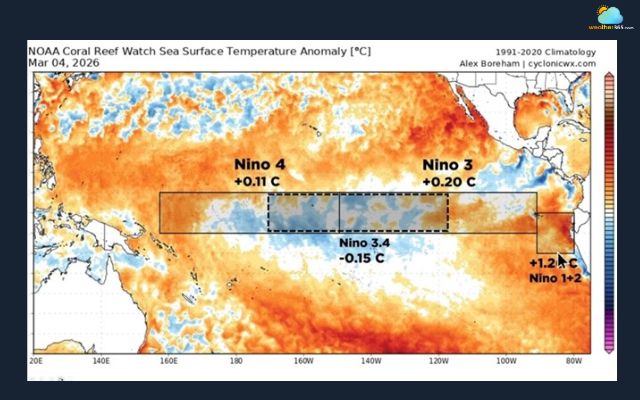
Super El Nino 2026 could bring drought risks to Southeast Asia
Global temperatures are another concern.
El Nino can temporarily raise the planet's average temperature, adding to the warming caused by greenhouse gas emissions.
This combination could increase the likelihood of exceptionally hot conditions in 2026 and 2027, although annual temperature records cannot be predicted with certainty.
El Nino can also influence tropical cyclone activity, generally suppressing Atlantic hurricane development while favoring activity in parts of the Pacific.
Other atmospheric and ocean conditions remain important, so the pattern cannot predict individual storms.
NOAA and international climate agencies will continue monitoring Pacific temperatures and updating seasonal forecasts.
As the event develops, residents should follow local weather alerts and prepare for the specific risks facing their communities rather than assume every region will experience the same impacts.
Stay tuned to Weather365 for the latest news and updates on Super El Nino 2026 and other severe weather phenomena.
References
FOX Weather
BBC
Related post
What Is The Highest Recorded Temperature In The World? Shocking Event Revealed
 449
449
 8
8
 4.8
4.8
 18/08/2026
What Is Stratospheric Warming? The Hidden Force Behind Extreme Cold
251
8
4.9
18/08/2026

8 Comment
Knox Hughes
Could a strong El Niño actually mean less snow in some parts of the US?
weather365
Yes. Historical El Niño winters have often been associated with less snowfall across parts of the Great Lakes, northern Rockies, Pacific Northwest and Alaska, although individual events can vary.
Kyrie Meyer
Why does warming in the Pacific affect weather so far away?
weather365
The warmer ocean changes atmospheric circulation and can shift the Pacific jet stream, which then affects temperature, rainfall and storm tracks in distant regions.
Trevor Hill
Does El Niño always cause the same weather pattern every time?
weather365
Not exactly. There are some typical patterns, but the strength and location of impacts can vary between events, and other climate patterns also play a role.
Carter Anderson
What makes a “super El Niño” different from a regular El Niño?
weather365
It refers to an unusually strong El Niño, with much warmer-than-normal sea surface temperatures in the central and eastern equatorial Pacific.
Leave a comment
Your email address will not be published. Required fields are marked *