




What Is 0 Degrees Celsius In Fahrenheit? An Accurate Answer


What is 0 degrees Celsius in Fahrenheit, and why does this tiny detail trip people up so often? One moment you’re checking the weather, the next you’re confused by unfamiliar numbers. Don’t worry, now you’ll uncover the exact answer and finally make sense of temperature conversions for good. Diving in!
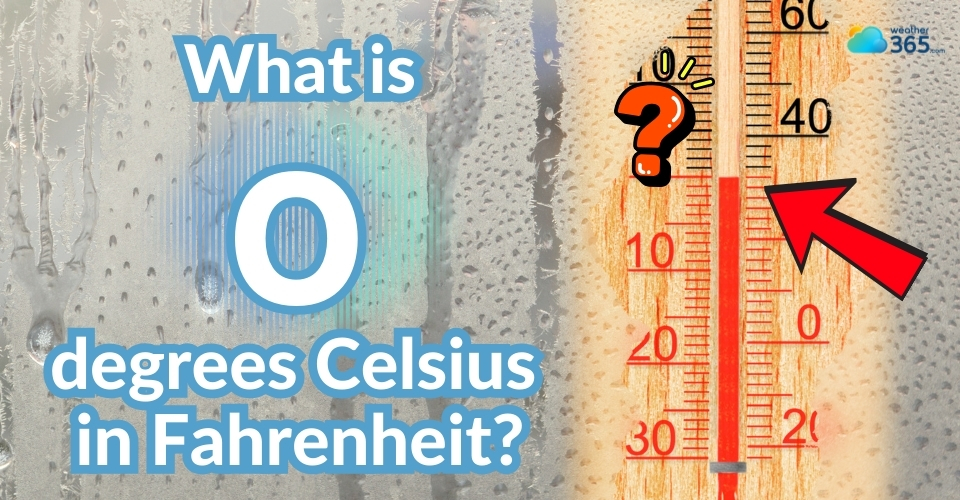
What is 0 degrees Celsius in Fahrenheit?
What Is 0 Degrees Celsius In Fahrenheit?
If you’ve ever checked the weather or read a science article, you’ve probably wondered: What is 0 degrees Celsius in Fahrenheit? The answer is simple and exact:
0°C = 32°F
On the Celsius scale, 0°C is defined as the freezing point of water under normal atmospheric conditions. That means when the temperature drops to 0°C, water begins to turn into ice.
For instance, zero degrees Celsius equals 32 degrees Fahrenheit, indicating freezing conditions you might see in a Michigan freezing weather forecast.
So even though the numbers look different, they are describing the exact same moment in nature.
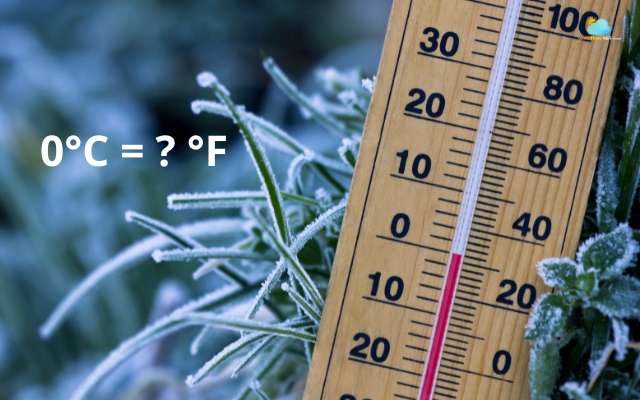
What is 0°C in Fahrenheit?
What Are Celsius and Fahrenheit in Temperature?
Celsius and Fahrenheit are the two main scales used to measure temperature.
Before looking at where these scales come from, it helps to ask What is air temperature actually measuring.
In short, it’s a measurement of how hot or cold the air is, which both Celsius and Fahrenheit quantify in their own ways.
Let’s see how they were created!
The Celsius
The Celsius scale (°C) is part of the metric system and is used in most countries around the world today.
It was developed in the 18th century by Swedish astronomer Anders Celsius.
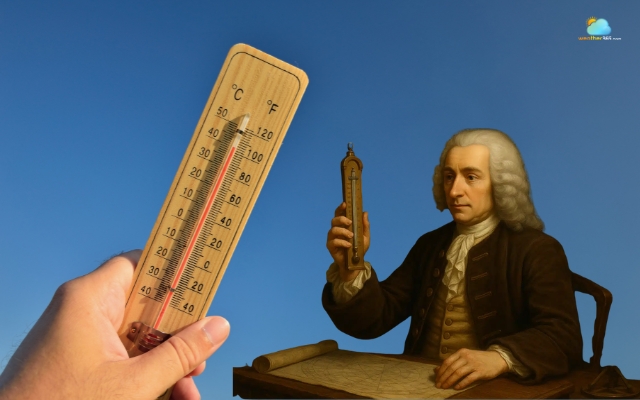
The Celsius system was developed by Anders Celsius
Interestingly, the original version of the scale was actually reversed,
0 represented the boiling point of water
100 represented freezing
After his death, other scientists adjusted it to the version we use today, where 0°C is freezing and 100°C is boiling. This change made the scale far more intuitive and practical.
What makes Celsius so widely adopted is its logical structure. It’s based on clear, observable physical phenomena: how water behaves under normal conditions.
That’s why it’s especially useful in science, education, and everyday weather reporting.
In daily life, Celsius is easy to interpret. Temperatures around 0°C feel cold and may involve ice or frost. Around 20°C is generally comfortable, and above 30°C starts to feel hot.
Because of its simplicity and alignment with the metric system, Celsius became the global standard in most parts of the world.
The Fahrenheit
The Fahrenheit scale (°F) was introduced earlier, in the early 18th century, by physicist Daniel Gabriel Fahrenheit.
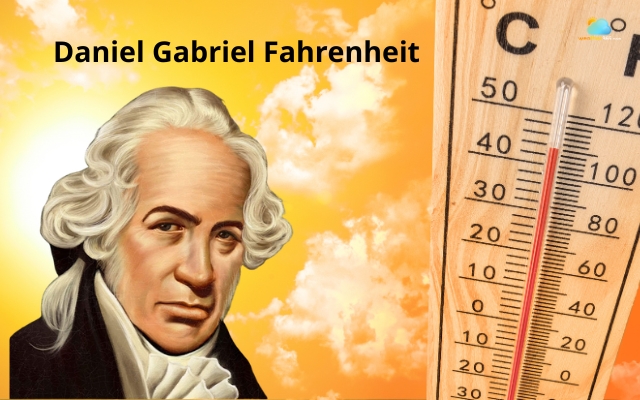
The Fahrenheit degree was named after Daniel Gabriel Fahrenheit
His goal was to create a more precise temperature scale using fixed reference points available at the time.
He based his system on a mixture of ice, water, and salt for the lower end, and human body temperature as another reference point.
Over time, the scale was refined, and today we define key points as 32°F for the freezing of water and 212°F for boiling.
Compared to Celsius, Fahrenheit divides temperature into smaller increments between these key points. This is why it’s often considered more detailed for describing everyday weather.
For example, small changes in temperature, like from 70°F to 75°F, can reflect noticeable differences in how it feels.
Even though most countries transitioned to Celsius with the rise of the metric system, Fahrenheit is still widely used in the United States.
Cultural habits, infrastructure, and familiarity have kept it in place, especially in weather forecasts and daily life.
So why do both scales still exist?
It mostly comes down to history and regional habits.
Countries that adopted the metric system moved to Celsius because it’s easier to standardize, while others, like the US, continued using Fahrenheit in daily life.
From a practical perspective, Celsius is often easier to understand at a glance: 0°C feels cold, 20°C feels comfortable, and 30°C feels hot.
Fahrenheit, however, gives more detailed distinctions in weather, like the difference between 68°F and 77°F, which can feel quite noticeable.
How to Convert Celsius to Fahrenheit?
To convert Celsius to Fahrenheit, multiply the Celsius temperature by 1.8 and add 32.
Understanding how to measure air temperature across different regions often comes down to mastering unit conversion.
Here’s the standard formula used worldwide:
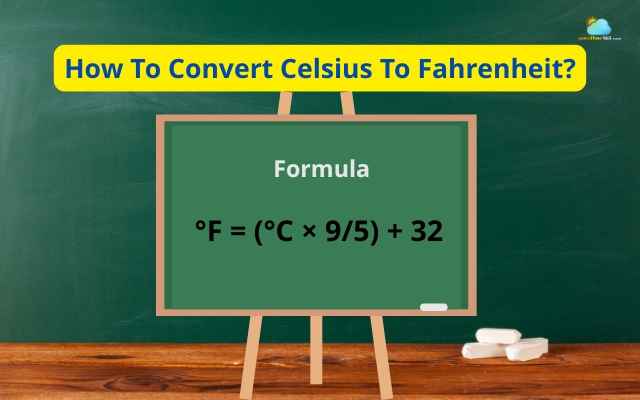
Formula to convert Celsius to Fahrenheit
Let’s apply it to a real example!
Start with 0°C. When you plug it into the formula, we have:
°F = (0 × 9/5) + 32 = 32°F
This matches what we already know: the freezing point of water in Fahrenheit. That’s a good sign that the formula works reliably.
Now try a few everyday temperatures.
If it’s 20°C, which is a comfortable room temperature, the formula converts it to 68°F. If it’s 30°C, a warm day, you get
°F = (20 × 9/5) + 32 = 86°F
After doing this a couple of times, you’ll start to see patterns and won’t always need to calculate everything from scratch.
Tips:
If remembering the formula feels tricky, a helpful way to think about it is: “scale, then shift.”
First, you adjust the size of the number (multiply by 9/5), then you shift it upward by adding 32.
That final +32 is what aligns the freezing points of the two systems.
Quick Reference Conversion
Do you not like math things? Just remember the quick reference conversion.
Instead of applying the formula each time, you can rely on familiar temperature pairs to estimate quickly and confidently.
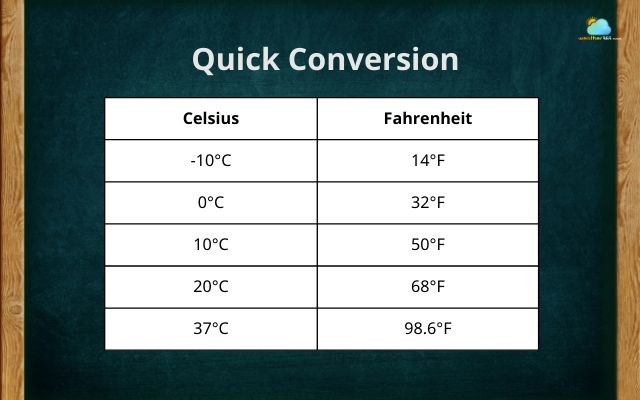
Common temperature pairs
Where To Check The Weather In Fahrenheit?
If you’re used to Celsius but need to read temperatures in Fahrenheit, the good news is - it’s easier than ever.
Today, most weather platforms allow you to switch between units instantly, so you don’t have to manually convert every time.
One of the quickest ways is simply using your phone. Built-in weather apps on both iOS and Android let you toggle between °C and °F in the settings.
With just one tap, all temperatures update automatically, making it convenient when you’re following international forecasts or traveling.
You can also check the weather directly through a search engine. Typing something like “weather in Fahrenheit today” will often display results in your preferred unit.
Many popular weather websites, such as Weather365, also give you the option to switch units at the top of the page.
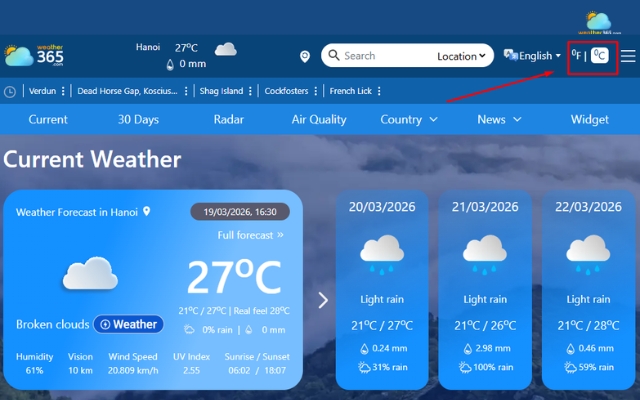
Easily convert the degree unit with Weather365
If you’re using a computer, tools like Windows weather panels or browser extensions provide similar flexibility.
These are especially useful if you check the weather regularly while working.
Final Thought
So, what is 0 degrees Celsius in Fahrenheit? It’s 32°F, a key temperature marking the freezing point of water. Understanding this conversion, and the formula behind it, makes it easier to interpret weather, follow recipes, and navigate between measurement systems in daily life.
Frequently Asked Questions (FAQs)
Related post
What is the ideal temperature for a house in winter? Tips to stay warm
 1569
1569
 8
8
 4.8
4.8
 24/07/2026
What's The Temperature For Tomorrow? A Simple Guide to Tomorrow’s Forecast
565
8
4.7
18/08/2026

8 Comment
Aaron King
I knew 0°C was 32°F, but I never remembered the conversion formula. This makes it much easier to keep straight.
Charlie Thomas
Zero degrees Celsius feels like such an important reference point, especially when checking whether conditions may be close to freezing.
Erick Hoffman
Is 32°F always exactly 0°C?
weather365
Yes. On the standard temperature scales, 32°F corresponds exactly to 0°C.
Carter Taylor
Why is 0°C important when checking the weather?
weather365
It’s the freezing point of water, so temperatures around 0°C can be important for frost, ice, and snow conditions.
Dominic Ruiz
What is 0°C in Fahrenheit?
weather365
0°C is equal to 32°F, which is the freezing point of water under standard conditions.
Leave a comment
Your email address will not be published. Required fields are marked *