




What Is Acid Rain? Definition, Causes and Effects Explained


What is acid rain, and why has it remained a global environmental concern for decades? Acid rain forms when air pollution mixes with moisture in the atmosphere, creating acidic precipitation that harms forests, lakes, buildings, and more. In this guide, you’ll discover its causes, effects, real-world examples, and practical prevention solutions.
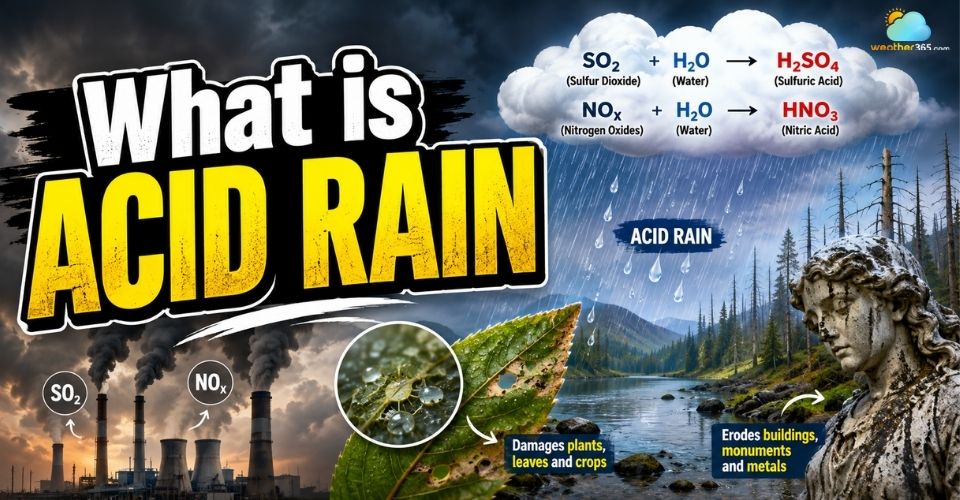
What is acid rain?
What is acid rain?
Acid rain is a type of precipitation with unusually high levels of acidity caused by air pollution.
According to the U.S. Environmental Protection Agency (EPA), it forms when sulfur dioxide (SO₂) and nitrogen oxides (NOₓ) react with water, oxygen, and other chemicals in the atmosphere.
Acid rain happens when polluted air combines with clouds and falls back to Earth as rain, snow, fog, or even dry particles.
When was the term acid rain first used?
The term “acid rain” was first introduced in 1852 by Scottish chemist Robert Angus Smith.
While studying industrial pollution in England, he noticed that rainwater near factories was much more acidic than normal rainfall.
His observations helped scientists understand the connection between industrial emissions and environmental damage.
How does acid rain form?
Acid rain usually appears in two main forms: Wet deposition and Dry deposition.
Wet deposition
Wet deposition refers to acidic rain, snow, sleet, or fog falling directly from the atmosphere.
This is the type most people imagine when they hear the phrase “acid rain.”
These types of precipitation can gradually damage ecosystems and surfaces over time when reaching forests, lakes, or buildings
Dry deposition
Dry deposition happens when acidic pollutants in the air settle directly onto surfaces like soil, trees, and buildings without falling as rain or snow.
These pollutants can stick to trees, cars, buildings, and soil until rain eventually washes them away.
Although less visible, dry deposition can still significantly affect the environment.
One of the most famous examples of acid rain damage occurred in Europe and North America during the 20th century.
Industrial emissions from coal-burning power plants caused severe acidification in lakes and forests.
Also, many lakes in Scandinavia and eastern Canada experienced massive fish population declines because acidic water disrupted aquatic ecosystems.
Historic marble buildings and statues also showed visible corrosion caused by acidic precipitation.
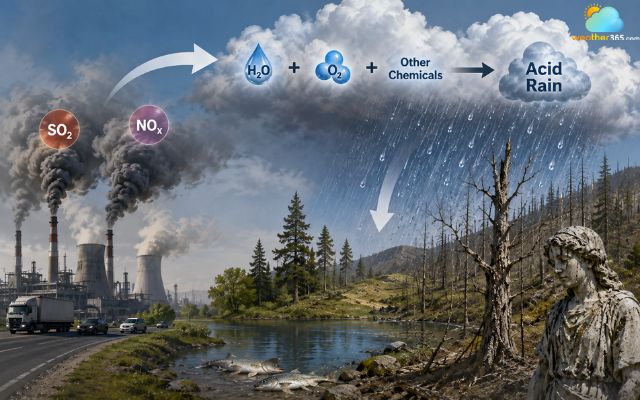
Acid rain is caused by air pollution
What causes acid rain?
Acid rain is mainly caused by sulfur dioxide (SO₂) and nitrogen oxides (NOₓ) released into the atmosphere through activities such as burning fossil fuels.
These pollutants mainly come from human activities involving fossil fuel combustion.
Once released into the air, these gases react with oxygen and water vapor to form sulfuric acid and nitric acid.
Winds can carry the pollutants hundreds or even thousands of miles before they fall back to Earth as acid rain.
Major sources of acid rain pollution
Power plants
Coal-burning power plants are among the largest contributors to sulfur dioxide emissions.
When coal is burned for energy production, large quantities of harmful pollutants are released into the air.
Vehicles and transportation
Cars, trucks, buses, ships, and airplanes produce nitrogen oxides through fuel combustion.
Heavy traffic in urban areas can worsen acid rain formation.
- Industrial factories
Manufacturing facilities, refineries, and metal-processing industries also emit sulfur dioxide and nitrogen oxides during production processes.
Natural causes
Although human activity is the primary driver, some natural events can also contribute to acid rain formation.
Volcanic eruptions, wildfires, and lightning release sulfur and nitrogen compounds into the atmosphere naturally.
However, these natural sources are usually much smaller compared to industrial emissions.
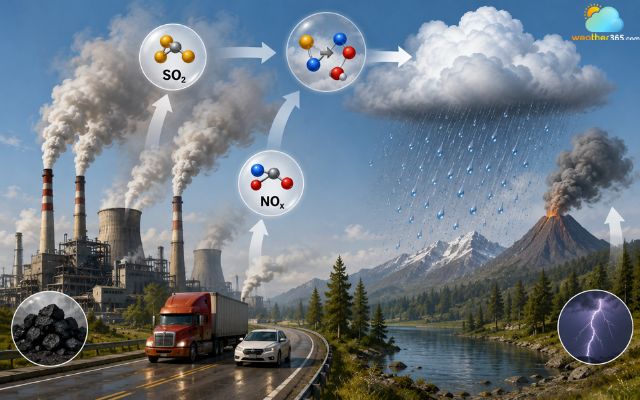
The release of sulfur dioxide causes acid rain
Effects of acid rain
Acid rain can seriously affect ecosystems, infrastructure, and even human well-being.
While the damage may not always appear immediately, long-term exposure creates widespread environmental and economic problems.
The continuous impact of accumulated precipitation with high acidity disrupts the natural balance of ecosystems by changing soil chemistry and water acidity.
Environmental impact
Acid rain disrupts the natural balance of ecosystems by changing soil chemistry and water acidity. This weakens plants, damages habitats, and threatens biodiversity.
Aquatic environments
Acid rain makes lakes, rivers, and streams more acidic. Many fish species, amphibians, and aquatic insects cannot survive in low-pH water.
It also causes aluminum to leach from soil into nearby water bodies.
Aluminum can be harmful to aquatic organisms because it affects fish gills and reduces their ability to absorb oxygen properly.
In heavily affected lakes, fish populations may disappear completely.
Forests
Forests are especially vulnerable to acid rain because trees depend on balanced soil nutrients for healthy growth.
Acid rain removes key minerals like calcium and magnesium from the soil, reducing its fertility and affecting plant health.
At the same time, it increases aluminum absorption by tree roots, making it harder for trees to absorb water.
As a result, trees become weaker, more vulnerable to disease, and less resistant to extreme weather conditions.
Infrastructure and buildings
Acid rain also damages human-made structures. Acids react with minerals in limestone, marble, and metal surfaces, accelerating corrosion and erosion.
Historic monuments, bridges, statues, and old buildings often show visible signs of deterioration after years of acid rain exposure.
Human health impacts
Acid rain itself is generally not dangerous to touch because it is usually only slightly acidic.
However, the pollutants responsible for acid rain can harm human health.
Sulfur dioxide and nitrogen oxides contribute to respiratory issues such as asthma attacks, bronchitis, coughing, wheezing, and shortness of breath, particularly in people with existing respiratory conditions.
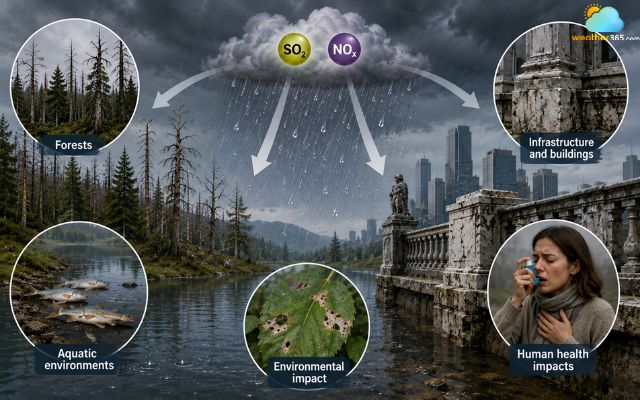
Consequences of acid rain
How to measure acid rain?
Scientists measure acid rain primarily using the pH scale.
The pH scale ranges from 0 to 14 and shows how acidic or alkaline a substance is (typically between pH 4.2 and 4.4)
Normal rainwater is naturally slightly acidic, usually with a pH around 5.6 due to dissolved carbon dioxide. Rainfall with a pH value below 5.6 is typically classified as acid rain.
Measurement methods
Scientists collect rainwater samples using monitoring stations and rain gauges. These samples are analyzed to determine acidity levels and pollutant concentrations.
For instance, industrial emissions reacting with atmospheric moisture can lower rainwater pH, as monitored on Ohio air quality and precipitation.
Researchers also track sulfur dioxide and nitrogen oxide emissions to understand pollution patterns.
Geographic distribution
Acid rain is most common in industrialized and heavily populated regions where fossil fuel use is high.
In the past, acid rain heavily affected regions such as the northeastern United States, eastern Canada, and several parts of Europe, China, and India have experienced significant acid rain problems.
Wind patterns can transport pollutants across borders, meaning one country’s emissions may affect another region’s environment.
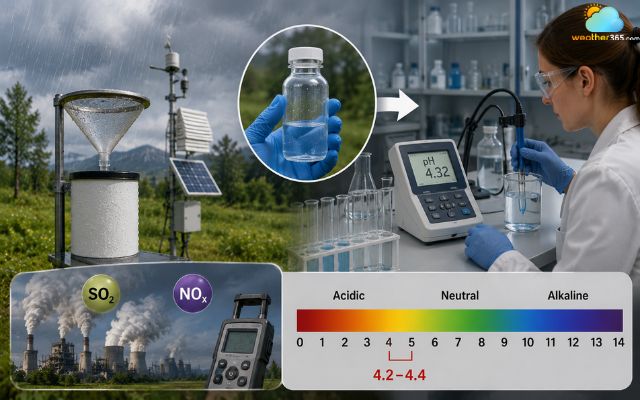
Scientists use the pH scale to measure acid rain
How to prevent acid rain?
Reducing acid rain requires lowering sulfur dioxide and nitrogen oxide emissions.
Governments, industries, and individuals all play an extremely important role in acid rain prevention.
Use cleaner energy sources
Switching from coal and oil to renewable energy sources like solar, wind, and hydroelectric power can significantly reduce pollution.
Improve industrial technology
Factories and power plants can install scrubbers and emission-control systems to remove harmful pollutants before they enter the atmosphere.
Reduce vehicle emissions
Using public transportation, electric vehicles, and fuel-efficient cars helps lower nitrogen oxide emissions.
Support environmental regulations
Many countries have introduced clean air laws that successfully reduced acid rain pollution. Policies limiting industrial emissions continue to play a major role in environmental protection.
Save energy at home
Simple actions like turning off unused electronics, using energy-efficient appliances, and reducing electricity consumption can help decrease fossil fuel demand.

Reducing acid rain requires lower sulfur dioxide emissions
Closing thoughts
What is acid rain, and why should we care about it today? Although pollution controls have reduced its impact in many regions, acid rain still threatens forests, lakes, buildings, and air quality worldwide. By understanding its causes and prevention methods, we can all contribute to protecting ecosystems and creating a cleaner, healthier environment. Learn more about other severe weather phenomena to stay safe on the Weather365 blog!
Frequently Asked Questions (FAQs)
Related post
Accumulated Precipitation: Definition, Applications, and Measurement
 494
494
 8
8
 4.8
4.8
 10/08/2026
What is probability of precipitation? Explain 20-50-80% chance of rain
327
10
4.8
13/08/2026

Types of Precipitation: Definition, Examples, and Weather Impact
177
10
4.8
19/08/2026

8 Comment
Isla Watts
What surprised me is that acid rain isn’t necessarily something you can identify just by looking at the rain. The effects can be much more subtle and long-term.
Peyton Waters
It’s easy to think of rain as simply “clean water from the sky,” but atmospheric chemistry can make the story much more complicated.
Alexandria King
Can lakes and rivers be affected by acid rain?
weather365
Yes. Acid deposition can lower the pH of freshwater and affect aquatic organisms, especially in areas with soils and bedrock that have limited ability to neutralize acidity.
Catalina Johnson
Can acid rain affect forests even if the rain itself doesn’t look unusual?
weather365
Yes. Acid deposition can alter soil chemistry and remove important nutrients, potentially making ecosystems more vulnerable over time.
Alani Douglas
Which pollutants are mainly responsible for acid rain?
weather365
Sulfur dioxide and nitrogen oxides are the main pollutants involved. They can react in the atmosphere to form acids that return to the surface through precipitation.
Leave a comment
Your email address will not be published. Required fields are marked *