




What is probability of precipitation? Explain 20-50-80% chance of rain


Probability of precipitation is one of the most misunderstood weather forecast terms. Does a 50% chance of rain mean it will rain for half the day or across half the area? Discover what PoP really means, how it's calculated, and, and why these forecasts matter for daily life and businesses. Start now!
Probability of precipitation
- What is the probability of precipitation?
- How to calculate the chance of rain?
- Formula explained
- Important notes about the probability of precipitation
- Factors that affect the probability of precipitation
- What does a 20-50-80 chance of rain mean?
- What does a 20% chance of rain mean?
- What does a 50% chance of rain mean?
- What does an 80% chance of rain mean?
- Does 100% chance of rain mean rain all day?
- Practical business applications of probability of precipitation
What is the probability of precipitation?
The probability of precipitation (PoP) is the likelihood that measurable precipitation will fall at a specific location during a given forecast period.
In weather forecasts, precipitation can include rain, snow, sleet, or hail.
Meteorologists usually define measurable precipitation as at least 0.01 inches (or 0.25 mm) of rain or melted snow.
The percentage shown in weather apps or forecasts reflects the probability that this amount will occur at your location.
For example:
20% PoP = low chance of precipitation
50% PoP = moderate likelihood
80% PoP = very likely precipitation
Many people use probability of precipitation and chance of rain interchangeably.
While "chance of rain" is a common phrase in everyday forecasts, PoP is the more accurate meteorological term because it includes all forms of precipitation, not just rain.
To estimate PoP, meteorologists combine data from weather radar, satellite imagery, surface observations, atmospheric moisture, pressure systems, and numerical weather prediction models.
Advances in forecasting technology and real-time weather data have made these predictions increasingly accurate.
In the next section, we'll explore exactly how probability of precipitation is calculated.
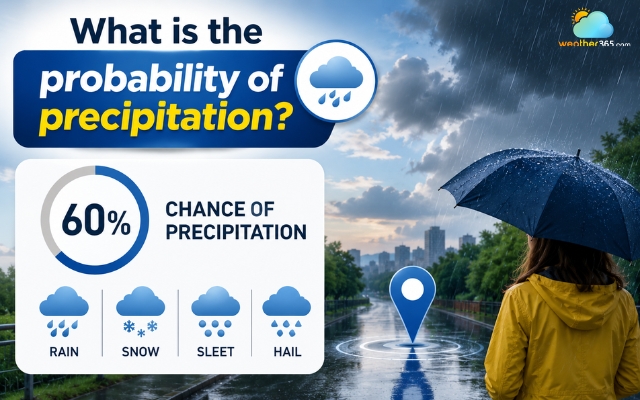
Probability of precipitation refers to the chance that precipitation will occur
How to calculate the chance of rain?
The chance of rain is calculated by combining how confident meteorologists are that precipitation will occur with how much of the forecast area is expected to receive it.
Meteorologists often use this basic formula:
PoP = C x A
Where:
PoP = Probability of precipitation
C = Confidence that precipitation will happen somewhere in the forecast area
A = Percentage of the area expected to receive precipitation
Formula explained
Forecasters estimate both the likelihood of rain forming and how widespread it may become.
For example, if meteorologists are:
80% confident that rain will occur
expecting rain to cover 50% of the area
Then:
0.8 x 0.5 = 0.4
That equals a 40% chance of rain.
Imagine a city where a small storm system may pass through during the afternoon.
Forecast confidence: 100%
Expected rain coverage: 30%
The calculation becomes:
1.0 x 0.3 = 0.3
So the weather app shows a 30% chance of rain.
This also helps answer the common question: what does a 30 chance of rain mean?
It means there is a 30% probability that measurable rain will occur at your specific location during the forecast period.
Rather than doing the math yourself, you can get real-time, high-precision PoP calculations for your exact location on Weather365.
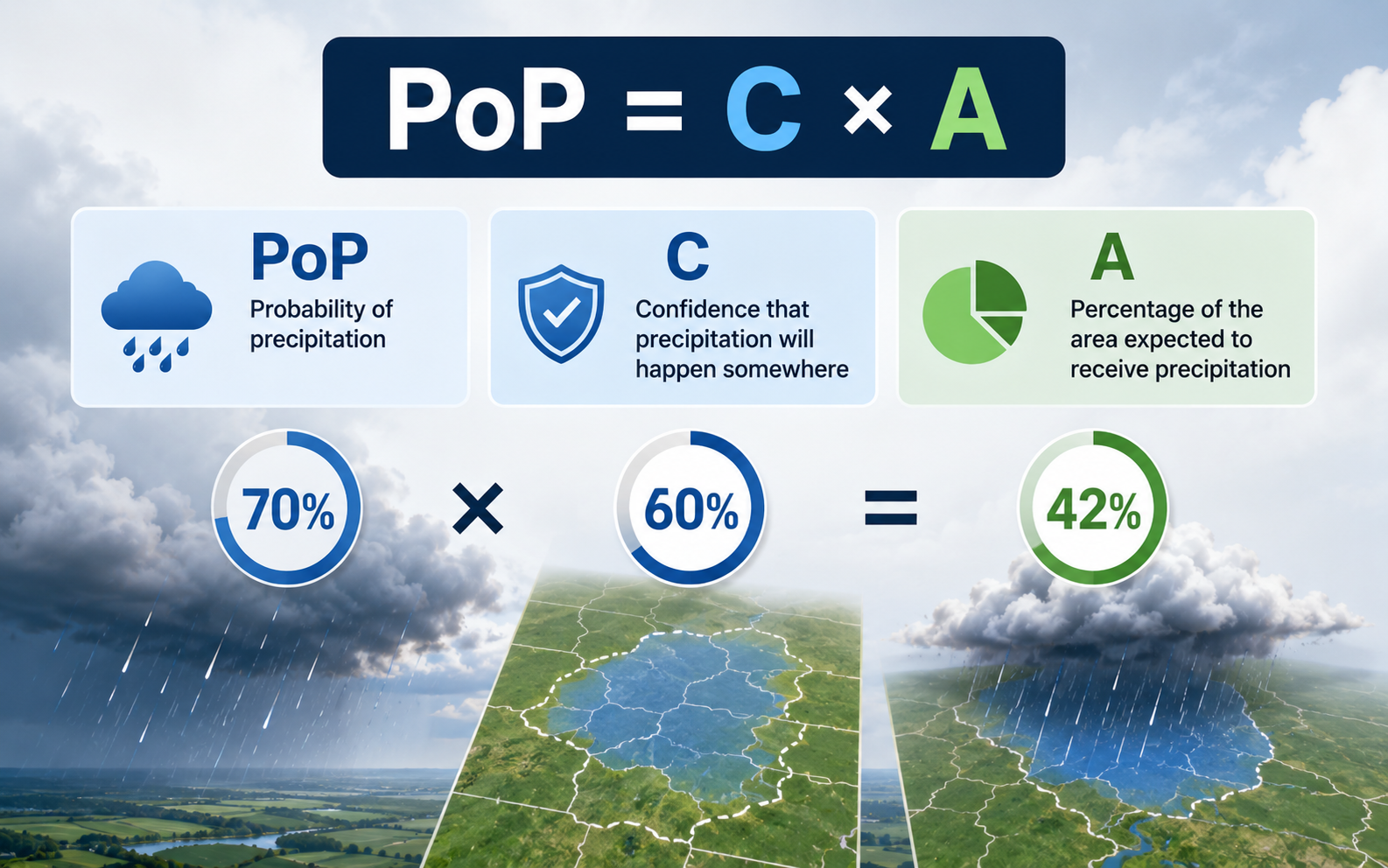
Probability of precipitation calculates the likelihood of rain forming
Important notes about the probability of precipitation
It’s not just coverage
One of the biggest misunderstandings about weather forecasts is assuming the percentage refers only to the area covered by rain.
A 40% chance of rain does not necessarily mean 40% of the city will get wet. It means there is a 40% chance that rain will occur where you are.
A 60% PoP means rain is expected over 60% of the area, making it vital to check Florida hourly rain probability before heading out.
Confidence vs. area
The same percentage can come from different forecasting situations.
For example, a 30% chance of rain could mean:
→ Meteorologists are 100% sure rain will affect only 30% of the area
→ Meteorologists are only 30% confident rain will affect the whole area
Both situations produce the same PoP value, even though the weather setup is very different.
Does not indicate intensity
The percentage does not describe how heavy the rain will be.
A 20% chance could still bring a strong thunderstorm if your location ends up under the storm cell.
Likewise, an 80% chance may only produce light drizzle.
PoP also does not tell you how long it will rain or how much rain will fall.
Accumulated probability
For longer forecast periods, some systems use compound probability calculations to estimate the overall chance of precipitation.
This method combines multiple forecast periods into one total probability estimate. It is often used in extended forecasts and precipitation models.
You can learn more about this concept in our article about accumulated precipitation.
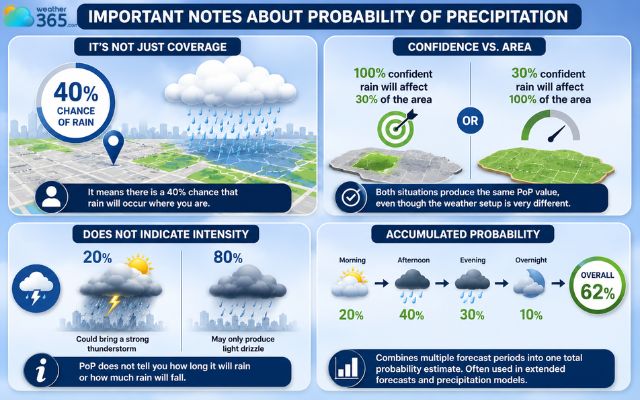
Facts about the probability of precipitation
Factors that affect the probability of precipitation
Several factors affect the probability of precipitation, including atmospheric moisture, weather systems, geographic features, and seasonal weather patterns.
Atmospheric moisture
Humidity plays a major role in precipitation formation. The more moisture available in the atmosphere, the greater the chance that clouds can develop into rain-producing systems.
Weather systems
Cold fronts, warm fronts, thunderstorms, and low-pressure systems can all increase precipitation probability.
Large storm systems typically produce higher PoP values because they affect wider areas.
Geographic influence
Location matters more than many people realize.
Coastal areas often experience different precipitation patterns compared to inland regions because oceans provide additional moisture.
Mountain regions can also increase rainfall through elevation-related weather effects.
For instance, these unique geographic factors are exactly what created the wettest place in the United States.
Seasonal variations
The probability of precipitation changes throughout the year.
Summer often brings short, scattered thunderstorms, while winter precipitation depends more on large-scale weather systems and temperature conditions.
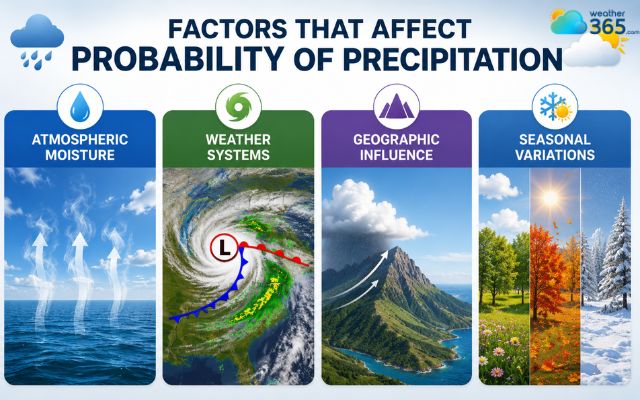
Atmospheric moisture greatly affects the probability of precipitation
What does a 20-50-80 chance of rain mean?
A 20%, 50%, or 80% chance of rain describes how likely measurable precipitation is to occur at your specific location during the forecast period.
Many people misunderstand weather percentages and assume they describe how long it will rain or how much of the city will get wet.
In reality, these numbers simply represent the probability of precipitation at your location.
What does a 20% chance of rain mean?
20% chane of rain usually indicates a low likelihood of precipitation.
In most cases:
weather conditions are expected to stay mostly dry
rain may occur only in isolated areas
any showers are often brief or scattered
A 20% forecast does not guarantee sunshine all day, but it suggests rain is relatively unlikely.
For example, you might still see a quick passing shower in the afternoon, especially during humid summer weather.

20% chance of rain
What does a 50% chance of rain mean?
A 50% chance of rain means meteorologists believe there is an equal chance of precipitation occurring or not occurring at your location.
This type of forecast often happens when:
storm systems are unpredictable
scattered showers are developing
weather conditions are changing quickly
In practical terms, it’s smart to prepare for possible rain, especially if you plan to spend time outdoors.

50% chance of rain
What does an 80% chance of rain mean?
80% chance of rain means precipitation is considered very likely.
For those asking what does 80 chance of rain means, it generally indicates:
strong confidence that rain will occur
larger storm coverage
a higher likelihood of wet conditions
At this percentage, carrying an umbrella or adjusting outdoor plans is usually a good idea.
However, even an 80% probability does not always mean nonstop rain all day. It simply means the chance of measurable precipitation is very high during the forecast window.
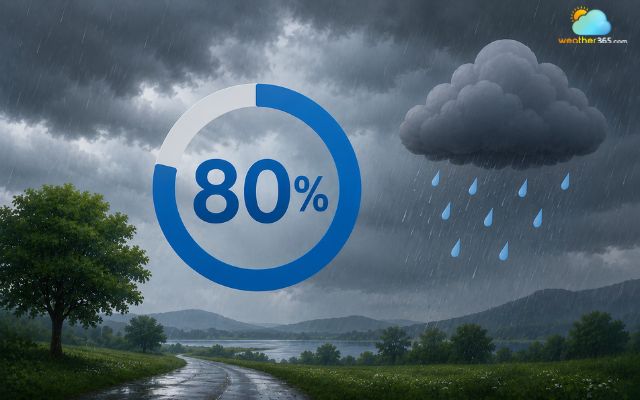
80% chance of rain
Does 100% chance of rain mean rain all day?
No. A 100% probability of precipitation does not necessarily mean it will rain continuously throughout the day.
Instead, it means forecasters are certain that measurable precipitation will occur at some point during the forecast period.
For example:
Rain may only last 15 minutes
A thunderstorm could pass quickly
Showers might occur during only part of the day
The forecast percentage only measures certainty of occurrence, not duration.
Similarly, a 20% forecast does not guarantee dry weather.
Rain can still occur if your location happens to fall within the affected area.
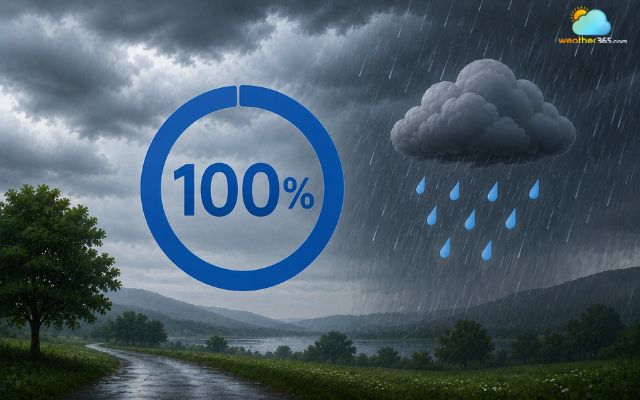
What is 100% chance of rain?
Practical business applications of probability of precipitation
The probability of precipitation supports decision-making in agriculture, construction, transportation and logistics, retail and event planning, and energy management.
Agriculture
In agriculture, precipitation forecasts help farmers decide when to plant, irrigate, fertilize, or harvest crops.
A high chance of rain may allow farmers to delay irrigation and conserve water, while an unexpected storm during harvest season can damage crops and reduce productivity.
Accurate probability of precipitation data helps agricultural businesses make faster and smarter decisions.
Construction
The construction industry also depends heavily on weather forecasts. Rain can delay projects, affect worker safety, and damage materials like concrete or wood.
By monitoring precipitation probability, contractors can better schedule outdoor tasks and avoid unnecessary downtime. Even a moderate chance of rain can influence daily work plans on large construction sites.
Transportation and logistics
Transportation and logistics companies use precipitation forecasts to improve route planning and operational efficiency. Heavy rain, snow, or storms can slow deliveries, reduce visibility, and increase accident risks.
Airlines, shipping companies, and trucking services often monitor weather probabilities in real time to minimize delays and protect cargo.
Retail and event planning
Retail businesses also pay close attention to weather trends. Consumer behavior changes significantly during rainy conditions.
For example, stores may adjust staffing levels, delivery schedules, or product promotions based on expected precipitation.
Weather-sensitive businesses such as grocery stores, outdoor equipment retailers, and food delivery services often see direct impacts from changing weather patterns.
Event planning is another area where probability of precipitation matters.
Concert organizers, sports venues, tourism companies, and wedding planners regularly use weather forecasts to prepare backup plans and reduce disruptions.
An 80% chance of rain may lead organizers to move activities indoors or prepare additional shelter for guests.
Energy management
Energy management companies also use precipitation data to predict energy demand and maintain infrastructure.
Rain and storms can influence electricity consumption, renewable energy production, and hydroelectric reservoir levels.
Utility providers often combine precipitation forecasts with other weather data to prepare for peak demand periods and weather-related outages.
As forecasting technology continues to improve, both individuals and businesses rely on real-time weather intelligence to make smarter daily decisions.
Ready to plan your day with confidence? Check live, hyper-local forecasts and accurate precipitation probabilities today at Weather365!

The probability of precipitation plays an important role in many industries
Conclusion
The probability of precipitation helps people better understand weather forecasts and prepare for changing conditions. Whether you’re asking what the probability of precipitation means or trying to interpret a 30% chance of rain, understanding PoP makes forecasts far less confusing!
Frequently Asked Questions (FAQs)
Related post
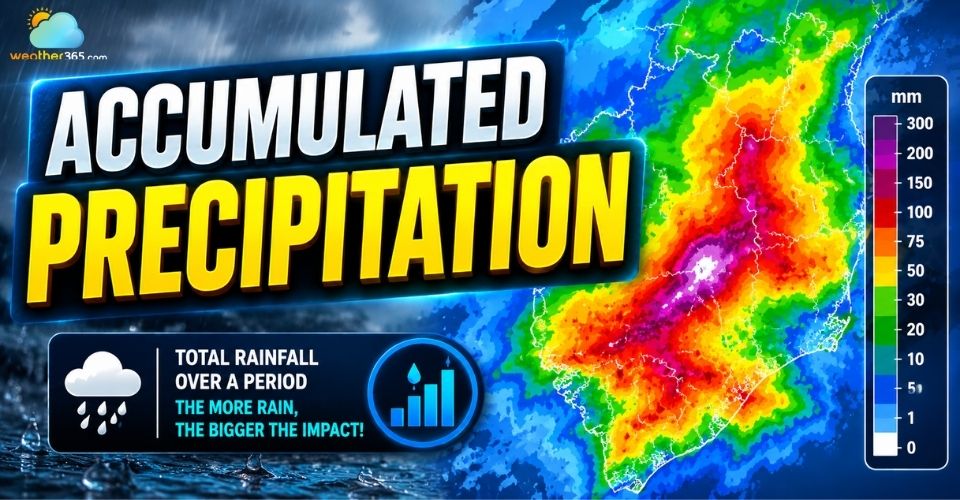
Accumulated Precipitation: Definition, Applications, and Measurement
 486
486
 8
8
 4.8
4.8
 10/08/2026

Types of Precipitation: Definition, Examples, and Weather Impact
175
10
4.8
19/08/2026

10 Comment
Ruth Nelson
Why does the chance of rain change during the day?
weather365
Weather conditions can change quickly. New observations, weather radar, satellite data, and updated forecast models can change the expected timing, location, or intensity of precipitation. As a result, the probability of precipitation may increase or decrease.
Caleb Houston
Can there be a 0% chance of rain and still rain?
weather365
Yes, although it is unlikely. A very low precipitation probability means measurable precipitation is considered unlikely at the forecast location and during the specified period. Forecasts are estimates and can change as weather conditions develop.
Gabrielle Floyd
Weather percentages can be confusing. I like that this article explains what the numbers actually mean instead of just giving a definition.
weather365
Thanks for your feedback! Weather percentages can definitely be confusing at first. We’re glad the examples helped make the meaning of precipitation probability easier to understand.
Mckenna Nelson
I finally understand what PoP means in weather apps. The examples make the percentages much easier to interpret.
weather365
Glad the examples helped! PoP can be confusing at first, but once you understand what the percentage actually represents, weather forecasts become much easier to read.
Anthony Myers
Does a high chance of rain mean heavy rain?
weather365
Not necessarily. A high precipitation probability only indicates a greater likelihood of measurable precipitation. The rain could be light, moderate, or heavy, so you should also check the expected precipitation amount and weather conditions.
Leave a comment
Your email address will not be published. Required fields are marked *