




Tropical Storm Jangmi Batters Japan, Cancels Hundreds of Flights


Japan is facing dangerous weather conditions as tropical storm Jangmi continues its path northward, bringing torrential rain, damaging winds, power outages and widespread travel disruptions across the country's southern regions.
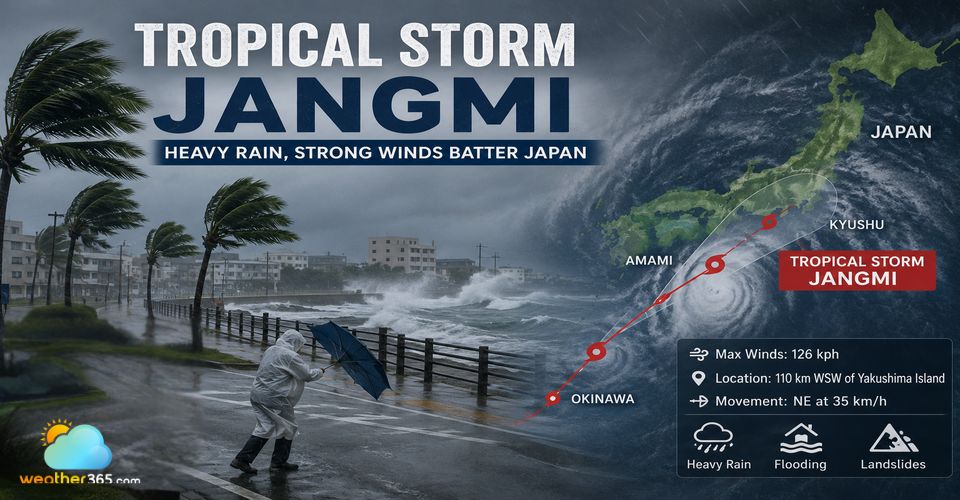
Tropical storm Jangmi in Japan
After lashing the Okinawa islands with severe weather on Monday, the storm moved toward Kyushu, Japan's southwestern main island, prompting authorities to issue warnings for flooding, landslides and river overflows. Residents in vulnerable areas have been urged to remain alert as conditions are expected to deteriorate through Wednesday.
According to the Japan Meteorological Agency (JMA), tropical storm Jangmi was located approximately 110 kilometers west-southwest of Yakushima Island by midday Tuesday. The storm was traveling northeast at around 35 kilometers per hour and producing maximum sustained winds near 126 kilometers per hour.
The weather system, which began as Typhoon Jangmi before weakening to a tropical storm, has continued to generate intense rainfall across southern Japan.
Forecasters warned that mountainous terrain and already saturated ground could significantly increase the risk of landslides, particularly in the Amami Islands and parts of western Japan.
Government officials reported that nine people sustained minor injuries during the storm's passage through Okinawa Prefecture. While no fatalities had been reported, authorities remained concerned about the potential for additional incidents as the storm advances toward more densely populated regions.
Power infrastructure has also been affected by the severe weather. Chief Cabinet Secretary Minoru Kihara stated that roughly 48,000 households in Kagoshima and Okinawa prefectures were without electricity as of early Tuesday morning.
Utility crews have been working to restore service, but strong winds and heavy rain have complicated repair efforts in some locations.
Transportation networks have experienced significant disruptions as airlines canceled hundreds of flights. More than 300 domestic and regional flights, many serving destinations in and around Kyushu, were grounded on Tuesday due to unsafe flying conditions.
Travelers were advised to check with carriers for updated schedules and potential delays as weather conditions continue to evolve.
The storm has also prompted local authorities to monitor rivers and low-lying communities closely. Heavy rainfall could cause waterways to rise rapidly, increasing the risk of flash flooding in urban and rural areas alike.
Emergency management officials have emphasized the importance of heeding evacuation notices and avoiding unnecessary travel during periods of intense rainfall.
Meteorologists expect the heaviest impacts from tropical storm Jangmi to shift into western Japan as the system tracks northeastward.
Rain bands associated with the storm are forecast to produce substantial precipitation totals through Wednesday, potentially affecting transportation, infrastructure and daily activities across several prefectures.
Although the storm is expected to gradually weaken as it moves farther north, forecasters caution that even a weakening tropical system can generate dangerous conditions.
Strong gusts, flooding rain, and rough coastal waters remain major concerns for communities in its path.
As Japan enters the peak portion of the Pacific typhoon season, officials are urging residents to stay informed through weather updates and emergency alerts.
With tropical storm Jangmi continuing to move across the region, authorities remain focused on minimizing risks and ensuring public safety during the ongoing severe weather event.
Related post

Hottest Day in UK on May record as temperatures pass 34°C
 245
245
 0
0
 4.8
4.8
 25/05/2026
Severe Weather Warning South Australia Brings Power Outage Risk
200
0
4.8
01/06/2026

Indy 500 Weather Forecast Calls for Possible Race-Day Rain
148
0
4.9
25/05/2026

0 Comment
Leave a comment
Your email address will not be published. Required fields are marked *