




What Happens When Lightning Strikes Sand? Unveil the Rare Glass’s Formation


What happens when lightning strikes sand? The answer is fulgurites - rare glassy tubes formed in seconds by extreme heat. In this article, we will uncover how they form, why they are so fragile, and the unique places where these “fossilized lightning bolts” can be found.
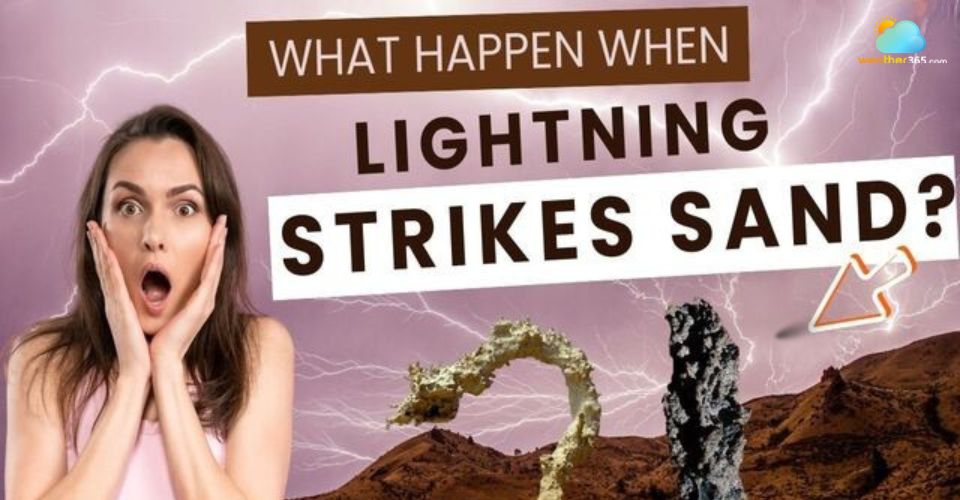
What Happens To Sand When Lightning Strikes?
- How Lightning Works
- What Happens When Lightning Strikes Sand?
- Intense Heat
- Sand Melts
- Tube Formation
- Rapid Cooling
- What Are Fulgurites?
- Where to Find Fulgurites?
- Beaches and Coastal Dunes
- Deserts and Arid Regions
- Mountain Ranges and Rocky Terrains
- Dry Soil and Sandy Plains
- Hidden Beneath the Surface
How Lightning Works
Lightning is a powerful burst of electricity that occurs when a significant charge difference builds up in the atmosphere.
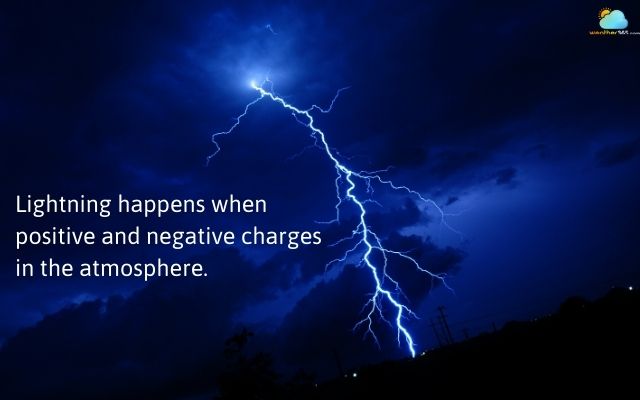
What is Lightning?
During a storm, clouds build up strong electric fields. When the imbalance between positive and negative charges becomes too great, the excess energy is released as a brilliant lightning bolt.
There are four primary forms of lightning: Cloud-to-Ground Lightning, Intra-Cloud Lightning, Cloud-to-Cloud Lightning, and Cloud-to-Air Lightning.
To learn the details about lightning, drop by our guide on the Difference Between Thunder and Lightning.
What Happens When Lightning Strikes Sand?
When a lightning bolt meets sand, it triggers one of nature’s most fascinating transformations.
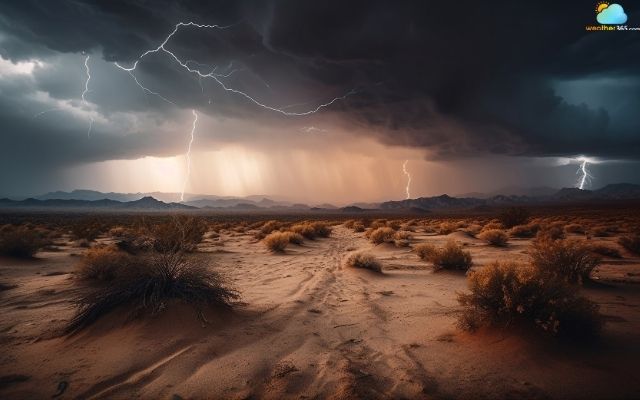
What Happens When Lightning Strikes Sand?
The extreme heat and sudden cooling form fragile glassy tubes called fulgurites, sometimes informally referred to as “fossilized lightning.”
Let’s walk through how this phenomenon unfolds step by step.
Intense Heat
When lightning strikes the ground, it releases an enormous burst of energy in just a fraction of a second.
Specifically, temperatures at the strike point can climb to more than 3,272°F (1,700°C) - hotter than the surface of the Sun.
This sudden heat surge is concentrated in a narrow channel, which means that anything in its path, including sand, is heated almost instantly.
In just seconds, the top layers of sand start to melt.
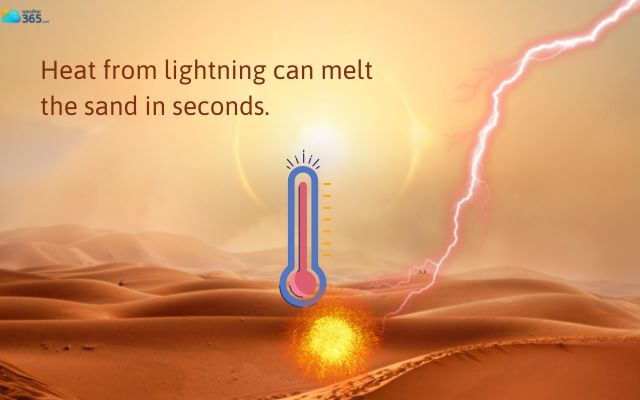
The intense heat of lightning melts the sand
Sand Melts
Most sand, especially along beaches and dunes, contains a high percentage of silica (also known as quartz).
Under normal conditions, quartz takes a long time to crystallize. But under lightning’s extreme heat, there is no time for this process - the grains melt immediately and turn into amorphous glass.
Did you know that trace materials in the sand can alter the final appearance? For example:
Iron may darken the glass to a greenish or brown tone.
Carbon or organic material can make it appear nearly black.
Shell fragments or lighter minerals can leave streaks of white or pale gray.
Lightning glass forms in an instant, creating a unique structure that can not be replicated by ordinary geological processes.
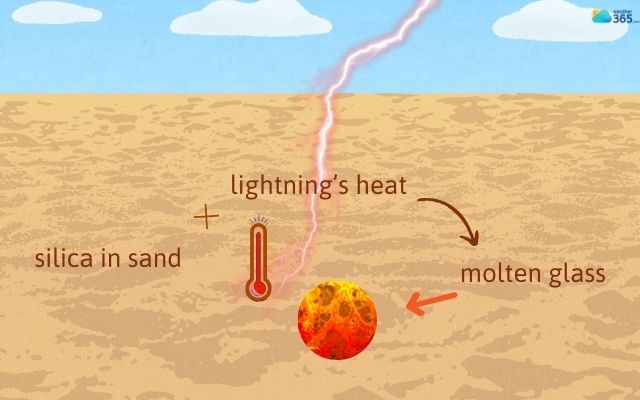
Sand melts into molten glass due to intense heat
Tube Formation
As the electric current pushes downward into the sand, it melts and fuses grains along its pathway. This process creates branching, hollow tubes that often resemble tree roots or tangled branches.
The inner wall of each tube becomes smooth and glassy, while the outer wall stays rough because it collects bits of sand.
The size of these tubes can vary widely: some are no thicker than a pencil, while others can be as wide as a finger.
In regions where sand is mixed with rock, lightning does not form tubes at all. Instead, it can fuse or glaze the rock surface, creating what scientists call rock fulgurites.
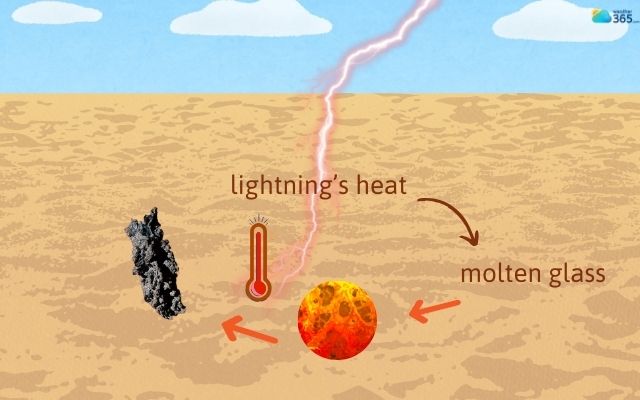
Tube Formation
Rapid Cooling
As soon as the lightning stops, the molten glass cools instantly, creating the fulgurite’s smooth interior and rough exterior.
A smooth, glassy interior where the lightning channel passed.
A rough, sandy exterior where unmelted grains stuck to the surface.
Because this process is so fast, the walls of a fulgurite are often very thin, which makes them extremely fragile. Many break apart as soon as they are exposed to air or handled.
Another important detail is that fulgurites are usually hidden below the surface.
After a storm, wind and shifting sand often cover them again, making them difficult to spot. This is why fulgurites are considered rare and special finds for geologists and collectors alike.
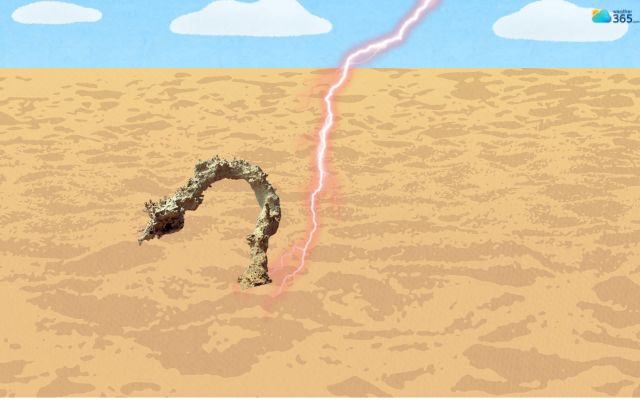
Fulgurites
Interested in lightning? Find out more about what happens if lightning strikes a car.
Now you have an answer to the question of what happens when lightning strikes sand, let's dive deeper to see what exactly these creatures are!
What Are Fulgurites?
The word fulgurite comes from the Latin term fulgur, meaning “lightning.”
These structures are natural glass-like tubes formed when lightning strikes sand, soil, or rocky minerals.
Unlike typical minerals, fulgurites are mineraloids because they form through an instant melting and cooling process rather than slow crystallization.
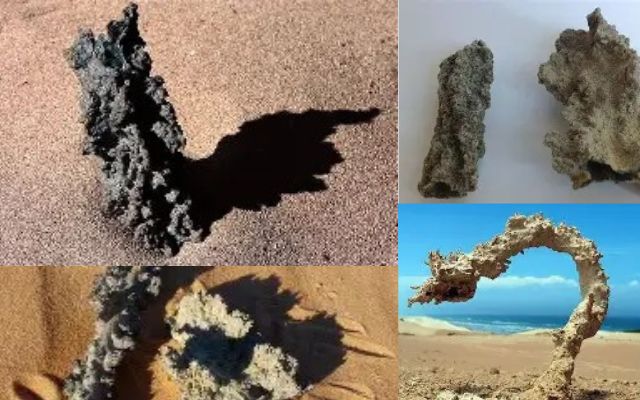
What Are Fulgurites?
Fulgurites have several unique features that make them easy to recognize:
Looks like branching tree roots or hollow tubes
Fulgurites’ outside is rough and sandy, while the inside is smooth and glassy.
Fulgurites are extremely delicate. Many break during excavation, so complete specimens are hard to find.
Depending on the minerals in the sand or soil, fulgurites can range from white, gray, or brown to darker shades like black or greenish tones.
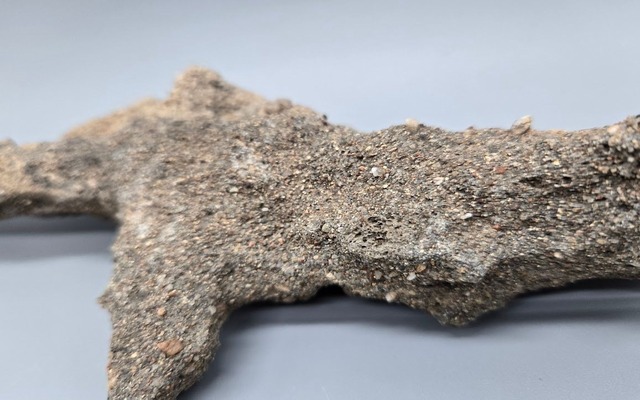
Fulgurites’ outside is rough and sandy
Where to Find Fulgurites?
Fulgurites are rare, but they can be discovered in specific environments where lightning has the right conditions to strike and melt sand or rock.
Their occurrence depends largely on the type of ground material: silica-rich sand, dry soil, or exposed rock formations.
Beaches and Coastal Dunes
One of the best places to find fulgurites is along beaches and sand dunes. These areas are rich in quartz sand, the perfect ingredient for lightning glass.

Fulgurites can be found on beaches and sand dunes
When storms roll in from the ocean, lightning strikes on sandy beaches fuse glass structures called fulgurites during unpredictable North Carolina beach weather, leaving behind hidden tubes beneath the surface.
Some of the most impressive specimens have been unearthed in coastal regions where shifting sands preserve them for centuries.
Deserts and Arid Regions
Deserts are another prime location. The vast, dry, sandy terrain acts like a giant natural canvas for lightning strikes. Since desert sand is also high in silica, the intense heat can easily form long fulgurite tubes.

Where can you find fulgurites?
Well-known desert locations in Africa, the Middle East, and parts of the southwestern United States have yielded fulgurites buried just below the dune surfaces.
Mountain Ranges and Rocky Terrains
In high-altitude regions, lightning frequently strikes rocky peaks, ridges, and exposed outcrops.
Here, instead of sand tubes, the result is usually rock fulgurites - glassy crusts or fused patches on the rock surface.
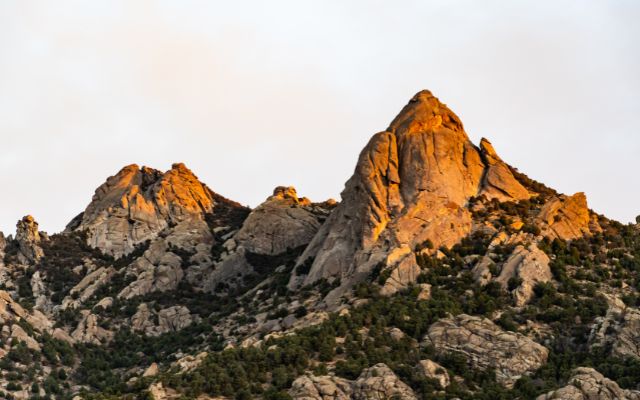
Some fulgurites are found in Rocky Mountains
Fulgurites have been found in the Sierra Nevada, the French Alps, and Utah’s Wasatch Range, where frequent mountain storms provide the perfect conditions for their formation.
Dry Soil and Sandy Plains
Not all fulgurites form in pristine white sands. Dry soils and sandy plains can also produce fulgurites if they contain enough silica.
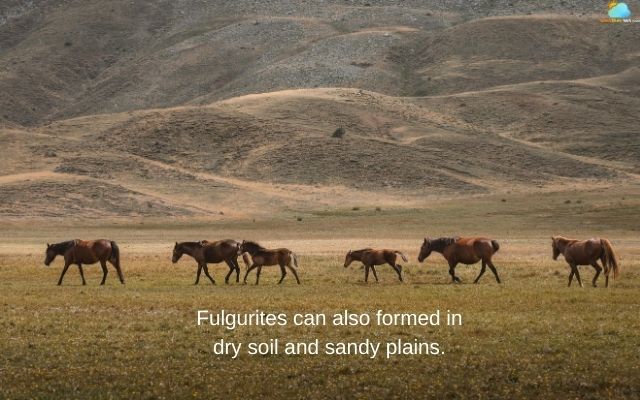
Fulgurites can be found in dry soil and sandy plains
These formations may look less glassy and more brittle compared to beach or desert varieties, but they still preserve the branching paths of lightning strikes underground.
Hidden Beneath the Surface
It’s important to note that fulgurites are rarely found lying openly on the ground.
Most are buried just below the surface, often hidden by wind-blown sand, shifting dunes, or soil.
Careful digging is usually required to uncover intact specimens, but because they are fragile, many break apart during excavation.
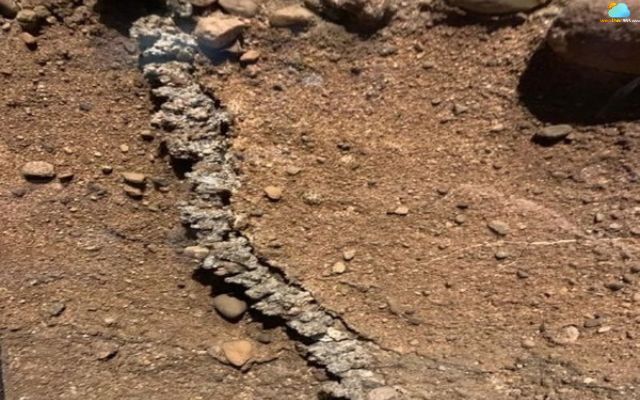
Fulgurites can be found below the surface
Final thought
What happens when lightning strikes sand? It transforms ordinary grains into extraordinary glass tubes known as fulgurites. These fragile structures not only capture the raw power but also leave behind a rare geological treasure. They serve as reminders that even destructive forces can give rise to extraordinary natural beauty.
Frequently Asked Questions (FAQs)
Related post

What Happens If Lightning Strikes A Car? Real Dangers, Myths & What to Do Next
 1867
1867
 8
8
 4.9
4.9
 15/09/2026
Can Lightning Strike Through A Window? Scientific Facts & Life-Saving Tips
1634
8
4.8
14/09/2026

Difference Between Thunder and Lightning: What Truly Tells Them Apart?
1524
8
4.8
15/09/2026

8 Comment
Grace Wright
It’s fascinating that something as destructive as a lightning strike can leave behind such a unique geological formation
Gabrielle Mccarty
Are fulgurites strong enough to be handled like ordinary pieces of glass?
weather365
Not really. They can be extremely fragile because their walls are often very thin, and many specimens break during excavation or handling.
Nina Fuller
How hot does lightning need to be to melt sand like this?
weather365
Temperatures at the strike point can rise above 3,272°F (1,700°C), which is enough to melt the sand almost instantly.
Faith Gilbert
The part about the inside being smooth and glassy while the outside stays rough and sandy was really interesting. I always assumed the whole structure would look like glass.
Destiny Sanders
Are fulgurites only formed on beaches, or can they also appear in deserts?
weather365
They can form in both places. The article mentions beaches, coastal dunes, deserts, dry soil, and sandy plains as possible locations, especially where the ground contains enough silica.
Leave a comment
Your email address will not be published. Required fields are marked *