




Why Does The Sky Turn Red At Sunrise And Sunset? Simple Science Explained


Sunset and sunrise are easy to love - but hard to explain. If you’ve ever wondered Why does the sky turn red at sunrise and sunset, but got overwhelmed by scientific terms, you’re not alone. Let’s walk through it in a way that finally clicks. Diving in!
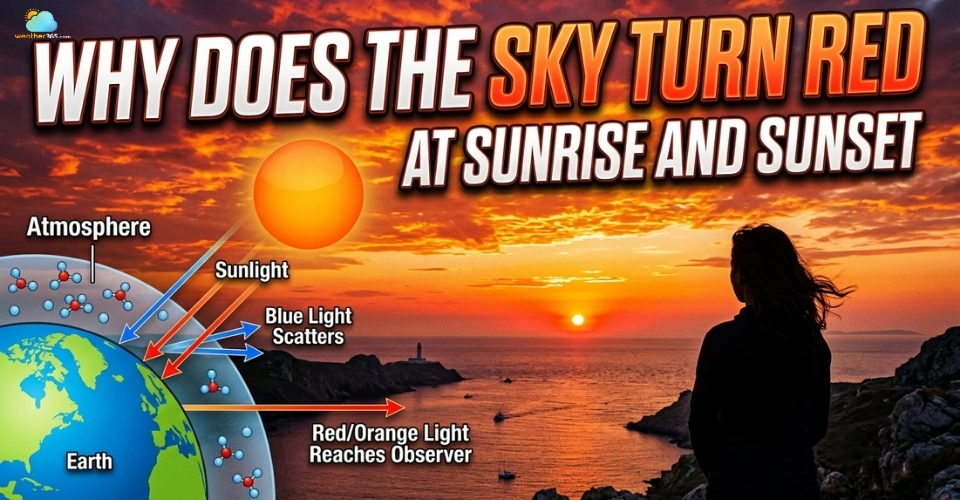
Why does the sky turn red at sunrise and sunset?
Why Does The Sky Turn Red At Sunrise And Sunset?
The sky turns red at sunrise and sunset because sunlight passes through more of the atmosphere when the Sun is near the horizon.
Different colors made up
Sunlight might look plain white to our eyes, but it’s actually a mix of many colors: red, orange, yellow, green, blue, and violet.
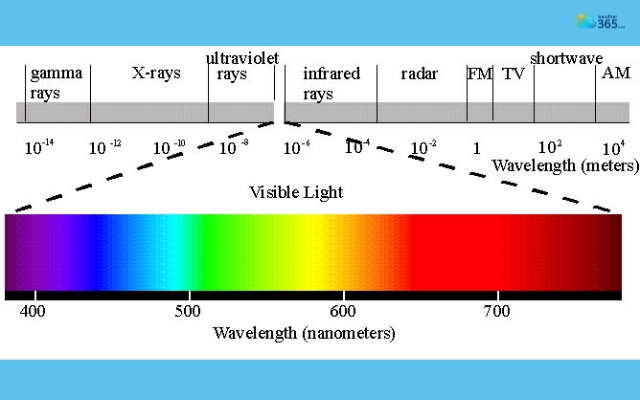
Sunlight is a mix of different colors
Each of these colors travels in waves, and the key difference lies in their wavelength.
Shorter wavelengths, like blue and violet, are more easily scattered when they hit tiny particles in the air.
Longer wavelengths, like red and orange, are less affected and can travel more directly through the atmosphere.
This difference is the foundation of why we see changing sky colors throughout the day.
Skies and Sun Color
During the daytime, the sky appears blue because shorter wavelengths (especially blue light) are scattered in all directions by gas molecules in the atmosphere.
This process is known as Rayleigh scattering.
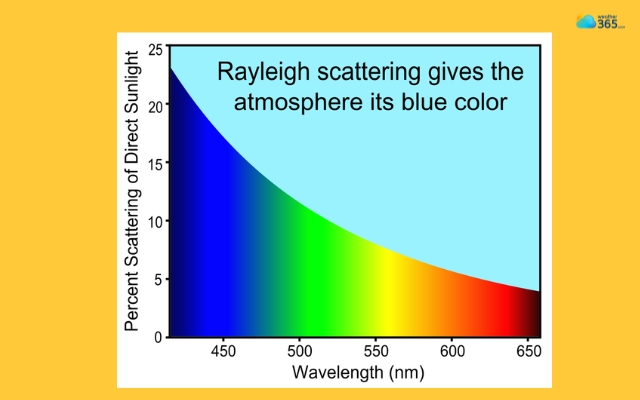
Rayleigh scattering causes the sky to be blue and the sunset to be red
But here’s where it gets interesting:
The Sun itself does not actually change color.
What changes is the path its light takes and how much of each color reaches your eyes.
At sunrise and sunset, the balance shifts, and the warmer colors begin to dominate the sky.
Longer path
When the Sun is high in the sky, its light travels a relatively short distance to reach you.
But at sunrise and sunset, the Sun sits low on the horizon, so its light has to pass through a much thicker layer of the atmosphere.
This longer path means that most of the shorter wavelengths, blues and violets get scattered away before they can reach your eyes.
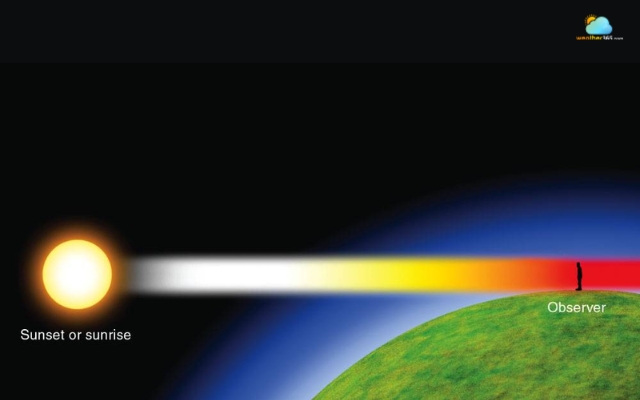
Light is made up of shorter wavelengths at long distances
By the time the light arrives, it’s mostly made up of longer wavelengths like red, orange, and yellow.
That’s why the sky takes on those warm, glowing tones during these times of day.
Atmosphere particles
The atmosphere is not made of just clean air, it also contains dust, water droplets, pollution, and other tiny particles.
These elements can enhance or change the colors we see during sunrise and sunset.
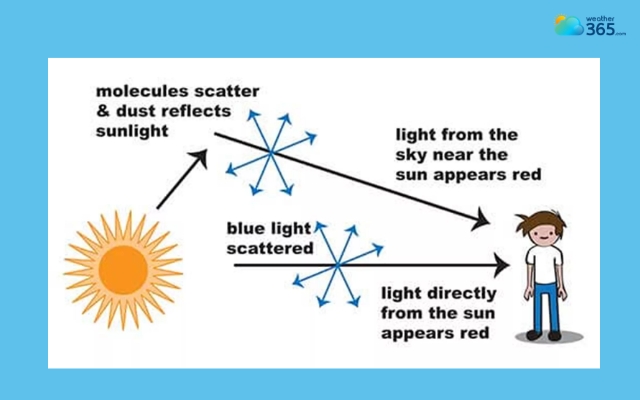
Tiny particles in the atmosphere can affect the light color of the sun
For example, a sky with more dust or pollution can scatter light differently, often making reds and oranges appear deeper and more intense.
On the other hand, cleaner air might produce softer, more pastel shades.
That’s also why no two sunsets ever look exactly the same.
Small changes in the atmosphere can create completely different color displays, even from one day to the next.
Why does the moon turn red?
The Moon turns red during a total lunar eclipse because Earth blocks direct sunlight from reaching the Moon.
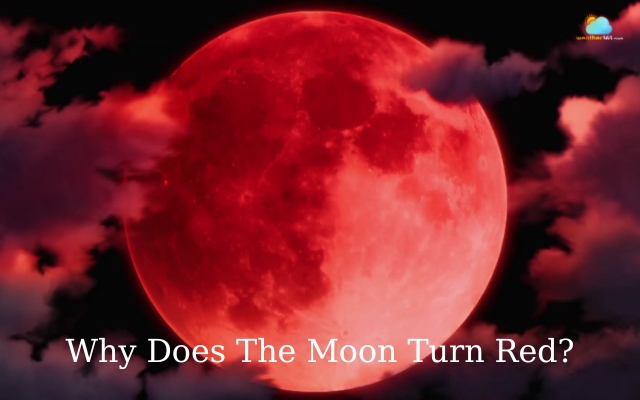
A red moon is also called the blood moon
The key moment happens during a total lunar eclipse, when the Earth moves directly between the Sun and the Moon.
At first, you might expect the Moon to disappear completely since it’s in Earth’s shadow.
Instead of disappearing into darkness, the Moon takes on a reddish glow, so what causes that change?
It comes down to how sunlight travels through Earth’s atmosphere.
Even though Earth blocks direct sunlight, some light still bends (or refracts) around the edges of the planet and continues toward the Moon.
But this light doesn’t stay the same. As it passes through the atmosphere, it goes through Rayleigh scattering - the same process responsible for blue skies and red sunsets.
During this process, shorter wavelengths like blue and violet are scattered away in all directions.
What remains are the longer wavelengths, mainly red and orange, which continue traveling and eventually reach the Moon.
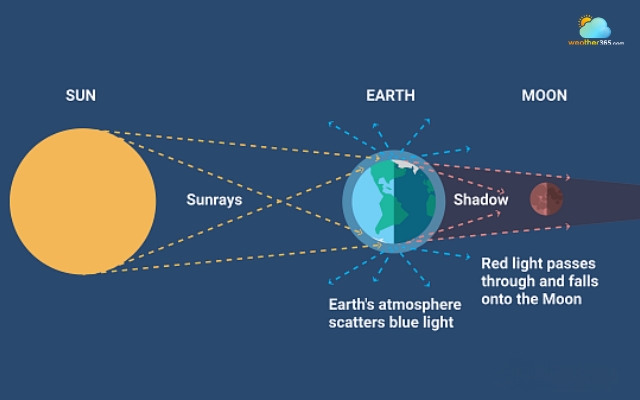
Longer wavelengths reach the Moon and make it red
So instead of being lit by white sunlight, the Moon is illuminated by this filtered, reddish light, giving it that iconic red glow.
There’s also another layer that makes each “blood moon” slightly different. The exact shade of red depends on the condition of Earth’s atmosphere at that moment.
If there’s more dust, pollution, clouds, or even volcanic ash in the air, the light gets filtered differently.
This can make the Moon appear darker, deeper red, or sometimes more orange.
A simple way to picture it: during a lunar eclipse, the Moon is being lit by all the sunrises and sunsets happening around Earth at the same time.
That’s why the color feels so warm and familiar; it’s the same kind of light you see at dusk, just reflected back from space.
Best places to watch the sunset in the US
Best places to watch the sunset in the US are Grand Canyon, Key West, Santa Monica Beach, Maui, Sedona, Lake Tahoe, Big Sur, Yellowstone National Park, and Monument Valley.
Grand Canyon, Arizona
At the Grand Canyon, the wide-open landscape lets you see for miles, and as the sun sets, its colors wash beautifully over the canyon’s layered rock surfaces.
Rayleigh scattering creates vibrant red horizons, enhanced by clean air in Arizona weather and clear skies.
With over 6 million visitors each year, it’s one of the most iconic sunset spots in the US.
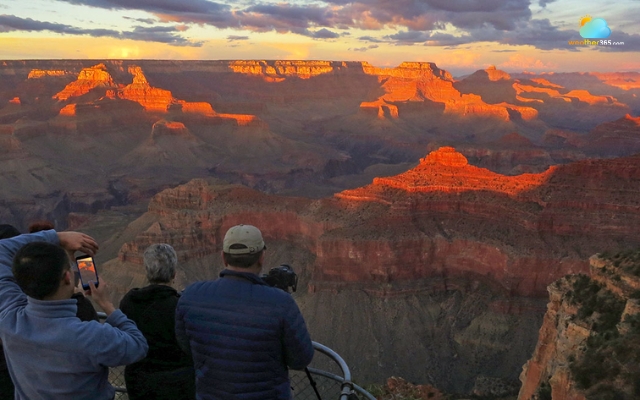
Sunset chasing in the Grand Canyon
Key West, Florida
Located at the southernmost point of the U.S., Key West provides a clear, uninterrupted view of the ocean horizon.
The sun setting directly into the sea creates a clean, picture-perfect sunset.
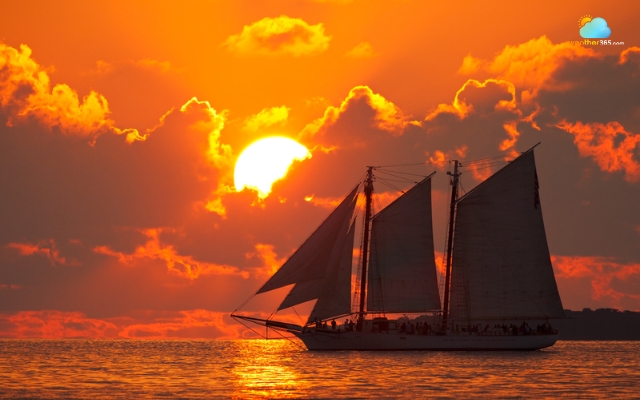
Beautiful sunset in Key West
Santa Monica Beach, California
This beach combines a wide ocean horizon with a lively coastal atmosphere. As the sun sets, the light reflects off the water and sand, creating vibrant and dynamic colors.
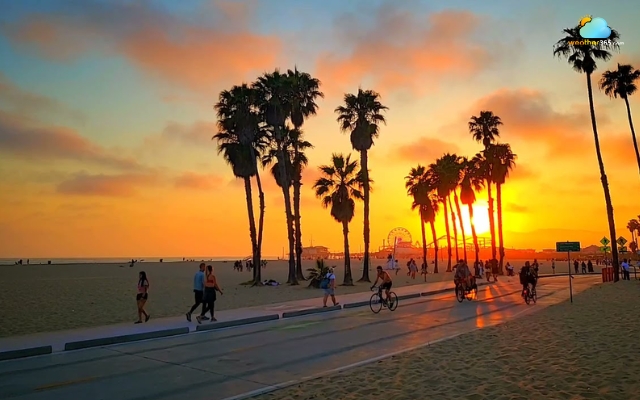
Sunset by the Santa Monica beach
Maui, Hawaii
Maui is known for elevated viewpoints like Haleakalā, which rises over 10,000 feet (3,000+ meters) above sea level.
Watching the sunset above the clouds makes the colors appear deeper and more dramatic.
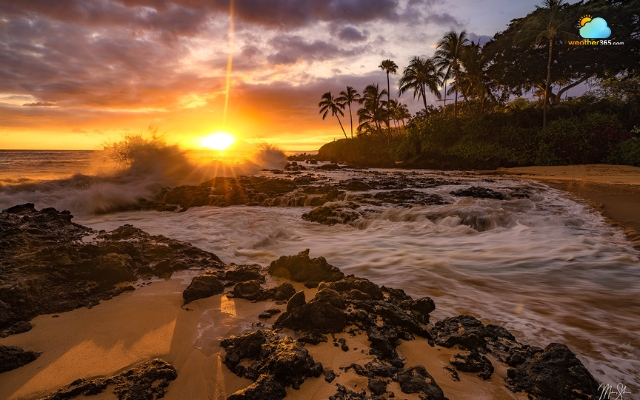
Stunning sunset captured in Maui
Sedona, Arizona
Sedona’s famous red rock formations naturally enhance sunset colors.
When the sun hits the rocks, it creates a glowing red effect often called the “red rock glow.”
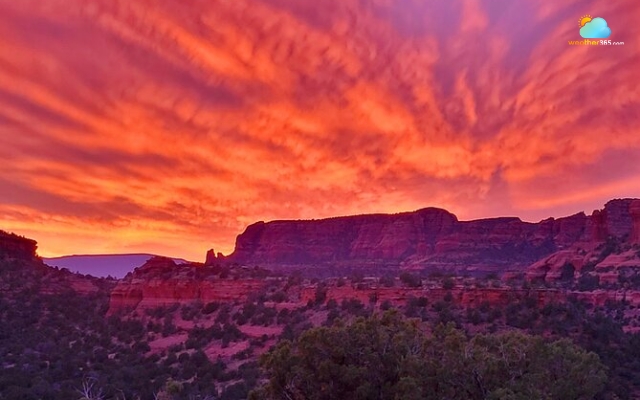
Red rocks in Sedona create a “red rock glow” effect
Lake Tahoe, California/Nevada
Lake Tahoe’s clear waters act like a mirror, reflecting the sunset sky.
The combination of mountains and water creates a balanced and peaceful sunset scene.
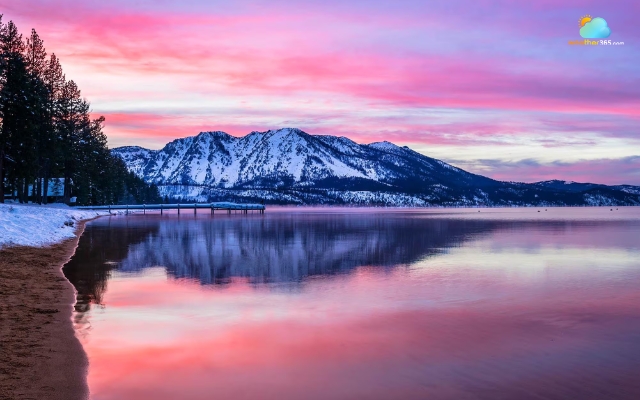
Sunset silhouettes on Lake Tahoe
Big Sur, California
Big Sur features dramatic cliffs overlooking the Pacific Ocean, offering wide, open views of the horizon.
The contrast between rugged coastline and warm sunset tones makes it especially striking.
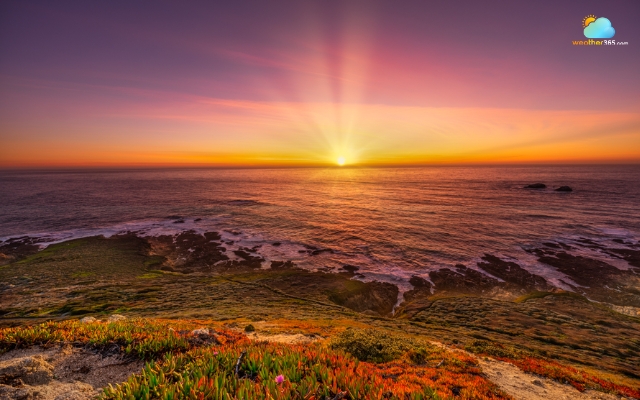
Stunning sunset in Big Sur
Yellowstone National Park, Wyoming
Yellowstone’s diverse landscapes: lakes, valleys, and geothermal features offer multiple ways to experience sunset.
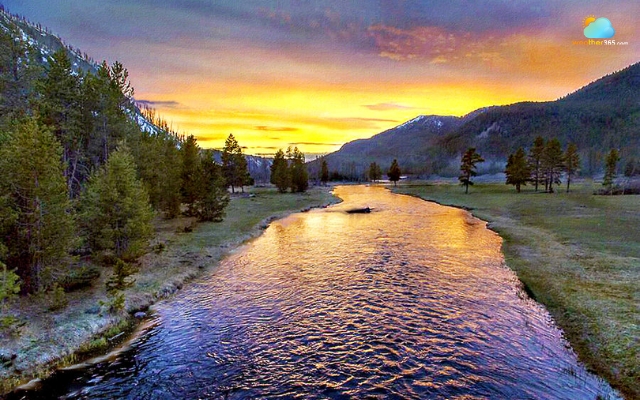
Yellowstone National Park has many spots for sunset watching
Acadia National Park, Maine
Located on the East Coast, Acadia provides coastal views where sunset light stretches across the ocean.
Its rocky shoreline adds texture and depth to the scene.
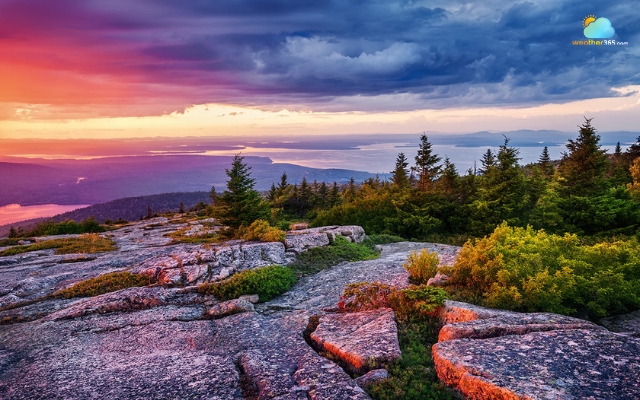
Sunset seen from Cadillac Mountain
Monument Valley, Utah/Arizona
Famous for its towering sandstone buttes, Monument Valley creates bold silhouettes at sunset.
The red desert landscape intensifies the warm tones, giving it a cinematic feel.
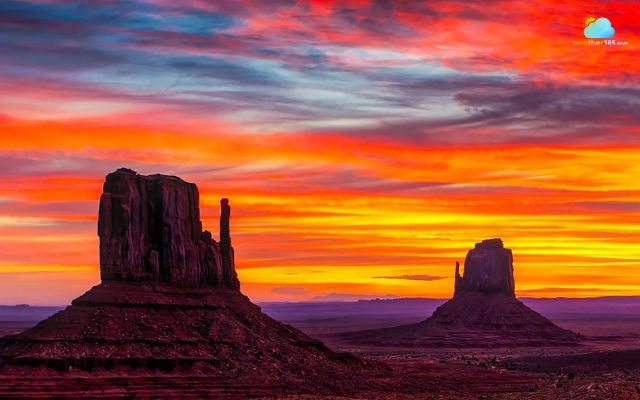
Cinematic sunset in the Monument Valley
What these places have in common is open views of the horizon and atmospheric conditions that enhance warm colors.
And that’s exactly what creates those deep reds and oranges we see at sunset.
Related articles
Wrap up
You don’t need to be a scientist to understand Why Does the Sky Turn Red at Sunrise and Sunset. It’s a simple mix of sunlight and atmosphere, but knowing that makes each sunset feel less random and more like a quiet, beautiful process happening right above you.
Frequently Asked Questions (FAQs)
◉ Morning: Sunrise to noon.
◉ Afternoon: Noon to late afternoon.
◉ Evening: Late afternoon to sunset.
◉ Night: After sunset until sunrise.
Related post

Best Places To Watch Sunset In The World: Top 18 Stunning Spots You Should Not Miss
 1018
1018
 8
8
 4.8
4.8
 18/08/2026
Why Do Sunrise And Sunset Times Change? Unveiling The Science Behind
458
8
5.0
18/08/2026

8 Comment
Christian Horton
This also explains why no two sunsets seem exactly alike. The atmosphere is basically changing the “filter” in front of the sunlight every day.
Jessica Harrison
I came for a quick explanation of red sunsets and ended up appreciating them a little more. Next time I see one, I’ll probably think about the light traveling through all that atmosphere.
Hailey Schultz
Can clouds make a sunset look more dramatic?
weather365
Yes. Clouds can reflect and scatter the warm-colored light coming from the lower Sun, creating brighter reds, oranges, and pinks.
Giselle Holmes
Why don’t we usually see the same deep red colors when the Sun is high overhead?
weather365
When the Sun is high, sunlight travels through less atmosphere, so less blue light is scattered out of the direct path before it reaches us.
Hannah Clark
Why do sunsets often look more colorful when the Sun is near the horizon?
weather365
Sunlight travels through a longer path in the atmosphere near the horizon, allowing shorter wavelengths to be scattered away more strongly and leaving more red and orange light to reach our eyes.
Leave a comment
Your email address will not be published. Required fields are marked *