




Largest California Wildfires: History, Damage, Record-Breaking Fires


Burning millions of acres, the Largest California Wildfires like the August Complex and Dixie Fire, rank among the most destructive in US history. Fueled by drought and extreme heat, these intensified seasons cause widespread environmental and economic damage. They also demonstrate how escalating climate conditions and wildfire risk continue to shape vulnerable communities across California.
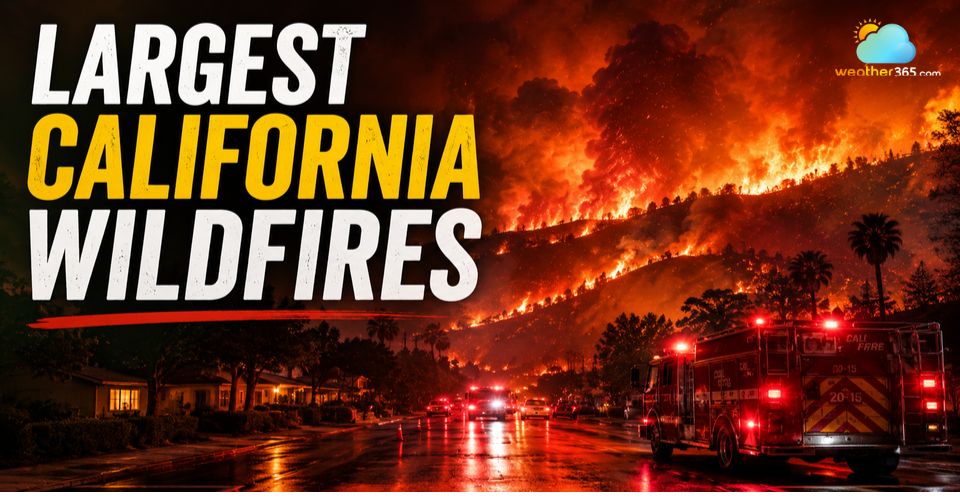
Top largest California wildfires
California fire history
California’s wildfire history is marked by some of the largest, deadliest, and most destructive fires ever recorded in the United States.
Over the past decade, the state has experienced multiple record-breaking blazes that have scorched millions of acres, destroyed hundreds of thousands of structures, and claimed countless lives—human, animal, and plant alike.
These wildfires have not only reshaped California’s landscapes but also caused billions of dollars in economic losses and long-term environmental damage.
While natural factors like drought, high winds, and extreme heat contribute to fire risk, a troubling fact stands out: most of these catastrophic fires were sparked by human activity.
This means many of California’s worst wildfires were preventable.
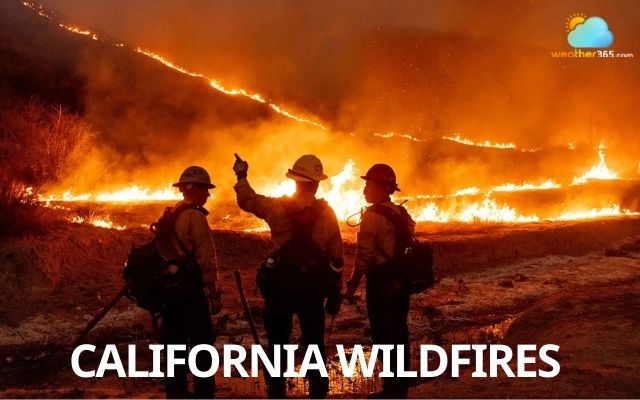
California has experienced multiple record-breaking blazes
Top 10 largest California wildfires
California has faced some of the most devastating wildfires in U.S. history, with the largest blazes leaving behind widespread destruction and loss.
Here’s a look at the Top 10 largest California wildfires, their causes, the damage, and the recovery efforts.
August Complex Fire
Date: August 2020
Cause: Lightning
County: Mendocino, Humboldt, Trinity, Tehama, Glenn, Lake, & Colusa
Acres: 1,032,648
Structures: 935
Deaths: 1
The August Complex Fire in August 2020 stands as the largest wildfire in California’s history.
It is estimated that the fire scorched an unprecedented 1,032,648 acres across Mendocino, Humboldt, Trinity, Tehama, Glenn, Lake, and Colusa counties.
Sparked by a series of lightning strikes, the blaze destroyed 935 structures and claimed one life.
The fire’s vast size and rugged terrain made containment efforts especially challenging, requiring thousands of firefighters and weeks of coordinated operations.
Recovery has been an ongoing process, involving debris removal, rebuilding homes, restoring critical infrastructure, and implementing forest rehabilitation programs to prevent future megafires.
The August Complex remains a stark reminder of the destructive potential of extreme wildfire events.
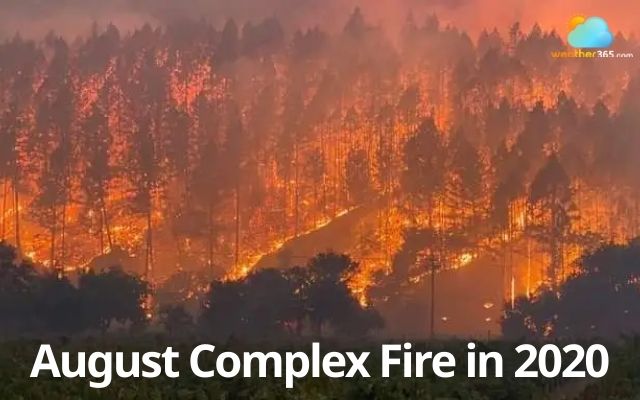
The devastating August Complex Fire in California in 2020
Dixie Fire
Date: July 2021
Cause: Powerlines
County: Butte, Plumas, Lassen, Shasta, & Tehama
Acres: 963,309
Structures: 1,311
Deaths: 1
In July 2021, the Dixie Fire ignited and burned 963,309 acres across Butte, Plumas, Lassen, Shasta, and Tehama counties.
The fire destroyed 1,311 structures and tragically claimed one life, while displacing thousands of residents.
It became one of the most devastating and largest wildfires in California’s history.
The Dixie Fire was officially determined to have been caused by faulty electrical equipment owned and operated by Pacific Gas and Electric Company (PG&E).
High summer temperatures, low humidity, and strong winds allowed the initial spark to quickly escalate into a fast-moving wildfire.
The incident emphasized the dangers of aging utility infrastructure and the need for proactive inspections, power shutoffs in extreme weather, and stricter safety rules to prevent future disasters.
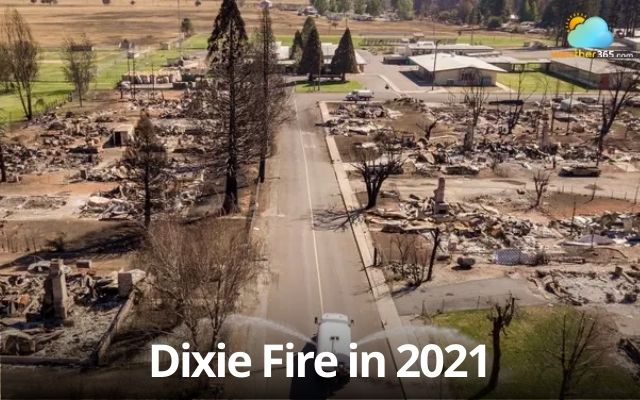
Dixie Fire sparked by PG&E power lines
Mendocino complex
Date: July 2018
Cause: Human Related
County: Colusa, Lake, Mendocino & Glenn
Acres: 459,123
Structures: 280
Deaths: 1
The Mendocino Complex Fire erupted in July 2018 across Colusa, Lake, Mendocino, and Glenn counties.
It was the largest wildfire in California that year, burning 459,123 acres.
The blaze was human-related in origin and consisted of the Ranch Fire and the River Fire.
The Ranch Fire started due to improper use of a hammer and a metal stake, which produced sparks that ignited dry grass.
The River Fire’s cause was also linked to human activity, though specifics were less publicized.
Both fires spread rapidly in the hot, dry, and windy conditions of midsummer, turning a small ignition into a massive blaze.
The fire destroyed 280 structures and claimed one life.
Thousands of firefighters battled the flames for weeks.
Recovery focused on clearing debris, repairing infrastructure, and replanting burned areas. The fire highlighted the urgent need for stronger wildfire prevention and public awareness.
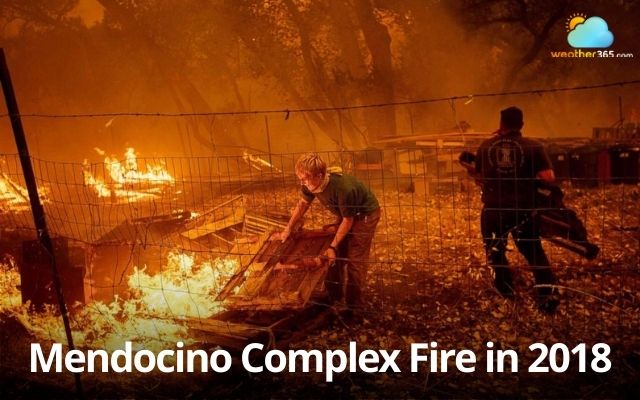
The largest Mendocino Complex Fire in 2018
SCU lightning complex
Date: August 2020
Cause: Lightning
County: Stanislaus, Santa Clara, Alameda, Contra, Costa, & San Joaquin
Acres: 396,625
Structures: 225
Deaths: 0
The SCU Lightning Complex Fire erupted in August 2020 after a series of lightning strikes ignited multiple blazes across Stanislaus, Santa Clara, Alameda, Contra Costa, and San Joaquin counties.
It became one of the largest wildfires in California’s history when scorching 396,625 acres.
The fire destroyed 225 structures, though, fortunately, no fatalities were reported.
The scale of the disaster demanded thousands of firefighters, aircraft support, and weeks of coordinated suppression efforts.
Recovery focused on rebuilding lost homes, restoring damaged infrastructure, and addressing long-term environmental impacts such as soil erosion and habitat loss.
The SCU Lightning Complex remains a stark reminder of how natural events like lightning, combined with extreme weather, can escalate into catastrophic wildfires.
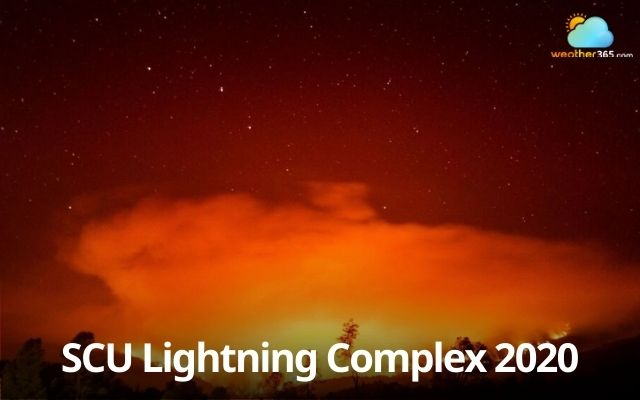
The SCU Lightning Complex in 2020
Creek Fire
Date: September 2020
Cause: Undetermined
County: Fresno & Madera
Acres: 379,895
Structures: 858
Deaths: 0
The Creek Fire broke out in September 2020 in Fresno and Madera counties. Burning through 379,895 acres, the blaze destroyed 858 structures and forced mass evacuations. Luckily, no fatalities were reported.
The exact cause remains undetermined. However, dry conditions and strong winds fueled its rapid spread, trapping hundreds of campers and residents in the Sierra National Forest before dramatic helicopter rescues saved them.
Recovery efforts centered on restoring destroyed communities, clearing hazardous debris, and repairing critical infrastructure, while long-term work focused on forest rehabilitation and wildfire prevention planning.
The Creek Fire highlighted the devastating effects of extreme fire behavior and the urgent need for improved preparedness in vulnerable mountain regions.
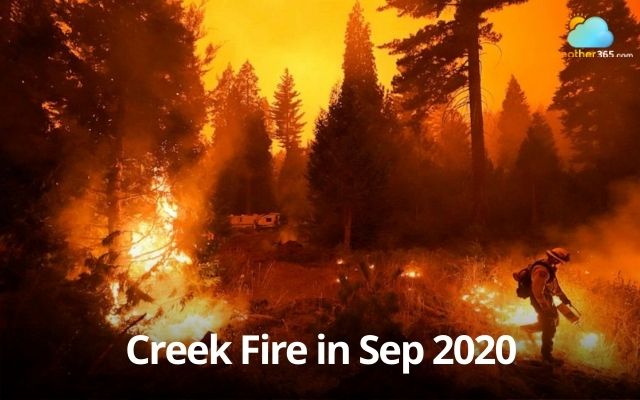
The Creek Fire in 2020
LNU lightning complex
Date: August 2020
Cause: Lightning/ Arson
County: Napa, Solano, Sonoma, Yolo, Lake, & Colusa
Acres: 363,220
Structures: 1,491
Deaths: 6
The LNU Lightning Complex Fire erupted in August 2020. It scorched 363,220 acres across Napa, Solano, Sonoma, Yolo, Lake, and Colusa counties.
Sparked by a combination of lightning strikes and arson, the fire rapidly spread through rural and suburban areas.
Dry vegetation and strong winds also contributed more fuel to the fire.
It destroyed 1,491 structures, damaged hundreds more, and tragically caused six deaths, while forcing tens of thousands of residents to evacuate.
The LNU Lightning Complex underscored the dual threats of natural and human-caused ignitions, highlighting the need for stricter enforcement against arson and better resilience planning in California’s fire-prone regions.
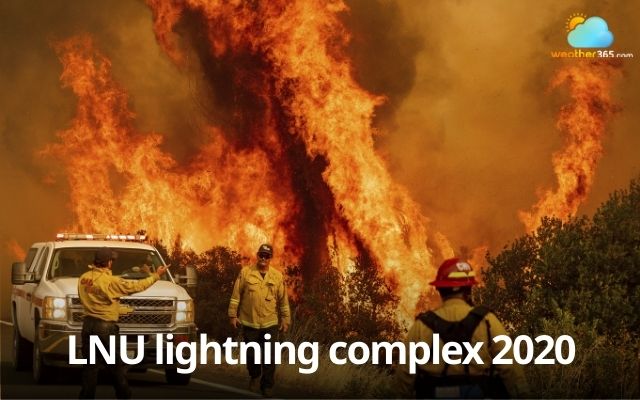
The LNU lightning complex in Aug 2020
North complex
Date: August 2020
Cause: Lightning
County: Butte, Plumas & Yuba
Acres: 318,935
Structures: 2,352
Deaths: 15
The North Complex Fire, ignited by lightning in August 2020, tore through Butte, Plumas, and Yuba counties.
The fire burned 318,935 acres and left a devastating consequence on Northern California.
It destroyed 2,352 structures and claimed 15 lives, making it one of the deadliest fires of the year.
Intense winds and extremely dry conditions accelerated its spread, overwhelming firefighting efforts and forcing mass evacuations.
The tragedy reinforces the urgent need for early warning systems, better evacuation planning, and stronger community resilience measures to save lives in future fire seasons.
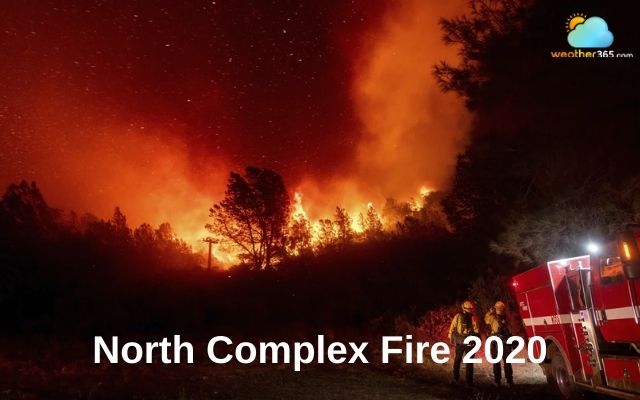
The North Complex Fire in Aug 2020
Thomas Fire
Date: December 2017
Cause: Power lines
County: Ventura & Santa Barbara
Acres: 281,893
Structures: 1,060
Deaths: 2
The Thomas Fire ignited in December 2017 due to faulty power lines.
It swept 281,893 acres across Ventura and Santa Barbara counties in just a few weeks.
The fire destroyed 1,060 structures, damaged hundreds more, and tragically caused two deaths, while forcing over 100,000 people to evacuate.
Its rapid spread was fueled by powerful Santa Ana winds and exceptionally dry vegetation, making containment extremely difficult.
Lessons from the Thomas Fire emphasized the need for modernized power equipment, stricter fire safety regulations, and community preparedness measures to reduce the risk of future catastrophes.
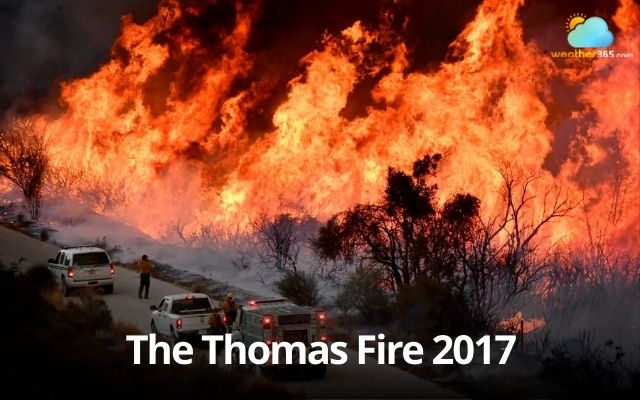
The Thomas Fire in 2017
Cedar Fire
Date: October 2003
Cause: Human Related
County: San Diego
Acres: 273,246
Structures: 2,820
Deaths: 15
The Cedar Fire in October 2003 was one of the most destructive wildfires in California history.
It started in San Diego County and was caused by human activity. Strong Santa Ana winds and extremely dry conditions helped the fire spread quickly across 273,246 acres.
The blaze destroyed 2,820 structures and caused 15 deaths, making it one of the deadliest fires in the state.
Recovery focused on rebuilding homes, restoring burned landscapes, and improving community resilience.
The disaster also led to changes in evacuation systems, firefighting coordination, and fire prevention laws.
The Cedar Fire serves as a lasting reminder of the dangers of human-caused wildfires and the importance of preparedness and awareness in fire-prone regions.
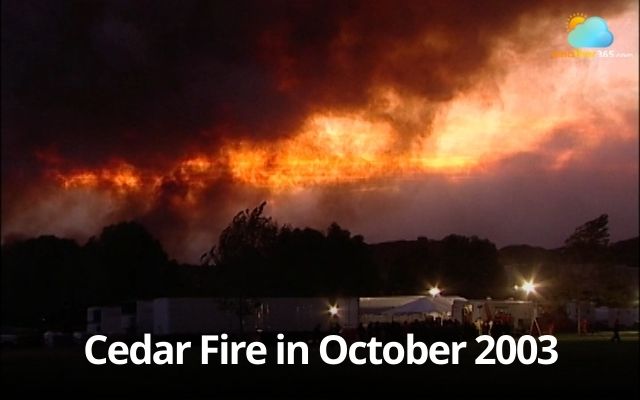
The Cedar Fire in October 2003
Rush Fire
Date: August 2012
Cause: Lightning
County: Lassen
Acres: 271,911 CA /43,666 NV
Structures: 0
Deaths: 0
The Rush Fire of August 2012 spread across 271,911 acres in Lassen County and 43,666 acres in Nevada.
It was sparked by lightning during a series of summer storms.
The fire caused no deaths or structural damage, but it devastated rangeland, wildlife habitat, and sagebrush ecosystems that are slow to recover.
Fire crews worked for weeks to contain the blaze in extremely dry and windy conditions.
Recovery efforts focused on restoring grazing land, protecting soil from erosion, and replanting native vegetation.
The Rush Fire highlighted how even remote, unpopulated regions can suffer massive ecological impacts from lightning-driven wildfires.
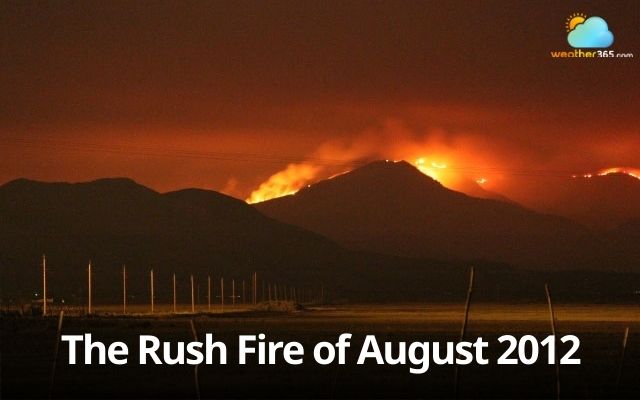
The Rush Fire in Aug 2012
Here is a table of the TOP 10 largest California wildfires in this century. As you can see, 2020 is a year California residents experienced most devastating and many wildfires.
Fire name | Date | Country | Damage |
August Complex | August 2020 | Mendocino, Humboldt, Trinity, Tehama, Glenn, Lake, & Colusa |
|
Dixie | July 2021 | Butte, Plumas, Lassen, Shasta, & Tehama |
|
Mendocino complex | July 2018 | Colusa, Lake, Mendocino & Glenn |
|
SCU lightning complex | August 2020 | Stanislaus, Santa Clara, Alameda, Contra Costa, & San Joaquin |
|
Creek | September 2020 | Fresno & Madera |
|
LNU lightning complex | August 2020 | Napa, Solano, Sonoma, Yolo, Lake, & Colusa |
|
North complex | August 2020 | Butte, Plumas & Yuba |
|
Thomas | December 2017 | Ventura & Santa Barbara |
|
Cedar | October 2003 | San Diego |
|
Rush | August 2012 | Lassen |
|
Why does California often have wildfires?
California often faces frequent and destructive wildfires due to a combination of natural and human factors.
Climate change has intensified wildfire risks by creating hotter temperatures, prolonged droughts, and longer dry seasons. This dries out vegetation, turning it into highly flammable fuel.
Strong winds, such as the Santa Ana and Diablo winds, rapidly spread flames across vast areas and into urban regions, making containment extremely difficult.
Dry vegetation and fuel build-up from extended droughts, warmer weather, and past fire suppression practices accumulate large amounts of combustible material.
Human activities are another major driver, causing nearly 85% of wildfires through power line failures, unattended campfires, discarded cigarettes, arson, and sparks from machinery.
Urban expansion into wildland-urban interfaces increases ignition risks and places more people and property in fire-prone zones.
Together, these factors make California one of the most wildfire-prone regions in the world, with fires spreading faster and lasting longer.
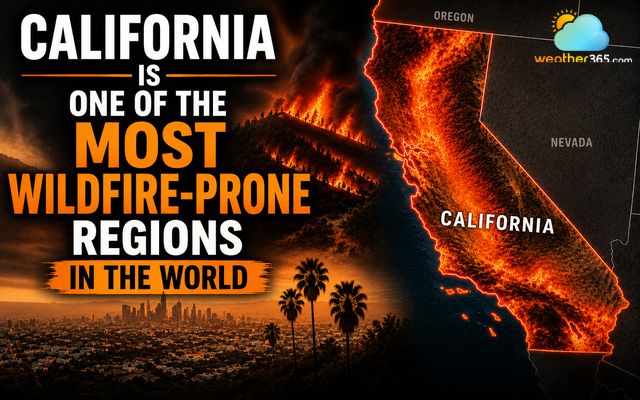
California is one of the most wildfire-prone regions in the world
Conclusion
The largest California wildfires serve as a stark reminder of the growing threat posed by climate change, extreme weather, and human activity. By learning from past disasters and investing in fire management strategies, California can better prepare for future wildfire seasons and reduce the devastating impacts of these record-breaking events.
Frequently Asked Questions (FAQs)
Related post
What Country Has The Most Wildfires? Analyzing Global Hotspots
 566
566
 8
8
 4.8
4.8
 20/05/2026
What States Have The Most Wildfires And The Fewest Wildfires?
292
8
4.8
19/05/2026

What is the biggest wildfire in US history? Top 10 Records Ranked
255
9
4.7
19/05/2026

8 Comment
River Sanders
Which one was the most destructive? I'm guessing it's not necessarily the biggest one.
weather365
Exactly. "Largest" usually refers to acres burned. A different ranking can look very different if you measure structures destroyed or lives lost.
Heidi Hopkins
Wait, is the August Complex one fire or several fires grouped together?
weather365
It's a complex made up of multiple fires that were managed together, which is why you'll see "Complex" in the name.
Selena Fleming
I remember the Dixie Fire, but I didn't realize it was almost as large as the August Complex.
weather365
Yeah, Dixie burned 963,309 acres, putting it very close to the August Complex in terms of size.
Lucia Edwards
Over 1 million acres for the August Complex... that's an absolutely massive area. 😳
weather365
It really is. The August Complex remains the largest wildfire on CAL FIRE's list by burned acreage.
Leave a comment
Your email address will not be published. Required fields are marked *