




What Is an Isolated Thunderstorm Compared to a Scattered One?


What is an Isolated Thunderstorm, and how is it different from a scattered one? Knowing the answer helps you read forecasts with confidence and prepare for sudden weather risks. This article explores their definition, causes, dangers, and the key differences that every weather-watcher should know.
Definition of isolated thunderstorms
- What is An Isolated Thunderstorm?
- What Causes Isolated Thunderstorms?
- Atmospheric Instability
- Abundant Moisture
- Light Winds with Minimal Wind Shear
- When Are Isolated Thunderstorms Likely to Happen?
- Are Isolated Thunderstorms Dangerous?
- Isolated vs. Scattered Thunderstorms
- Can isolated thunderstorms cause tornadoes?
What is An Isolated Thunderstorm?
An isolated thunderstorm is a single storm cell that forms over a tiny, localized area. It appears as one cloud in an otherwise clear or partly cloudy sky.
Typically, an isolated storm affects only about 10–20% of the forecast region.
For example, South Carolina isolated storms affect small localized areas rather than widespread bands.
Unlike larger storm systems, these are often short-lived and appear as “pop-up” storms that develop quickly, bringing heavy rain or lightning to a single location and dissipating just as quickly.
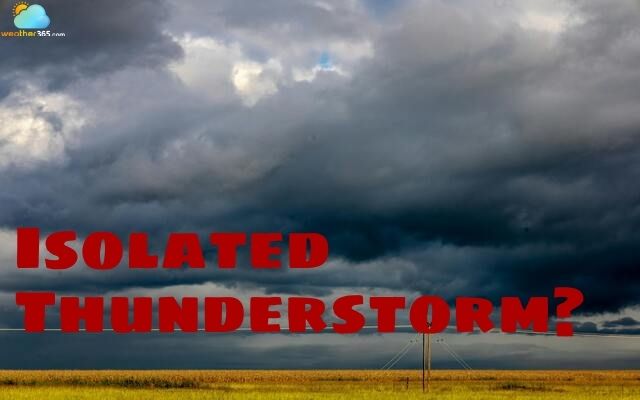
Isolated thunderstorm
Isolated thunderstorms may not cover wide areas, but they share a set of features that make them both fascinating and unpredictable. They typically:
Affect only 10–20% of a forecast area.
Last less than an hour.
Produce heavy but brief downpours.
Generate frequent lightning strikes. One to five lightning strikes could occur in five minutes during an isolated thunderstorm.
Form suddenly in warm, humid conditions.
What Causes Isolated Thunderstorms?
Isolated thunderstorms are most likely to appear when there is instability in the atmosphere.
Unlike larger storm systems, they do not need a strong weather front to trigger them. Instead, they often arise spontaneously under three main factors:
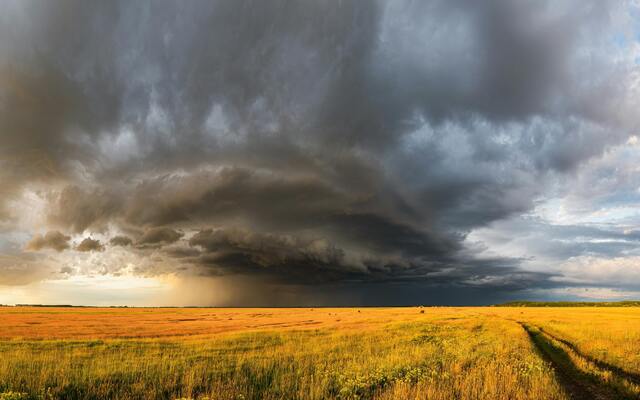
What Causes Thunderstorms?
Atmospheric Instability
On warm days, uneven heating of the ground creates pockets of hot air that rise into the atmosphere. Because the air is unstable, it keeps lifting, cooling, and condensing into cumulonimbus clouds.
This instability is what triggers isolated thunderstorms, allowing them to form suddenly and intensify within minutes.

Unstable atmosphere triggers isolated thunderstorms
Abundant Moisture
Moisture is also a factor contributing to the formation of an isolated thunderstorm.
Moisture in the lower atmosphere provides the “fuel” for storm formation. High humidity increases the chance that rising air will condense into towering storm clouds.
This is why isolated thunderstorms are common in humid afternoons, when evaporation and convection combine to build quick, intense cells.

Abundant moisture in the atmosphere
Light Winds with Minimal Wind Shear
Wind is also a critical component of isolated thunderstorms. For these storms to be brief and localized, the surrounding winds must be light with minimal wind shear.
When wind shear is weak, the storm’s updraft and downdraft remain intertwined. As the cooler downdraft falls and spreads across the surface, it cuts off the warm, moist inflow that fuels the storm.
This quickly weakens the system, leaving isolated thunderstorms short-lived and confined to small areas.

Light winds and minimal wind shear
You may also like this: What causes thunderstorms?
When Are Isolated Thunderstorms Likely to Happen?
In general, isolated thunderstorms form from local heating; they often appear suddenly and in scattered places.
The most common time isolated thunderstorms happen is during hot daytime, high humidity, and weak wind shear conditions.
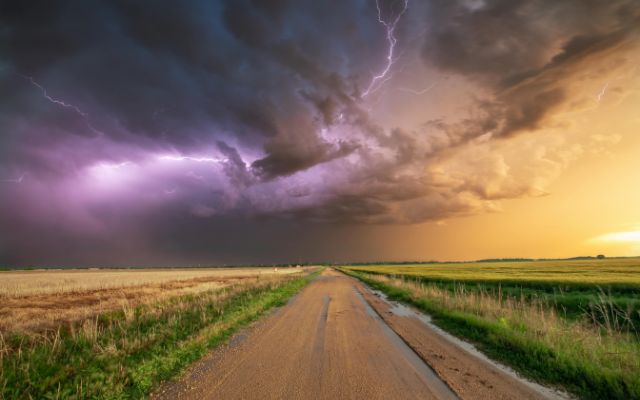
When Are Isolated Thunderstorms Likely to Happen?
To be more specific, below are the times when isolated thunderstorms are most likely to occur:
From the afternoon to early evening, when the sun heats the ground unevenly, causing warm air to rise. The atmosphere becomes unstable due to this daytime heating, which is the main cause of isolated "pop-up" storms.
In the summer, due to intense daytime heating and abundant surface moisture.
During late spring or early fall, when warm and moist air is present. This is less frequent.
Are Isolated Thunderstorms Dangerous?
In fact, isolated thunderstorms are not usually dangerous, mostly due to their small coverage and short-lived duration.
However, it is worth remembering that anyone directly beneath the storm can face serious hazards.
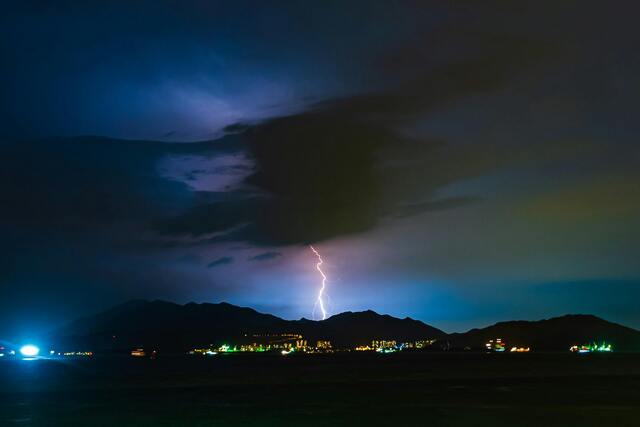
Are Isolated Thunderstorms Dangerous?
The main dangers associated with isolated thunderstorms include lightning, heavy rain, and wind.
Now, let’s see how dangerous they can be!
Lightning: Lightning is a significant threat that can strike people, cause fires, and damage property. It can even strike several miles away from the storm's center.
Heavy Rain and Flash Flooding: Isolated thunderstorms can produce very heavy rainfall in a short period, which can lead to flash flooding, especially in areas with poor drainage or in mountainous regions.
Wind and Hail: Although less frequent than in larger storms, isolated thunderstorms can still generate damaging winds and hail, which can cause power outages and damage to vehicles and homes.
Isolated vs. Scattered Thunderstorms
Weather forecasts often mention both isolated and scattered thunderstorms, and while the terms sound similar, they describe different levels of coverage and risk.
In short, the key distinction between these two types of thunderstorm lies in how much of the forecast area is expected to experience storm activity.
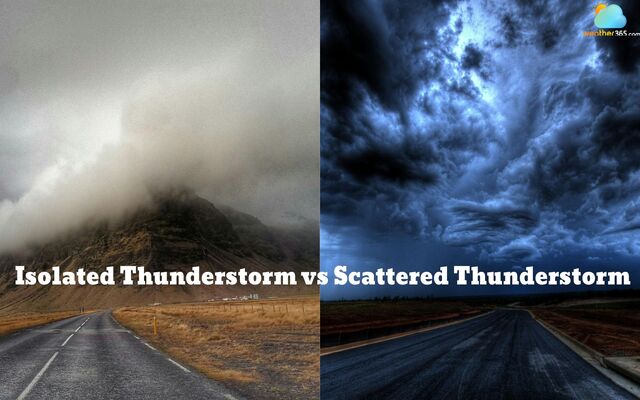
What is the difference between an isolated and a scattered thunderstorm?
While isolated thunderstorms affect only about 10–20% of the area, scattered thunderstorms cover a broader area, typically 30–50%, and are more likely to affect multiple communities within the same region.
Here is a quick side-by-side comparison:
Feature | Isolated Thunderstorm | Scattered Thunderstorm |
Coverage Area | Very localized, small spots | Larger, several locations affected |
Rain and Lightning | Heavy bursts, frequent lightning | Heavier but less frequent lightning |
Storm Type | Usually single-cell, short-lived | Often, multi-cell clusters, longer-lasting |
Weather risk | Lower overall, but can still be severe locally | Moderate, broader regional impact |
Can isolated thunderstorms cause tornadoes?
The short answer is YES, but very rarely.
Most isolated thunderstorms are single-cell storms, lacking the organized rotation and wind shear needed to generate tornadoes.
However, under just the right conditions (an environment with strong vertical wind shear), even a lone storm can briefly spawn a weak tornado.
A vivid example took place near North Platte, Nebraska, on June 16, 2025. A stunning tornado - dubbed the "tornado of the year" by storm chasers - formed from an isolated thunderstorm.
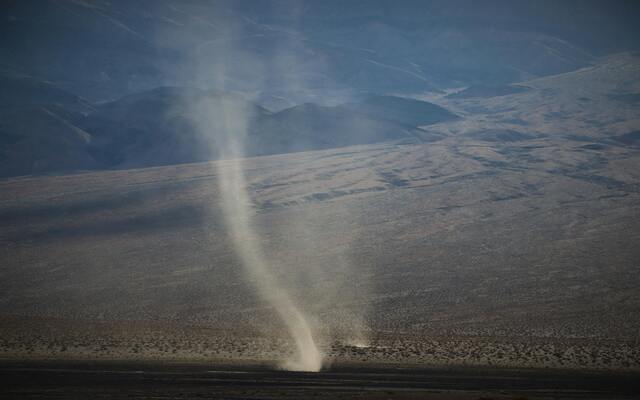
Can isolated thunderstorms cause tornadoes?
This tornado, rated EF2, produced winds estimated at 180 mph, traveled just over 3 miles at a slow speed of 4 mph, and lasted 45 minutes.
Remarkably, it formed in a “mesoscale accident” - a highly localized event without a larger storm system to organize it.
By forming along a subtle boundary, the storm tapped into hidden rotational energy in the atmosphere, which stretched and evolved into a tornado.
So while the odds of a tornado arising from a small isolated storm are slim, Nebraska’s “tornado of the year” proves it’s not impossible.
The Final Words
Understanding what is an isolated thunderstorm helps you stay prepared for sudden weather changes. Even if it may look minor on a forecast map, its sudden lightning, heavy rain, or gusty winds can still catch you off guard. By recognizing their traits and differences from scattered storms, you will be better equipped to plan and stay safe.
Frequently Asked Questions (FAQs)
Related post
Exploring Types of Thunderstorms and Their Unpredictable Impacts
 1688
1688
 8
8
 4.7
4.7
 15/09/2026
What Causes Thunderstorms? Explore the Science Behind Intense Events
1646
8
4.8
15/09/2026
What Is a Supercell Thunderstorm? Key Features and How It Forms
1386
8
4.8
15/09/2026

8 Comment
Carter Taylor
I always assumed an isolated thunderstorm was just a small storm. This article made the term much clearer.
Dominic Ruiz
I’ll definitely pay more attention when a forecast mentions isolated thunderstorms. A low storm chance doesn’t always mean no risk.
Hudson Carter
Can isolated thunderstorms produce tornadoes?
weather365
Yes, although tornadoes are not common with every isolated storm.
Wesley Mills
How long does an isolated thunderstorm usually last?
weather365
Many are relatively short-lived, though conditions can make some last longer.
Theo Smith
Can an isolated thunderstorm become severe?
weather365
Yes, even a single storm can produce strong winds, hail, or heavy rain.
Leave a comment
Your email address will not be published. Required fields are marked *